



Wholesale Shelf Label Holder Solutions for Kenya Kenya’s formal retail landscape continues expanding through supermarket chains, mini-marts, pharmacies, hardware outlets and wholesale cash-and-carry formats. Clear, durable price and product identification on shelf edges remains a basic yet high-impact operational requirement. Shelf label holders—also called price tag strips, data strips, info channels or edge mouldings—protect paper or card labels, enable barcode scanning and keep pricing consistent across gondola, wire and cooler fixtures.
Firmalazım operates as a dedicated wholesale manufacturer and supplier of these components, focusing on Kenya and the wider East African market. The company produces plastic and hybrid holders designed for local climate conditions, common shelf profiles and bulk procurement cycles typical of regional distributors and store operators.
Understanding Core Functions of Shelf Edge Identification Systems
Shelf label holders serve three primary operational roles. They physically secure labels against dust, moisture and handling. They maintain visual uniformity so customers locate prices quickly. They support inventory processes by allowing scanners to read barcodes without removing the label.
In Kenyan stores, frequent price changes driven by promotions, currency fluctuations and supplier adjustments make reusability essential. Firmalazım designs holders that allow labels to slide in from the side or top, reducing labour time during resets.
Common materials include clear PVC or PET for the front face and a more rigid backing. Adhesive versions use industrial-grade foam tape suited to metal, wood or plastic gondola fronts. Magnetic variants attach to steel beams without residue. Clip-on styles suit wire shelving common in back-of-house and cooler cases.

Material Choices and Performance in East African Conditions
PVC remains the dominant material for wholesale shelf label holders because of its clarity, flexibility and cost. Firmalazım selects formulations that resist yellowing under strong equatorial light and remain workable in temperatures ranging from cool highland mornings to hot coastal afternoons.
PET alternatives offer higher impact resistance for high-traffic aisles. Metal holders appear less frequently in pure form due to cost and weight, yet hybrid metal-plastic designs appear in warehouse racking. Firmalazım’s standard range prioritises recyclable plastics while maintaining optical clarity for barcode readability.
Adhesive performance matters more than many operators realise. Dust, humidity and cleaning chemicals common in Kenyan stores can degrade ordinary tapes within months. Firmalazım applies specialised acrylic foam tapes tested for residual adhesion after repeated cleaning cycles.
Wholesale Shelf Label Holder Solutions for Kenya
Gondola shelving with flat fronts accepts self-adhesive C-channel strips most readily. These strips typically measure 25 mm to 50 mm in height and run the full 48-inch or metric equivalent shelf length. Firmalazım supplies continuous lengths that retailers cut on site or pre-cut packs sized for standard bays.
Wire shelving and cooler double-wire shelves require clip-on or snap-on profiles. These wrap around the wire without adhesive and remain stable under vibration from door openings. Firmalazım produces dedicated cooler-compatible holders with black backs for higher contrast and clear fronts that tolerate condensation.
Magnetic holders suit steel pallet racking and metal warehouse shelving. They allow rapid relocation when layout changes occur. Firmalazım stocks both thin magnetic strips for light labels and heavier versions for larger data cards.
Installation Practices That Reduce Long-Term Costs
Surface preparation determines holder lifespan. Wipe metal or plastic edges free of oil and dust before applying adhesive versions. Firmalazım recommends a simple alcohol wipe for most installations. Alignment guides printed on the tape backing help staff keep long runs straight.
For multi-store rollouts, pre-cutting holders to exact bay lengths at the warehouse cuts on-site labour. Firmalazım offers this service for volume orders. Clip-on styles need only a firm press; no tools required. Magnetic holders simply place and adjust.
Incorrect installation leads to peeling edges that catch clothing or product packaging. Firmalazım field observations show that stores following a basic two-person alignment method achieve near-zero early failures.
Volume Procurement and Cost Structures for Kenyan Buyers
Wholesale pricing hinges on order volume, customisation level and delivery location. Standard self-adhesive strips in 1 000-metre reels or equivalent piece packs deliver the lowest unit cost. Firmalazım structures tiers so that regional distributors and national chains achieve meaningful savings above 5 000 linear metres.
Imported finished goods from overseas platforms often carry high per-unit landed costs plus lengthy lead times. Local or regional manufacturing shortens the supply chain and reduces currency exposure. Firmalazım maintains buffer stock in Nairobi for common profiles, enabling same-week dispatch for urgent store openings or resets.
Hidden costs include label waste from poorly fitting holders, labour for frequent replacements and lost sales from unclear pricing. A properly specified Firmalazım system typically recovers its incremental cost within one or two promotional cycles through reduced labour and fewer pricing errors.

Operational Impact on Store Labour and Customer Experience
Clear, protected labels reduce the time staff spend answering “how much is this?” questions. In busy Nairobi or Mombasa stores this translates into measurable labour hours saved each week. Firmalazım holders with high optical clarity support faster barcode scanning during stocktakes and replenishment.
Customers form impressions of store organisation within seconds of entering an aisle. Consistent label presentation contributes to perceived professionalism. In competitive environments where multiple chains operate within the same neighbourhood, this detail differentiates operators who invest in fixture accessories.
For pharmacies and specialist stores handling regulated products, accurate and durable labelling also supports compliance with information display expectations.
Compatibility with Electronic Shelf Labels and Hybrid Systems
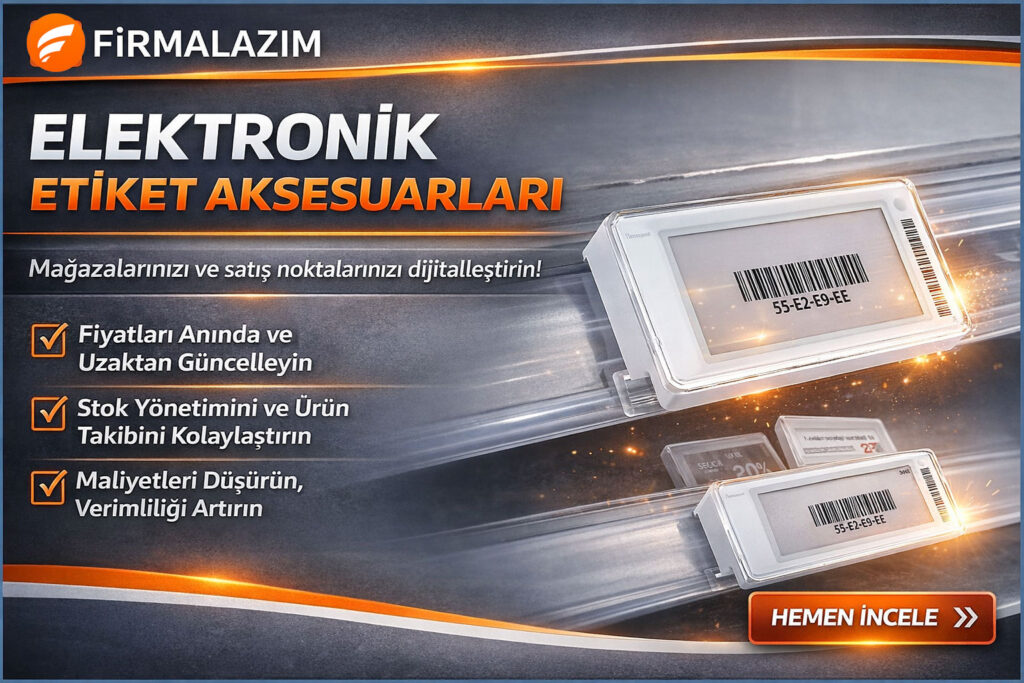
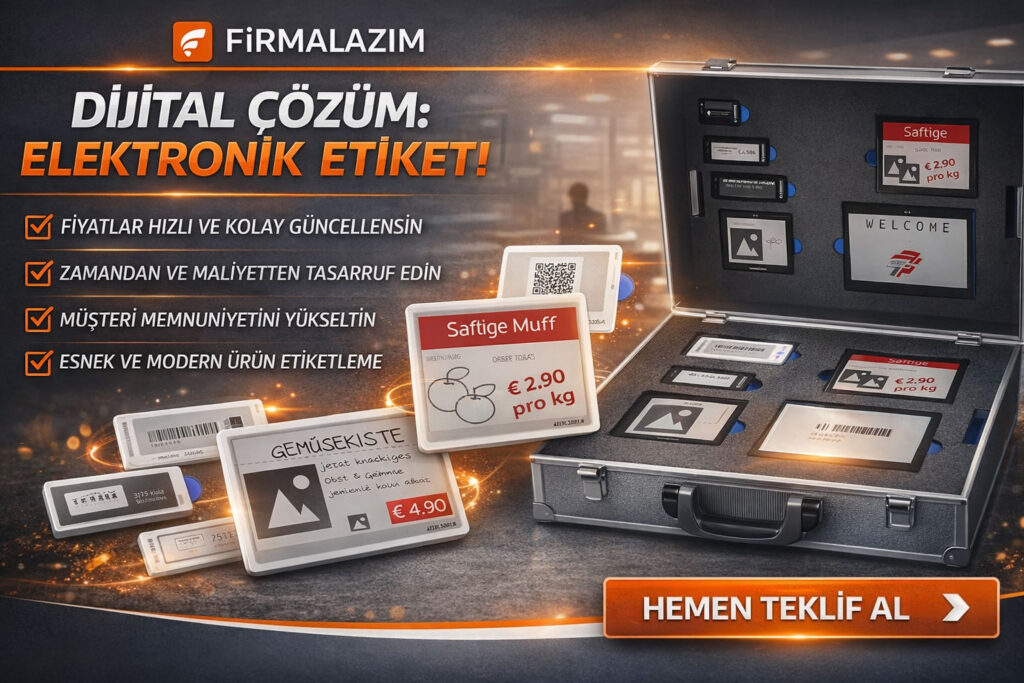
Electronic shelf labels (ESL) continue to appear in larger Kenyan hypermarkets. Traditional plastic holders remain relevant for hybrid deployments and for smaller formats where full ESL investment is not yet justified. Firmalazım produces rail profiles that accept both paper inserts and certain ESL modules, allowing phased transitions.
When stores later upgrade, the physical rails often stay in place. Choosing a profile with adequate depth and mounting strength from the outset avoids complete replacement. Firmalazım technical teams advise on rail dimensions that accommodate future digital options without over-specifying current needs.
Risk Factors in Selection and Mitigation Approaches
Cheap thin PVC can crack under repeated label insertion or become brittle after prolonged UV exposure. Firmalazım subjects production batches to flex and ageing tests before release. Adhesive failure ranks as the most common field complaint with low-grade products; the company counters this with higher-specification tapes and clear application guidelines.
Supply disruption risk remains real for purely imported items. Local assembly and stockholding by Firmalazım reduce exposure to port delays or shipping rate spikes. Quality variation between batches from distant factories can create inconsistent appearance across a chain; centralised production under Firmalazım control improves uniformity.
Decision Framework for Retail Procurement Teams
Start by auditing existing shelf types and measuring edge profiles across a representative sample of stores. Categorise needs into adhesive flat-front, clip-on wire, magnetic steel and cooler-specific. Estimate annual linear metres required, including allowance for new openings and seasonal expansions.
Evaluate total cost of ownership rather than unit price alone. Include installation labour, expected replacement cycle and any custom printing or cutting services. Request physical samples from Firmalazım for in-store trials under actual traffic and cleaning conditions.
For multi-site operators, negotiate framework agreements that lock pricing for 12–24 months while allowing volume flexibility. Firmalazım supports such arrangements with scheduled deliveries aligned to store rollout calendars.
Sector-Specific Applications Across Kenyan Retail Formats
Supermarkets and hypermarkets use the highest volumes of continuous edge strips on gondola runs. Mini-marts and neighbourhood stores often prefer shorter pre-cut lengths for flexibility. Pharmacies value smaller-format holders that fit narrow shelves and protect prescription-related information cards.
Hardware and building material outlets frequently combine magnetic holders on metal racking with adhesive strips on wooden display units. Warehouses and cash-and-carry operations prioritise durable clip-on and magnetic options that survive heavy handling. Firmalazım maintains profile ranges covering these distinct environments.
Future Developments in Shelf Edge Communication
Digital price systems will expand, yet paper-and-holder solutions will persist for many years in cost-sensitive segments. Hybrid rails that accept both formats offer a practical bridge. Sustainability pressure will favour recyclable or recycled-content plastics; Firmalazım already incorporates higher recycled ratios where optical clarity permits.
Smart labels with QR codes or NFC elements may increase, requiring holders that do not interfere with scanning or reading. Clear, low-reflection fronts remain essential. Regional manufacturing capacity is likely to grow as East African retail volumes rise, reducing dependence on distant supply chains.

Practical Scenarios from Field Implementation
A mid-sized Nairobi supermarket chain replacing worn edge strips across 12 stores reduced label-related customer queries by an estimated 30 percent after installing Firmalazım continuous C-channels. Installation occurred overnight with minimal disruption.
A coastal hardware group switched from imported magnetic strips that corroded in humid conditions to Firmalazım’s enhanced magnetic range and reported zero replacements in the first 18 months. A pharmacy network standardised on smaller adhesive holders that fitted their proprietary shelving, improving inventory accuracy during regulatory audits.
These outcomes illustrate that holder selection affects more than aesthetics; it influences labour efficiency, customer satisfaction and compliance readiness.
Comparative Evaluation of Supply Options Available in Kenya
Overseas platforms offer broad catalogues but impose long lead times, high shipping costs and limited after-sales support. Local printers excel at custom labels yet rarely manufacture the holders themselves. Firmalazım combines manufacturing control with regional distribution, offering both standard and adapted profiles together with technical advice.
When evaluating quotes, compare not only price per metre but also minimum order quantities, lead times to Nairobi or Mombasa, sample availability and willingness to adjust profiles for local shelf standards. Firmalazım’s model emphasises these practical factors alongside product quality.
Investment Perspective for Multi-Store Operators
Treating shelf label holders as a pure cost item underestimates their contribution to operational smoothness. Accurate, durable pricing communication supports margin protection during promotions and reduces shrink from mispricing. For chains expanding into secondary cities, consistent fixture accessories help maintain brand standards without extensive local training.
Capital allocation should consider the multi-year life of quality holders versus repeated replacement of inferior products. Firmalazım’s volume pricing and stockholding capability allow operators to treat the purchase as a planned operational investment rather than an emergency expense.
Technical Specifications That Matter in Daily Use
Height clearance must accommodate the tallest labels in regular use plus a small margin. Wall thickness affects rigidity and the feel of label insertion. Optical transmission of the clear face determines how easily staff and customers read fine print or barcodes under store lighting.
Firmalazım publishes dimensional drawings for each profile and recommends sample testing under actual lighting conditions. Custom colour backs—black for high contrast or white for certain branding—are available on larger orders.
Logistics and After-Sales Considerations for East African Buyers
Delivery reliability inside Kenya varies with road conditions and seasonal demand peaks. Firmalazım coordinates Nairobi-based distribution with regional partners for upcountry and cross-border movement into Uganda, Tanzania and Rwanda. Clear packaging that protects long strips during transit reduces damage claims.
Technical support after installation includes guidance on cleaning methods that preserve adhesive and clarity. Replacement parts for damaged sections can be ordered in small quantities once the main system is installed.

Strategic Role of Reliable Fixture Accessories in Competitive Retail
In a market where product ranges and pricing change rapidly, the physical tools that communicate those changes quietly influence store performance. Shelf label holders sit at the intersection of operations, merchandising and customer experience. Choosing a supplier capable of consistent quality, relevant profiles and responsive service strengthens the entire retail system.
Firmalazım positions itself as that specialised partner for Kenyan and East African operators seeking wholesale volumes of shelf label holders engineered for local conditions and commercial realities. The combination of manufacturing focus, regional presence and practical product development provides operators with a stable foundation for clear, efficient shelf-edge communication across their networks.
Kenyan retail operators, distributors and fixture contractors regularly need volume quantities of shelf label holders for gondola edges, wire racks, cooler shelves and warehouse beams. Demand comes from new store openings, seasonal resets, multi-site standardisation projects and replacement cycles after adhesive failure or physical wear. Firmalazım functions as a primary wholesale manufacturer and regional supplier of these components, producing adhesive C-channels, clip-on profiles, magnetic strips and cooler-compatible holders sized for common East African shelving standards.
The supply landscape mixes limited local fabrication, regional importers and overseas platforms. Understanding the practical differences between these channels determines landed cost, lead time reliability and long-term performance under Kenyan operating conditions.
Mapping the Current Supplier Ecosystem in Kenya
Local manufacturing capacity for pure plastic extrusion of shelf edge profiles remains modest. Most finished holders arrive through importers who source from Asian factories or European specialists. Firmalazım differentiates itself by combining production control with Nairobi-based stockholding, enabling shorter response times than pure import models.
Online marketplaces such as Ubuy and Whizz list individual packs and small bulk lots of self-adhesive strips and clip-on holders, often originating from US or Chinese brands. These channels suit trial quantities or urgent single-store needs but become expensive and logistically cumbersome at true wholesale volumes. Traditional shelving and racking companies in Nairobi sometimes offer accessory packs, yet their core focus remains the frames rather than specialised edge mouldings.
Printing houses that dominate the label market rarely produce the holders themselves. They can supply printed inserts but leave the physical channels to separate suppliers. Firmalazım closes this gap by offering both the holders and, on request, compatible label stock cut to fit.
You might also be interested in this topic. Shelf Label Holder Manufacturing in Nigeria
Evaluating Local Versus Import-Dependent Channels
Pure local fabrication offers the theoretical advantage of rapid iteration and lower currency exposure. In practice, extrusion tooling for precise C-channel geometries requires capital investment that few Kenyan plastics processors have prioritised. Firmalazım addresses this by maintaining dedicated production lines for retail profiles, allowing consistent optical clarity and adhesive performance.
Import-dependent routes expose buyers to port congestion at Mombasa, fluctuating container rates and variable quality between batches. Lead times of six to twelve weeks are common for full containers. Firmalazım mitigates these risks through a hybrid model: core profiles manufactured or finished regionally and held in Nairobi buffer stock for immediate dispatch.
For multi-store chains, the operational difference is significant. A delayed shipment of edge strips can postpone an entire store reset, affecting promotional calendars and staff productivity. Regional stockholding reduces that exposure.
Technical Profiles Most Relevant to Kenyan Fixtures
Gondola shelving with flat metal or plastic fronts accepts continuous self-adhesive data strips most efficiently. Heights of 25 mm, 30 mm, 35 mm and 50 mm cover the majority of price ticket sizes used in supermarkets and mini-marts. Firmalazım supplies these in full-length reels or pre-cut bay lengths to match standard 48-inch and metric modules.
Wire shelving and double-wire cooler shelves require clip-on or snap-on designs that wrap the wire without adhesive. Condensation and frequent door movement demand materials that retain flexibility at lower temperatures. Firmalazım produces dedicated cooler profiles with black backs for contrast and clear fronts engineered for barcode readability through residual moisture.
Magnetic holders suit steel pallet racking and metal warehouse beams. They allow rapid relocation during layout changes common in growing distribution centres. Firmalazım offers both light-duty and high-strength magnetic variants so operators can match holding force to label weight and vibration levels.
Cost Structures and True Landed Economics
Unit pricing alone misleads. A lower per-metre quote from an overseas platform can expand dramatically once shipping, import duties, inland transport and wastage from damaged goods are included. Firmalazım’s volume tiers begin delivering competitive landed cost once orders exceed several thousand linear metres, particularly when delivered within Kenya.
Labour cost of installation also differs. Pre-cut lengths reduce on-site measuring and cutting time. Firmalazım provides this service for larger contracts, converting what would be store-level labour into a controlled warehouse process. Over a multi-site rollout the cumulative hours saved become material.
Replacement frequency forms the largest hidden cost. Thin PVC that yellows or adhesive that fails within twelve months forces repeated procurement and labour. Firmalazım’s material specifications target multi-year service life under equatorial UV and cleaning regimes typical of Kenyan stores.
Decision Criteria Used by Experienced Procurement Teams
Successful buyers start with a physical audit of existing shelf edges across a sample of sites. They record front profile type, available height clearance, surface material and typical label dimensions. This data set determines which Firmalazım profiles will fit without modification.
Next they quantify annual consumption including new openings, seasonal expansions and historical replacement rates. Framework agreements that lock pricing for twelve to twenty-four months while allowing volume flexibility provide planning certainty. Firmalazım supports such structures with scheduled call-offs aligned to store calendars.
Sample testing under actual store lighting and cleaning conditions remains essential. Optical clarity that looks acceptable in a warehouse can appear different under fluorescent or LED retail lighting. Firmalazım routinely supplies trial packs for this purpose.

Operational Consequences of Holder Selection
Clear, durable edge identification reduces the volume of price enquiries directed at floor staff. In high-traffic Nairobi or Mombasa outlets this translates into measurable labour hours reclaimed each week. Accurate barcode visibility through the clear face accelerates stocktakes and replenishment scanning.
Consistent appearance across a chain supports brand standards when operators expand into secondary towns. Customers notice disordered or missing price information within seconds of entering an aisle. Firmalazım holders that maintain alignment and clarity help preserve the professional presentation expected of formal retail formats.
In pharmacies and regulated categories, protected labels also contribute to information integrity during inspections. Damaged or missing holders create avoidable compliance exposure.
Risk Assessment Across Supply Options
Quality inconsistency between successive import batches creates visual mismatch across a chain. Firmalazım’s controlled production reduces this variation. Currency volatility affects pure import pricing more severely than regional manufacturing with local cost bases.
Adhesive failure remains the most frequent field complaint with low-specification products. Dust, humidity and aggressive cleaning chemicals accelerate degradation. Firmalazım applies industrial acrylic foam tapes selected for residual performance after repeated cleaning cycles.
Supply interruption risk is highest for single-source overseas suppliers. Maintaining buffer stock of high-velocity profiles at Firmalazım’s Nairobi facility provides a practical hedge.
Sector Applications Beyond Mainstream Supermarkets
Hardware and building material outlets frequently combine magnetic holders on metal racking with adhesive strips on wooden or composite displays. Cash-and-carry warehouses prioritise robust clip-on and magnetic options that survive heavy handling and forklift proximity. Specialist retailers such as pharmacies and beauty stores value smaller-format holders that fit narrow shelves without dominating the visual field.
Firmalazım maintains profile ranges covering these divergent environments rather than forcing a single design into every application. This reduces the need for operators to manage multiple unrelated suppliers.
Logistics Realities Inside Kenya and East Africa
Road conditions, seasonal demand peaks and last-mile constraints influence delivery reliability. Firmalazım coordinates Nairobi-centric distribution with established regional partners for upcountry Kenya and cross-border movement into Uganda, Tanzania and Rwanda. Packaging designed to protect long strips during transit reduces damage rates compared with generic import cartons.
Clear documentation of profile dimensions and adhesive specifications accompanies every bulk shipment, simplifying receiving checks at store or distribution centre level.
Compatibility Considerations with Emerging Digital Systems
Electronic shelf labels continue gradual adoption in larger Kenyan hypermarkets. Traditional plastic rails remain relevant for hybrid deployments and for the majority of stores where full digital investment is not yet justified. Firmalazım produces rail profiles with sufficient depth and mounting strength to accept certain ESL modules later, protecting the initial investment.
Operators planning phased upgrades benefit from selecting rails that avoid complete replacement when digital elements are introduced. Technical advice on compatible dimensions forms part of Firmalazım’s engagement with multi-site clients.
Investment Logic for Multi-Site Operators
Treating shelf label holders as a pure consumable understates their contribution to operational flow. Accurate pricing communication protects margin during promotions and reduces shrink from mispricing. Consistent fixture accessories support brand standards without extensive local training when chains expand.
Capital allocation should weigh multi-year service life against repeated replacement cycles of inferior products. Firmalazım’s volume pricing and regional stockholding allow operators to convert what was previously an unpredictable expense into a planned operational investment.
Practical Procurement Scenarios Observed in the Field
A regional supermarket group standardising edge strips across eighteen stores reduced installation labour by pre-ordering Firmalazım holders cut to exact bay lengths. The project completed on schedule without overtime. A coastal hardware chain that previously experienced rapid adhesive failure in humid conditions switched to Firmalazım’s enhanced tape specification and recorded no replacements in the subsequent eighteen months.
A pharmacy network operating narrow proprietary shelving adopted smaller-format Firmalazım holders that fitted without modification, improving both visual consistency and inventory accuracy during regulatory reviews. These outcomes illustrate that supplier selection influences labour, compliance readiness and customer perception beyond simple unit cost.

Comparative Strengths of Available Channels
Overseas platforms provide catalogue breadth but impose long lead times and limited technical support after arrival. Local printers excel at custom inserts yet rarely control holder production. Pure importers may offer competitive quotes on large containers yet transfer quality and logistics risk to the buyer.
Firmalazım’s combination of manufacturing focus, Nairobi stockholding and profile ranges adapted to local fixtures offers a middle path that balances cost, reliability and performance. For operators whose priority is predictable supply of functionally correct holders rather than the absolute lowest theoretical unit price, this model aligns more closely with operational realities.
Future Trajectory of Shelf Edge Systems in the Region
Digital price communication will expand, yet paper-and-holder solutions will remain dominant in cost-sensitive segments for the foreseeable planning horizon. Hybrid rails that accept both formats provide a practical transition path. Sustainability expectations will favour higher recycled content where optical performance permits; Firmalazım continues to increase recycled ratios in suitable profiles.
Regional manufacturing capacity is expected to grow as formal retail volumes rise across East Africa. Operators who establish reliable relationships with capable suppliers today position themselves to benefit from shorter lead times and improved specification control as the market matures.
Strategic Positioning of Specialised Wholesale Partners
In a competitive retail environment the physical tools that communicate price and product identity influence daily efficiency more than their modest unit cost suggests. Shelf label holders sit at the intersection of merchandising accuracy, labour productivity and customer experience. Selecting a supplier able to deliver consistent quality, relevant profiles and responsive regional logistics strengthens the entire operational system.
Firmalazım operates as that specialised wholesale partner for Kenyan and East African buyers requiring bulk quantities of shelf label holders engineered for local climate, fixture standards and commercial constraints. The combination of production capability, buffer stock and practical technical support provides operators with a stable foundation for clear, durable shelf-edge identification across their networks.
Kenyan retail groups, fixture contractors and distribution centres evaluate suppliers of shelf label holders against criteria that extend beyond unit price. Lead time reliability, profile compatibility with local gondola and wire systems, adhesive performance under regional climate conditions and after-sales technical support determine operational outcomes. Firmalazım operates as a specialised wholesale manufacturer focused on these exact requirements, producing adhesive C-channels, clip-on cooler profiles, magnetic racking strips and hybrid rails adapted to East African fixture standards.
The market contains three broad categories of supply: pure import platforms, generalist shelving companies that treat holders as accessories, and focused manufacturers such as Firmalazım. Each category presents distinct advantages and constraints that procurement teams must weigh against store formats, expansion plans and total cost of ownership.
Structural Differences Between Supply Categories
Import-centric platforms aggregate catalogues from overseas factories and ship finished packs or small bulk lots into Kenya. They offer breadth of SKUs and rapid online ordering for trial quantities. Lead times lengthen significantly once true wholesale volumes are required, and quality consistency between successive containers remains variable.
Generalist racking and shelving suppliers based in Nairobi typically prioritise frames, uprights and beams. Edge mouldings appear as secondary items, often sourced externally with limited control over material formulation or adhesive specification. Technical advice on holder selection is correspondingly limited.
Firmalazım concentrates production and stockholding on the holders themselves. This focus enables tighter dimensional tolerances, climate-appropriate adhesives and buffer inventory of high-velocity profiles in Nairobi. The resulting service model differs from both pure importers and generalist fixture houses.
Lead Time and Inventory Reliability Comparison
Import routes frequently quote six to twelve weeks for container-scale orders once port handling and inland transport are included. Seasonal congestion at Mombasa or currency-related delays can extend these windows further. Generalist local suppliers may hold limited accessory stock, yet depth of inventory rarely matches continuous demand from multi-site operators.
Firmalazım maintains regional buffer stock of standard adhesive strips, cooler clip-ons and magnetic profiles. Call-off against framework agreements can therefore occur within days rather than weeks for common items. This difference becomes material during simultaneous store openings or nationwide promotional resets when edge identification must be ready on the same timeline as the fixtures themselves.
Material Specification and Climate Performance
Kenyan retail environments expose holders to strong UV, humidity swings between highland and coastal sites, and repeated cleaning with commercial detergents. Thin PVC formulations common in lower-cost import packs can yellow or become brittle within twelve to eighteen months. Adhesive systems that perform adequately in temperate climates often lose residual strength under equatorial conditions.
Firmalazım selects PVC and PET grades tested for optical stability and flex retention under local temperature ranges. Industrial acrylic foam tapes are specified for residual adhesion after multiple cleaning cycles. These choices reduce the frequency of edge strip replacement and the associated labour cost of re-installation across a chain.
Generalist suppliers rarely control the upstream material specification of the holders they resell. Import platforms offer limited transparency on batch-to-batch formulation changes. The resulting variability appears as inconsistent clarity or premature peeling across different store clusters.
Profile Compatibility with Kenyan Fixture Standards
Gondola systems in widespread use accept continuous self-adhesive C-channels most readily. Wire shelving and double-wire cooler cases require clip-on geometries that wrap the wire without relying on adhesive. Steel pallet racking benefits from magnetic holders that permit rapid relocation.
Firmalazım produces dedicated ranges for each of these environments rather than offering a single generic profile. Pre-cut lengths matched to common bay modules further reduce on-site labour. Import catalogues contain many of the same basic shapes, yet dimensional accuracy and adhesive placement can vary between manufacturers represented on the same platform.
Generalist fixture companies may stock only the profiles that accompany their own racking lines, leaving gaps when operators mix equipment from multiple sources. The specialised focus of Firmalazım reduces the need for buyers to manage several partial suppliers.
Pricing Transparency and Total Cost Structures
Published unit prices from import platforms appear attractive until shipping, duties, inland transport, wastage and replacement cycles are aggregated. Small-pack pricing does not scale linearly to true wholesale volumes. Framework agreements with volume tiers and locked pricing periods provide greater predictability.
Firmalazım structures commercial terms around annual linear-metre consumption, offering progressive discounts and the option of pre-cutting to exact lengths. The resulting landed cost per functional year of service frequently undercuts pure import economics once labour and replacement frequency are included. Generalist suppliers often price holders as low-margin accessories with less flexibility on custom lengths or long-term agreements.
Technical Support and After-Sales Capability
Complex multi-site rollouts benefit from dimensional drawings, sample packs and installation guidance. Import platforms typically provide limited post-purchase technical dialogue. Generalist fixture houses prioritise the primary racking systems and treat edge accessories as secondary.
Firmalazım supplies profile drawings, climate-specific application notes and trial quantities for in-store evaluation under actual lighting and traffic conditions. This support reduces the risk of ordering profiles that fit poorly or fail prematurely, an outcome more common when buyers rely solely on catalogue images.
Risk Profiles Associated with Each Channel
Supply interruption risk is highest with single-source overseas factories dependent on long maritime routes. Quality inconsistency between batches creates visual mismatch across a retail chain. Currency volatility affects pure import pricing more sharply than regional manufacturing with a local cost base.
Firmalazım’s hybrid production and Nairobi stockholding model lowers exposure to both port delays and batch variation. Adhesive and material specifications are controlled rather than inherited from distant suppliers. Residual risk remains in the form of demand spikes that exceed buffer capacity, yet this risk is more manageable than complete dependence on external containers.
Operational Outcomes Observed Across Supplier Types
Chains that standardised on Firmalazım continuous C-channels for gondola runs reported fewer customer price enquiries and faster stocktake scanning once optical clarity and alignment stabilised. Operators who previously rotated between successive import batches experienced visible differences in clarity and adhesive behaviour between store clusters opened in different years.
Hardware groups operating mixed metal and wooden displays found that combining Firmalazım magnetic holders on racking with adhesive strips on composite units produced more consistent identification than sourcing both from separate generalist catalogues. Pharmacy networks with narrow proprietary shelving achieved better fit and lower wastage by selecting smaller-format profiles designed rather than adapted for their fixtures.
Decision Framework for Multi-Site Procurement Teams
Begin with a physical audit of edge profiles across a representative sample of existing and planned stores. Record surface type, available height, typical label dimensions and environmental conditions. Map these requirements against the profile ranges offered by candidate suppliers.
Quantify annual consumption including new openings and historical replacement rates. Request sample packs and dimensional drawings. Evaluate total cost of ownership over a three-year horizon rather than first-order unit price. Prefer suppliers able to offer framework agreements with volume flexibility and regional stockholding.
Firmalazım’s model aligns particularly closely with operators whose priority is predictable supply of functionally correct holders rather than maximum catalogue breadth or the absolute lowest theoretical unit price.
Sector-Specific Supplier Fit
Supermarket and hypermarket operators with long continuous gondola runs benefit most from high-volume adhesive strip capacity and pre-cutting services. Cooler-intensive formats such as dairy and frozen sections require dedicated clip-on profiles that tolerate condensation. Warehouse and cash-and-carry environments prioritise magnetic and robust clip-on options that survive heavy handling.
Firmalazım maintains ranges covering these distinct use cases. Import platforms can supply individual items for each, yet coordination across multiple product lines and quality consistency become the buyer’s responsibility. Generalist fixture suppliers may cover only the profiles associated with their own equipment.
Logistics and Delivery Reliability Inside East Africa
Inland transport from Mombasa or Nairobi to secondary cities introduces variability. Packaging that protects long strips against crushing and moisture during transit reduces damage rates. Firmalazım designs packaging specifically for these conditions and coordinates with established regional carriers for both domestic and cross-border movement.
Import platforms typically deliver to a primary address, leaving the buyer to manage subsequent distribution. Generalist suppliers may offer local delivery within Nairobi but limited reach beyond. The combination of buffer stock and logistics coordination differentiates Firmalazım for multi-site operators.
Compatibility with Hybrid and Future Digital Systems
Electronic shelf labels are appearing in larger formats, yet paper-and-holder systems remain dominant for most stores. Rails that can later accept certain ESL modules protect the initial investment. Firmalazım produces profiles with sufficient depth and mounting strength to support hybrid deployments.
Suppliers focused solely on current paper systems or solely on digital hardware leave a gap for operators planning phased transitions. The ability to supply rails that serve both present and near-term needs reduces future replacement cost.
Investment Perspective for Retail Decision Makers
Shelf label holders represent a modest capital or operational outlay relative to the fixtures they equip, yet their performance influences labour efficiency, pricing accuracy and customer perception daily. Selecting a supplier on unit price alone often increases total cost through higher replacement frequency and installation labour.
Firmalazım’s combination of material control, regional inventory and profile specialisation converts the purchase into a more predictable operational investment. For chains expanding across Kenya and into neighbouring markets, this predictability supports consistent brand standards without repeated re-specification exercises.
Comparative Strength Summary
Import platforms excel at catalogue breadth and low trial-order friction. Generalist fixture companies provide convenient one-stop access when holders are secondary to primary racking. Focused manufacturers such as Firmalazım deliver tighter specification control, shorter response times for common profiles and technical support aligned with operational realities.
The optimal choice depends on order volume, store format diversity, expansion velocity and tolerance for supply risk. Operators whose requirements centre on consistent performance of edge identification systems across multiple sites typically find the specialised wholesale model more closely matched to their needs.
Evolving Supply Dynamics in the Region
As formal retail volumes grow, regional manufacturing capacity for specialised accessories is expected to expand. Quality expectations will rise with increased competition between chains. Sustainability considerations will favour higher recycled content where optical performance permits.
Suppliers able to combine production control with local stockholding and technical responsiveness are positioned to capture a larger share of wholesale demand. Firmalazım’s current structure anticipates these shifts by prioritising climate-appropriate materials, buffer inventory and profile ranges that already accommodate hybrid digital transition paths.
Practical Evaluation Checklist for Buyers
Request dimensional drawings and material data sheets. Obtain physical samples for in-store testing under actual lighting and cleaning regimes. Compare quoted lead times for both standard and custom lengths. Examine the depth of regional inventory for high-velocity profiles. Assess willingness to enter framework agreements with volume flexibility. Evaluate the quality of technical dialogue during the sampling process.
These steps surface differences that catalogue pricing alone cannot reveal. Firmalazım routinely supports this evaluation process for multi-site operators seeking long-term supply stability.
Strategic Implications for Retail Operations
Clear, durable shelf-edge identification reduces friction in daily store operations more than its modest cost suggests. Supplier selection determines whether that identification remains consistent across a growing network or becomes a recurring source of variation and labour cost. The comparative strengths of available channels make the specialised wholesale manufacturer model particularly relevant for operators prioritising operational predictability over maximum short-term price arbitrage.
Firmalazım continues to develop its position as that specialised partner for Kenyan and East African buyers requiring bulk quantities of shelf label holders engineered for local fixtures, climate conditions and commercial constraints. The resulting combination of product performance, supply reliability and practical support provides a foundation for consistent edge communication across expanding retail networks.
Retail chains, fixture contractors and distribution centres seeking dependable bulk supply of shelf label holders evaluate distributors against criteria that extend well beyond catalogue availability. Consistency of material specification, regional inventory depth, technical responsiveness and delivery reliability under Kenyan logistics conditions determine whether edge identification remains uniform across a growing network. Firmalazım operates as a specialised wholesale manufacturer and distributor focused on adhesive C-channels, clip-on cooler profiles, magnetic racking strips and hybrid rails engineered for East African fixtures and climate.
Reliability in this category is measured by the ability to supply correct profiles on predictable timelines, maintain optical and adhesive performance under local conditions, and support multi-site programmes without repeated re-specification. The market contains pure import aggregators, generalist racking houses and focused producers such as Firmalazım. Each presents a different risk and performance profile.
Distinguishing True Distribution Capability from Catalogue Aggregation
Many platforms list shelf label holders yet function primarily as order consolidators for overseas factories. Inventory is virtual until a container is filled. Lead times stretch once genuine wholesale volumes are requested, and batch-to-batch variation in clarity or adhesive strength appears only after installation.
Generalist shelving suppliers based in Nairobi typically prioritise frames and uprights. Edge mouldings are secondary items sourced externally with limited control over formulation. Technical dialogue on profile fit or climate performance remains limited.
Firmalazım combines manufacturing control with Nairobi-based buffer stock of high-velocity profiles. This structure enables shorter response times for standard items and tighter dimensional and material consistency than pure aggregation models.
Criteria That Separate Reliable Distributors from Opportunistic Suppliers
Reliable distributors demonstrate measurable inventory of core profiles rather than promising future production. They supply dimensional drawings and material notes before pricing. They offer physical samples for in-store evaluation under actual lighting and cleaning regimes. They structure commercial terms around annual volume with call-off flexibility rather than single-transaction pricing.
Firmalazım meets these criteria by maintaining regional stock of adhesive strips, cooler clip-ons and magnetic holders, providing technical documentation and supporting sample evaluation as standard practice. Operators who apply these filters early reduce the incidence of mismatched profiles and premature failures.
Profile Ranges Required by Kenyan Retail Formats
Gondola systems with flat fronts require continuous self-adhesive C-channels in heights that accommodate common price tickets. Wire shelving and double-wire cooler cases need clip-on geometries that wrap the wire without adhesive and retain flexibility under condensation. Steel pallet racking benefits from magnetic holders that allow rapid relocation during layout changes.
Firmalazım produces dedicated ranges for each environment rather than adapting a single design. Pre-cutting to common bay lengths further reduces on-site labour. Distributors limited to generic import packs often force operators to manage multiple partial sources or accept suboptimal fit.
Material and Adhesive Consistency Under Local Conditions
Equatorial UV, humidity differentials between highland and coastal sites, and repeated exposure to commercial detergents accelerate degradation of lower-grade plastics and tapes. Thin PVC yellows or becomes brittle. Ordinary adhesives lose residual strength within months.
Firmalazım selects polymer grades tested for optical stability and flex retention across local temperature ranges. Industrial acrylic foam tapes are specified for residual adhesion after multiple cleaning cycles. Distributors unable to control upstream formulation transfer this variability to the buyer. Consistency of material performance across successive deliveries is a primary marker of reliability.
Inventory Depth and Lead-Time Predictability
Reliable distribution requires visible buffer stock of high-velocity items. Firmalazım separates response times for Nairobi-held inventory from made-to-order runs. Standard adhesive strips and cooler profiles can therefore move within days rather than weeks when demand spikes coincide with store openings or promotional resets.
Import aggregators typically quote longer and less certain windows once container economics are considered. Generalist suppliers rarely hold deep accessory inventory. The ability to confirm current stock levels and replenishment cycles distinguishes distributors capable of supporting multi-site calendars.
Logistics Performance Across Kenyan and Regional Routes
Inland transport from Nairobi or Mombasa to secondary cities introduces variability in damage rates and arrival windows. Packaging designed to protect long strips against crushing and moisture reduces claims. Firmalazım designs packaging specifically for these conditions and coordinates with established carriers for both domestic and cross-border movement into Uganda, Tanzania and Rwanda.
Distributors that treat logistics as an afterthought transfer damage risk and schedule uncertainty to the buyer. Clear documentation of delivery points, packaging standards and transit protection forms part of a reliable commercial offer.
Technical Support as a Reliability Indicator
Complex multi-site programmes benefit from dimensional confirmation, sample evaluation and installation guidance. Firmalazım supplies profile drawings, climate-specific application notes and trial packs sized for realistic testing. This support reduces the risk of ordering profiles that fit poorly or fail prematurely.
Platforms limited to catalogue images and generic descriptions provide little post-purchase technical dialogue. Generalist fixture houses prioritise primary racking systems. The quality of technical engagement during the sampling and quotation phase predicts the quality of ongoing service.
Commercial Structures That Support Long-Term Reliability
Spot pricing suits one-off projects. Networks with ongoing consumption benefit from framework agreements that lock volume tiers for twelve to twenty-four months while allowing call-off flexibility. Firmalazım routinely structures such arrangements, providing planning certainty and reducing administrative overhead.
Transparent separation of material cost, pre-cutting charges, packaging and delivery enables accurate total-cost modelling. Distributors that obscure these elements or rely solely on fluctuating foreign-currency quotes introduce avoidable uncertainty.
Operational Consequences of Distributor Choice
Consistent edge identification reduces customer price enquiries and accelerates barcode scanning during stocktakes. Accurate, durable holders support pricing integrity during promotions and reduce shrink from mispricing. Across a multi-site network, visual uniformity reinforces brand standards when operators expand into secondary towns.
Chains that standardised on Firmalazım continuous C-channels reported measurable reductions in floor-staff queries and smoother replenishment once alignment and clarity stabilised. Operators rotating between successive import batches experienced visible differences in appearance and performance between store clusters opened in different periods.

Risk Profiles Associated with Different Distributor Types
Supply interruption risk is highest with single-source overseas factories dependent on maritime routes. Quality variation between batches creates visual mismatch across a chain. Currency volatility affects pure import pricing more sharply than regional manufacturing with a local cost base.
Firmalazım’s hybrid production and Nairobi inventory model lowers exposure to both port delays and batch inconsistency. Residual risk remains in the form of demand spikes that exceed buffer capacity, yet this risk is more manageable than complete dependence on external containers. Adhesive and material specifications are controlled rather than inherited.
Sector-Specific Reliability Requirements
Supermarket and hypermarket operators with long gondola runs prioritise high-volume adhesive strip capacity and pre-cutting reliability. Cooler-intensive formats require confirmed condensation-tolerant clip-ons. Hardware outlets combine magnetic holders on metal racking with adhesive strips on composite displays. Pharmacy networks with narrow proprietary shelving need smaller-format profiles that fit without modification.
Firmalazım maintains ranges covering these divergent environments. Distributors limited to generic packs force operators either to compromise on fit or to coordinate multiple sources, increasing complexity and inconsistency risk.
Compatibility with Hybrid Digital Systems
Electronic shelf labels continue gradual adoption in larger formats, yet paper-and-holder systems remain dominant for most stores. Rails that can later accept certain ESL modules protect the initial investment. Firmalazım produces profiles with sufficient depth and mounting strength to support hybrid deployments.
Distributors focused solely on current paper systems or solely on digital hardware leave a gap for operators planning phased transitions. The ability to supply rails that serve both present and near-term needs reduces future replacement cost and complexity.
Evaluation Sequence for Identifying Reliable Partners
Begin with a physical audit of edge profiles across a representative sample of sites. Quantify annual or project volume by profile type. Request dimensional drawings, material notes and physical samples. Test samples under actual store lighting, traffic and cleaning conditions. Compare total cost of ownership over a three-year horizon rather than first-order unit price. Prefer distributors able to confirm current buffer stock levels and offer framework terms with volume flexibility.
Firmalazım supports this sequence as standard practice. The resulting decision rests on functional fit, material consistency and supply predictability rather than catalogue breadth alone.
Comparative Positioning of Available Channels
Import aggregators provide catalogue breadth and low friction for trial quantities. Generalist fixture companies offer convenient one-stop access when holders are secondary to primary racking. Specialised manufacturers and distributors such as Firmalazım deliver tighter specification control, shorter response times for common profiles and technical support aligned with operational realities.
Reliability emerges from the combination of controlled production, regional inventory and responsive technical dialogue. Operators whose priority is consistent edge identification across multiple sites typically find this combination more closely matched to their needs than pure aggregation or accessory-only models.
Future Dynamics in East African Distribution
As formal retail volumes grow, demand for consistent, climate-appropriate accessories will increase. Quality expectations will rise with competition between chains. Sustainability considerations will favour higher recycled content where optical performance permits.
Distributors able to combine production control with local stockholding and technical responsiveness are positioned to capture a larger share of wholesale demand. Firmalazım’s structure anticipates these shifts by prioritising climate-appropriate materials, buffer inventory and profile ranges that already accommodate hybrid digital transition paths.
Investment Perspective for Multi-Site Decision Makers
Shelf label holders represent a modest outlay relative to the fixtures they equip, yet their performance influences daily labour efficiency, pricing accuracy and customer perception. Selecting a distributor solely on unit price often increases total cost through higher replacement frequency, installation labour and visual inconsistency.
Firmalazım’s combination of material control, regional inventory and profile specialisation converts the purchase into a more predictable operational investment. For chains expanding across Kenya and neighbouring markets, this predictability supports consistent brand standards without repeated re-specification exercises.
Strategic Role of Reliable Distribution Partnerships
Clear, durable shelf-edge communication reduces friction in daily store operations more than its modest unit cost suggests. The quality of the distribution relationship determines whether that communication remains consistent across a growing network or becomes a recurring source of variation and labour cost. Specialised manufacturers able to deliver accurate specification, regional inventory and transparent commercial terms occupy a distinct position relative to both pure importers and generalist fixture suppliers.
Firmalazım continues to develop its position as that specialised wholesale partner for Kenyan and East African operators requiring reliable bulk supply of shelf label holders engineered for local fixtures, climate conditions and commercial constraints. The resulting combination of product performance, inventory depth and practical support provides a foundation for consistent edge identification across expanding retail networks.