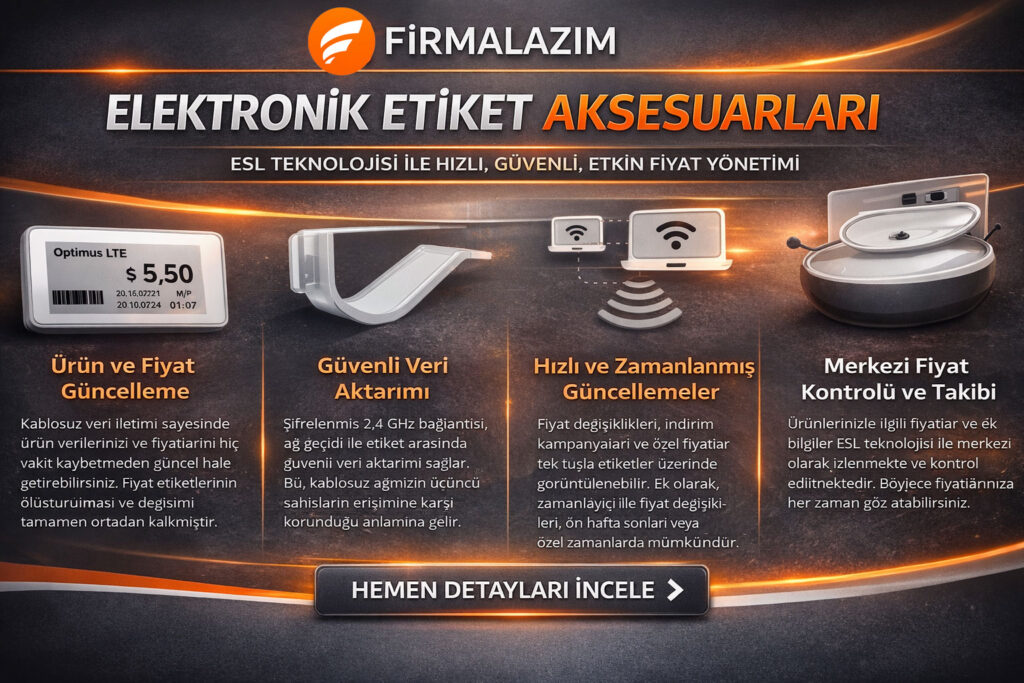




Shelf Label Holder Manufacturer Egyptian Shelf Label Holder Manufacturer Egyptian Egypt’s retail sector continues to expand rapidly across modern trade chains, independent supermarkets, pharmacies, and specialty stores. Clear, durable, and correctly installed shelf label holders form one of the most operationally critical yet frequently overlooked components of store presentation. Price visibility, stock identification, and promotional messaging depend directly on the quality and compatibility of these profiles. Firmalazım, operating from its production base in Menemen Plastik İhtisas OSB in İzmir, supplies PVC, transparent, adhesive, clip-on, and custom-cut shelf label holders that meet the practical demands of Egyptian retail environments while offering measurable advantages in durability, installation speed, and long-term cost control.
Core Function of Shelf Label Holders in Modern Retail Operations
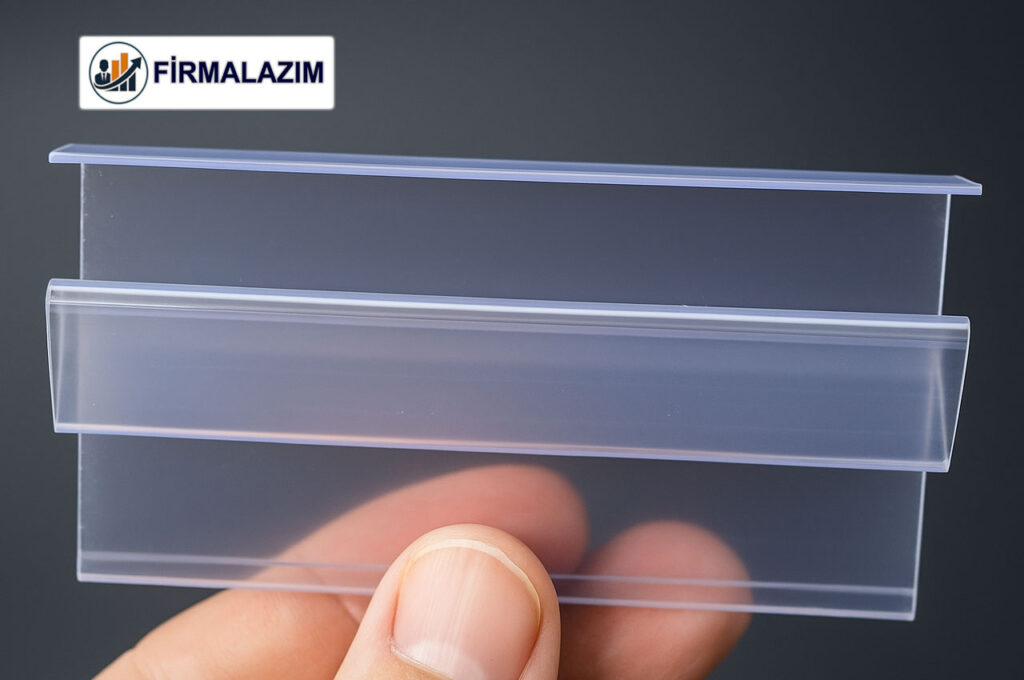
Shelf label holders secure printed price tags, barcode labels, or promotional cards along the front edge of shelving systems. Without a reliable holder, labels shift, curl, or fall, creating confusion at the point of purchase and increasing labor time for store staff. Firmalazım designs holders that maintain label stability under high-traffic conditions typical of Egyptian hypermarkets and neighborhood stores.
Material Performance Under Egyptian Climate Conditions
High ambient temperatures, dust, and frequent cleaning cycles in Egyptian stores place specific stress on plastic components. Firmalazım selects rigid yet flexible PVC and PET formulations that resist warping and yellowing far longer than lower-grade imported alternatives commonly found in the local market.
Compatibility With Existing Shelving Infrastructure
Egyptian retailers operate a mix of local metal gondolas, imported European systems, and older wooden fixtures. Firmalazım produces multiple mounting styles—adhesive-backed, clip-on, and edge-channel profiles—so that a single supplier can cover the majority of existing installations without forcing a full shelf replacement.
Material Science and Production Standards Applied by Firmalazım
PVC Formulation Choices for Long-Term Clarity
Firmalazım uses optical-grade PVC compounds that retain transparency after repeated exposure to fluorescent lighting and cleaning chemicals. This prevents the gradual clouding that reduces price readability within twelve to eighteen months on many competing products.

Thickness and Profile Geometry Decisions
Profile wall thickness is calibrated to balance rigidity against insertion force. Too thin and the holder deforms under label changes; too thick and staff struggle to insert or remove cards quickly during price updates. Firmalazım’s standard range optimizes this balance for daily operational speed.
Color and Finish Options Beyond Basic Clear
While clear remains the dominant choice, Firmalazım also supplies tinted and colored profiles that support category color-coding systems used by larger Egyptian chains for visual merchandising consistency.
You might also be interested in this topic. Shelf Edge Strip Supplier in South Africa
Mounting Systems and Installation Realities on the Shop Floor
Adhesive-Backed Profiles for Rapid Deployment
Double-sided foam tape versions allow installation on smooth metal or painted surfaces without tools. Firmalazım specifies adhesive formulations that maintain bond strength under the temperature swings common in non-air-conditioned Egyptian stores.
Clip-On and Edge-Channel Designs for Metal Shelving
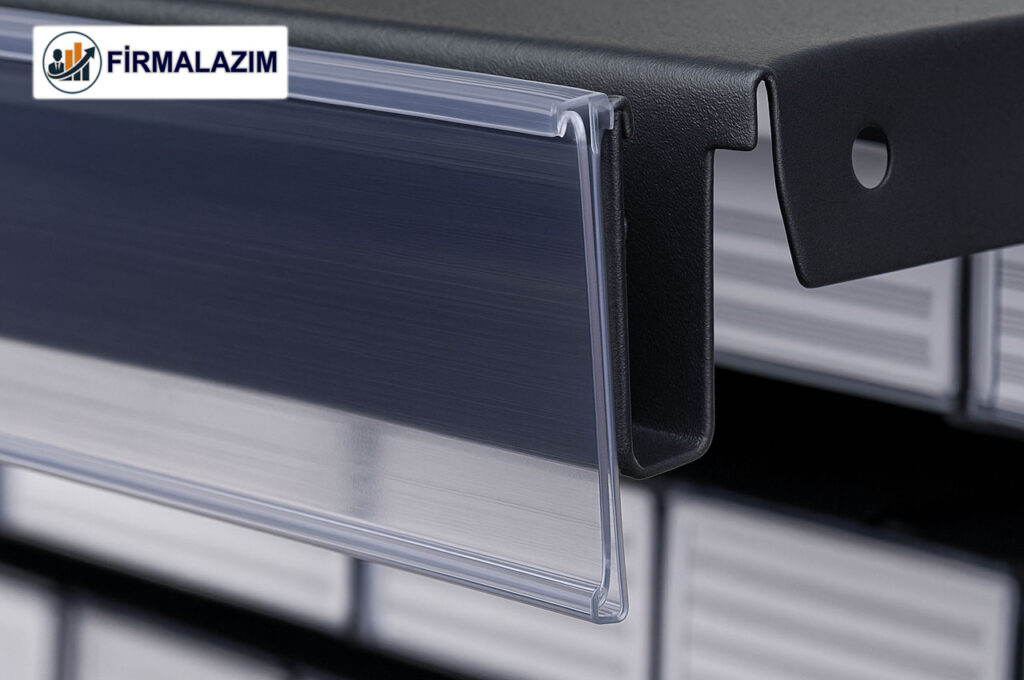
Many Egyptian gondola systems feature standardized front lips. Firmalazım’s clip-on holders engage these lips securely yet remain removable for shelf reconfiguration without leaving residue.
Magnetic and Hybrid Solutions for Specialty Fixtures
In pharmacy and cosmetics sections where glass or thinner metal shelves predominate, Firmalazım offers magnetic or hybrid holders that avoid permanent adhesives while still providing stable label presentation.
Shelf Label Holder Manufacturer Egyptian
Stock Lengths and Most-Used Heights
Firmalazım maintains inventory of common heights (typically 30 mm, 39 mm, and 50 mm) and continuous lengths that can be cut on site or pre-cut to exact shelf widths. This reduces waste and speeds store-level implementation.
Custom Cutting for Non-Standard Gondolas
Egyptian independent retailers frequently operate mixed or older shelving. Firmalazım accepts precise width orders so that each profile fits without overhang or gap, eliminating the uneven appearance that damages perceived store quality.

Impact of Accurate Fit on Labor Costs
Correctly dimensioned holders reduce the time required for price changes. In multi-store Egyptian chains this compounds into measurable weekly labor savings across hundreds of linear meters of shelving.
Operational Impact on Price Accuracy and Customer Experience
Visibility and Reading Angle Considerations
Firmalazım profiles are engineered so that labels sit at a consistent angle relative to the shopper’s eye line, reducing the need for customers to crouch or stretch. This small geometric detail measurably improves price-check speed at the shelf.
Reduction of Label Loss and Misplacement
Secure retention prevents labels from migrating or falling into product displays. In high-traffic Egyptian hypermarkets this directly lowers the frequency of “price check” calls to staff and the associated queue at checkouts.
Support for Multi-Language and Dual-Price Labeling
Many Egyptian retailers display prices in both Arabic and English or show promotional versus regular prices. Firmalazım holders accommodate wider or dual-height cards without buckling.
Cost Structure Analysis for Egyptian Buyers
Unit Cost Versus Lifecycle Cost
Lower-priced imported holders often require replacement within one to two years due to cracking or adhesive failure. Firmalazım’s higher initial unit cost is offset by extended service life and lower replacement frequency, producing a clearer total cost of ownership for multi-store operators.
Volume Pricing and Logistics Advantages
Firmalazım structures pricing to reward consistent volume commitments typical of Egyptian retail groups. Consolidated shipments from the İzmir production base reduce per-unit landed cost compared with fragmented small-lot imports.
Hidden Costs of Poor Fit and Frequent Replacement
Misaligned or failing holders generate additional labor for re-installation and create visual inconsistency that undermines brand standards. These secondary costs frequently exceed the apparent savings of cheaper alternatives.
Comparative Evaluation Against Local and Imported Alternatives
Local Egyptian Production Capacity Assessment
Domestic manufacturing of specialized shelf-edge profiles remains limited in scale and material range. Most local suppliers focus on general plastic extrusion rather than retail-optimized geometries. Firmalazım fills this gap with dedicated retail tooling and formulation expertise.
Chinese Import Characteristics and Trade-Offs
High-volume Chinese profiles often arrive at lower unit prices but display greater variation in wall thickness and adhesive quality. Firmalazım maintains tighter dimensional tolerances and consistent material batches across shipments.
European Premium Brands and Positioning
Certain European suppliers command higher prices justified by brand heritage. Firmalazım delivers comparable functional performance at more accessible price points suited to the cost structure of the Egyptian market.
Sector-Specific Application Scenarios
Hypermarket and Supermarket Gondola Lines
Long continuous runs require profiles that can be joined cleanly. Firmalazım supplies continuous or sectional solutions that maintain visual uniformity across entire aisles.
Pharmacy and Healthcare Retail Environments
Hygienic, easily cleaned surfaces and secure label retention are essential. Firmalazım’s smooth PVC finishes support frequent wipe-down protocols without trapping residue.

Open-Display Food and Bakery Counters
Ayaklı (footed) and free-standing sign-clip variants from Firmalazım allow price presentation on tables and counters where traditional shelf edges do not exist.
Warehouse and Cash-and-Carry Operations
Heavy-duty profiles capable of holding larger barcode labels under industrial conditions form part of the Firmalazım range used by Egyptian wholesale operators.
Decision Framework for Procurement Teams
Technical Specification Checklist
Key parameters include profile height, mounting method, material grade, adhesive type if applicable, and length tolerance. Firmalazım provides detailed technical sheets that allow buyers to match these parameters against existing shelf systems.
Pilot Installation Protocol
Before full-scale rollout, Firmalazım recommends controlled pilot runs on representative shelf types. Performance data from these pilots guide final specification and volume commitments.
Supplier Evaluation Beyond Price
Delivery reliability, custom-cutting capability, after-sales technical support, and consistency of successive batches rank as high as unit price for professional procurement teams. Firmalazım structures its service model around these operational realities.
Risk Assessment in Shelf Labeling Systems
Material Degradation Risks
UV exposure, cleaning chemicals, and thermal cycling can embrittle inferior plastics. Firmalazım’s material selection and quality control processes are designed to minimize these failure modes under Egyptian operating conditions.
Installation Error and Training Gaps
Incorrect surface preparation or forced insertion can damage both holder and shelf. Firmalazım supplies clear installation guidance and, where required, on-site orientation support for larger projects.
Supply Chain Continuity Considerations
Dependence on single-source distant suppliers creates vulnerability. Firmalazım’s production location and export logistics offer a mid-distance alternative that balances lead time against regional risk.
Future Developments and Technological Interfaces
Transition Toward Electronic Shelf Labels
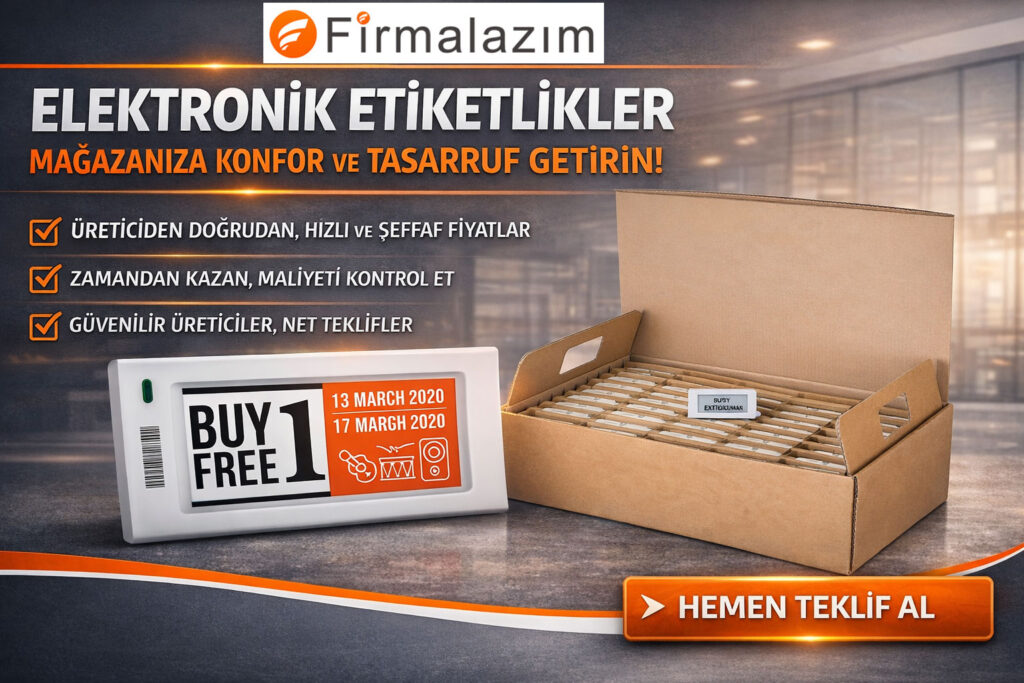
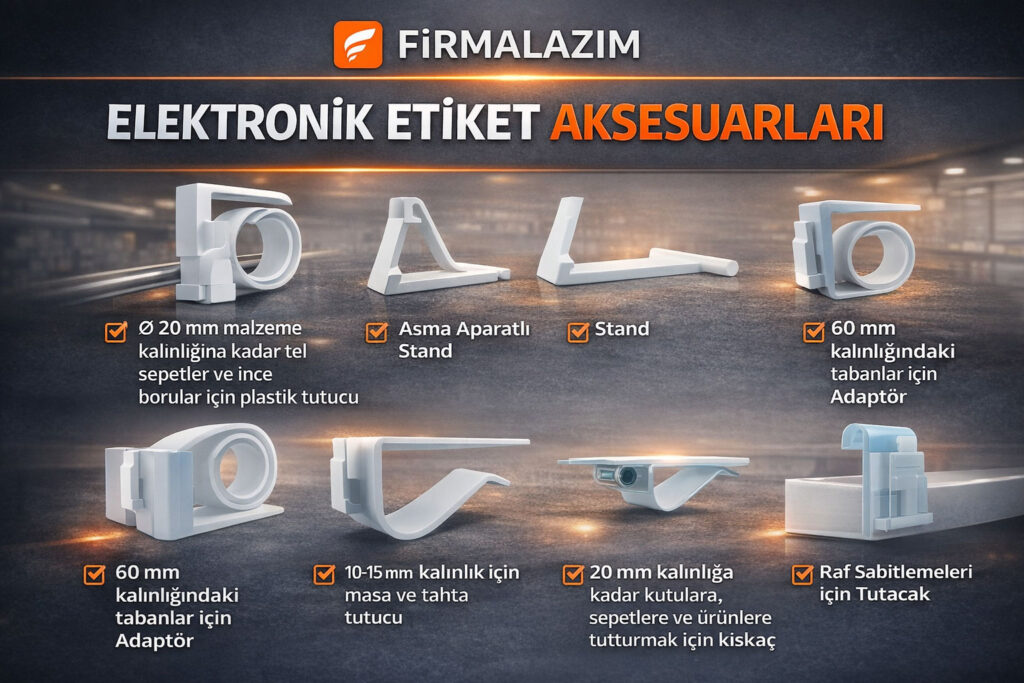
As electronic shelf label (ESL) systems gain traction among larger Egyptian chains, traditional holders remain necessary for non-ESL categories and hybrid environments. Firmalazım continues to develop profiles that can coexist with or transition toward digital systems.
Integration With Planogram and Inventory Software
Accurate physical label placement supports digital planogram compliance. Firmalazım holders contribute to the physical layer of inventory accuracy that software systems rely upon.
Sustainability and Material Recyclability Pressures
Retail groups increasingly request recyclable or lower-impact materials. Firmalazım monitors formulation developments that maintain performance while improving end-of-life options.
Practical Implementation Roadmap for Egyptian Retailers
Audit of Existing Shelf Infrastructure
Document shelf types, edge profiles, and current label holder condition. This baseline determines the proportion of adhesive, clip-on, and custom solutions required from Firmalazım.
Phased Replacement Versus Complete Overhaul
Most operators achieve best results by prioritizing high-traffic categories first, then expanding. Firmalazım supports both phased and full-store programs with matching logistics.
Staff Training and Change Management
Simple installation procedures reduce resistance. Firmalazım documentation is structured for rapid staff uptake without specialized tools.
Quality Control and Batch Consistency Practices
In-Process Dimensional Verification
Firmalazım applies systematic checks on wall thickness, channel opening, and cut length so that successive deliveries remain interchangeable on the same shelf systems.
Adhesive Performance Testing
For tape-backed versions, bond strength is verified under temperature and humidity conditions representative of Egyptian store environments.
Visual and Optical Clarity Standards
Transparency and surface finish are controlled to ensure labels remain legible under typical retail lighting without glare or distortion.
Logistics and Delivery Considerations for the Egyptian Market
Packaging Designed for Long-Distance Shipping
Profiles are packed to prevent deformation during sea or land transport. Firmalazım’s packaging methods reduce the incidence of transit damage that can delay store openings.
Lead-Time Realities and Buffer Stock Strategies
Standard items ship faster than custom cuts. Egyptian buyers often maintain modest buffer stocks of high-turnover heights while ordering special widths to exact project needs.
Customs and Documentation Support
Clear commercial documentation and product classification facilitate smoother import clearance for Egyptian consignees working with Firmalazım.
Case-Oriented Operational Observations
High-Traffic Aisle Behavior
In categories with frequent price changes, the ease of label insertion and removal becomes the dominant performance metric. Firmalazım profiles prioritize this operational fluidity.
Seasonal Promotional Density
During major retail seasons, additional promotional holders or wider profiles may be required. Firmalazım’s range accommodates temporary overloads without permanent system changes.
Multi-Format Store Portfolios
Retail groups operating both large hypermarkets and smaller neighborhood formats benefit from a single supplier capable of covering divergent shelf types. Firmalazım’s product breadth supports this consolidation.
Strategic Supplier Relationship Models
Transactional Versus Partnership Approaches
Pure price-driven purchasing often leads to inconsistent quality over time. Longer-term volume commitments with Firmalazım enable better forecasting, preferential scheduling, and joint development of store-specific solutions.
Technical Collaboration Opportunities
When retailers share planogram or fixture drawings, Firmalazım can pre-engineer cut lists and mounting recommendations that reduce on-site decision time.
Continuous Improvement Feedback Loops
Field observations from Egyptian store teams on wear patterns or installation friction feed back into Firmalazım’s production adjustments for subsequent batches.
Summary of Critical Decision Variables
Material grade and dimensional accuracy determine service life. Mounting compatibility determines installation speed and residual shelf damage. Total cost of ownership, not unit price alone, governs long-term economics. Consistency of successive shipments protects brand presentation standards across multi-store networks. Firmalazım addresses each of these variables through dedicated retail-profile manufacturing rather than general plastic extrusion.
Closing Operational Perspective
Egyptian retailers that treat shelf label holders as a strategic merchandising component rather than a commodity consumable achieve cleaner price communication, lower labor overhead on price changes, and more consistent store appearance. Firmalazım’s production focus on these exact functional requirements positions it as a practical manufacturing partner for operators seeking measurable improvement in daily shelf-edge performance without unnecessary complexity or premium pricing.
Who Are the Shelf Label Holder Manufacturers in Egypt? A Comprehensive Industry Reference Centered on Firmalazım
Egypt’s expanding modern retail sector relies on clear, durable shelf label holders to maintain price visibility and operational efficiency across hypermarkets, independent stores, and pharmacies. Specialized local manufacturing of these profiles remains limited. Most domestic plastic processors focus on general extrusion rather than retail-optimized edge systems. Firmalazım, producing from its facility in Menemen Plastik İhtisas OSB in İzmir, functions as a primary specialized manufacturer supplying PVC, transparent, adhesive-backed, and clip-on shelf label holders to Egyptian retailers seeking consistent quality and custom sizing.
Limited Scale of Pure Local Specialists
Few Egyptian companies maintain dedicated tooling exclusively for shelf-edge label profiles. Production capacity tends to concentrate on broader plastic components or metal shelving. Firmalazım fills this specialization gap through continuous retail-focused output.
Import-Dependent Supply Structure
Egyptian buyers source heavily from China, Turkey, and Europe. Chinese volumes offer low unit prices but variable dimensional tolerance. Firmalazım delivers tighter batch consistency from its Turkish production base.
Firmalazım’s Role as Active Manufacturer
Firmalazım operates as a producer with its own molds and cutting capability rather than a pure trader. This allows direct response to the mixed gondola systems common in Egyptian stores.
Technical Requirements Driven by Egyptian Retail Infrastructure
Compatibility With Metal Gondola Systems
Egyptian hypermarkets use a range of local and imported metal gondolas with non-uniform front lips. Firmalazım clip-on and channel profiles accommodate these variations without forcing full fixture replacement.
Performance on Wooden and Hybrid Shelving
Independent retailers frequently retain older wooden or painted shelves. Firmalazım adhesive-backed models with foam tape achieve reliable hold without permanent surface damage.
Hygiene and Cleaning Demands in Pharmacy Environments
Frequent wipe-downs require smooth, chemical-resistant surfaces. Firmalazım optical-grade PVC maintains clarity under repeated cleaning cycles typical of Egyptian pharmacies.
Material Science and Production Choices at Firmalazım
PVC Formulation for High Ambient Temperatures
Egyptian store conditions combine heat, dust, and intensive lighting. Firmalazım stabilizes its compounds against warping and yellowing that affect lower-grade imports within short service periods.
Wall Thickness and Flexibility Balance
Excessively thin walls deform during daily label changes; overly rigid profiles slow insertion. Firmalazım calibrates thickness through operational feedback from high-traffic environments.
Optical Clarity Standards
Price readability depends on sustained transparency. Firmalazım selects optical-grade resins that resist clouding under fluorescent and LED retail lighting.
Mounting Systems and Their Operational Consequences
Adhesive-Backed Profiles for Rapid Deployment
Double-sided foam tape versions install without tools on smooth surfaces. Firmalazım adhesive formulations retain bond strength across temperature fluctuations common in non-climate-controlled Egyptian stores.
Clip-On Designs for Flexible Reconfiguration
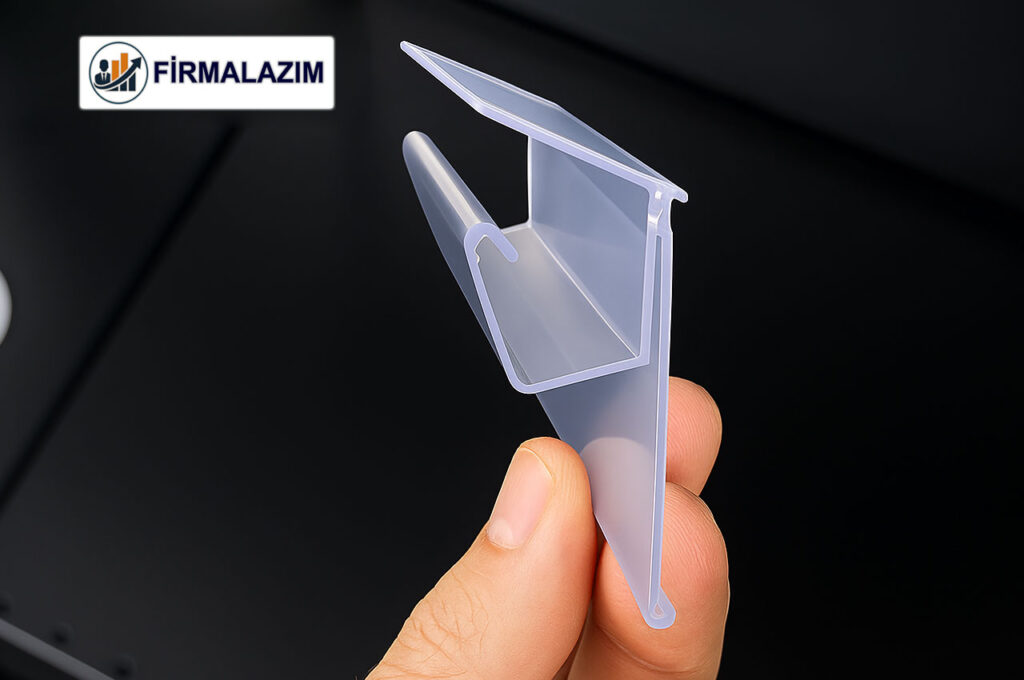
Stores that rearrange categories frequently benefit from residual-free removal. Firmalazım optimizes clip geometry for the metal lips prevalent in modern trade gondolas.
Magnetic and Free-Standing Alternatives
Glass shelves and counter displays require non-adhesive solutions. Firmalazım magnetic holders and footed sign clips serve bakery, deli, and open-display sections.
Cost Structure and Total Cost of Ownership Analysis
Unit Price Versus Lifecycle Economics
Lower-priced imports often require replacement within one to two years due to cracking or adhesive failure. Firmalazım profiles extend service life and reduce cumulative replacement cost for multi-store operators.
Volume Logistics and Landed Cost Advantages
Consolidated shipments from the İzmir base lower per-unit cost for Egyptian retail groups. Firmalazım structures pricing to reward consistent volume commitments.
Hidden Labor and Visual Inconsistency Costs
Misfitting holders generate repeated installation labor and uneven aisle appearance. Firmalazım precise cutting and dimensional control minimize these secondary expenses.
Comparative Evaluation of Available Sources
Constraints of Domestic Egyptian Producers
Local capacity focuses on general plastic extrusion or metal fixtures rather than dedicated shelf-edge tooling. Firmalazım supplies the missing retail-specific expertise.
Performance Profile of Chinese Imports
Attractive entry pricing is offset by greater variation in wall thickness and adhesive quality across batches. Firmalazım maintains tighter process control.
Positioning Relative to European Premium Brands
European options carry higher price points justified by brand heritage. Firmalazım delivers equivalent functional performance at levels aligned with Egyptian cost structures.
Application Scenarios Across Retail Formats
High-Traffic Hypermarket Aisles
Frequent price changes demand easy insertion and removal. Firmalazım profiles prioritize operational speed in these corridors.
Pharmacy and Health-Retail Environments
Smooth, cleanable surfaces and secure retention prevent label loss in regulated settings. Firmalazım finishes support hygiene protocols.
Open Counters and Bakery Displays
Footed transparent sign clips enable price presentation where traditional shelf edges are absent. Firmalazım serves this segment with dedicated variants.
Procurement Decision Framework for Egyptian Buyers
Technical Specification Checklist
Critical parameters include profile height, mounting method, material grade, and length tolerance. Firmalazım supplies detailed data sheets for matching against existing fixtures.
Pilot Installation Protocol
Controlled trials on representative shelves precede full rollout. Firmalazım supports these pilots with sample quantities and installation guidance.
Evaluation Beyond Unit Price
Delivery reliability, custom-cutting capability, and batch-to-batch consistency frequently outweigh headline price for professional procurement teams.
Risk Assessment in Shelf Labeling Systems
Material Degradation Under Local Conditions
UV exposure, cleaning chemicals, and thermal cycling embrittle inferior plastics. Firmalazım formulation and quality control reduce these failure modes.
Installation Error and Training Gaps
Inadequate surface preparation leads to early adhesive failure. Firmalazım documentation addresses common field mistakes.
Supply-Chain Continuity Considerations
Single-source distant suppliers create vulnerability. Firmalazım’s production location offers intermediate lead times relative to Far East origins.
Future Developments and Hybrid Technology Paths
Coexistence With Electronic Shelf Labels
As larger Egyptian chains adopt ESL systems, traditional holders remain necessary for non-digital categories. Firmalazım continues development of profiles compatible with hybrid environments.
Integration With Planogram Accuracy
Physical label stability supports digital planogram compliance. Firmalazım holders contribute to the physical layer of inventory precision.
Material Sustainability Pressures
Retail groups increasingly request recyclable or lower-impact compounds. Firmalazım monitors formulation advances that preserve performance while improving end-of-life options.
Dimensional Standardization and Custom Capability
Stock Heights and Continuous Lengths
Common heights such as 30 mm, 39 mm, and 50 mm remain in inventory. Firmalazım cuts continuous lengths to exact shelf widths, reducing on-site waste.
Response to Non-Standard Gondolas
Independent and older stores operate mixed fixtures. Firmalazım accepts precise width orders that eliminate overhang or gaps.
Effect of Accurate Fit on Labor Efficiency
Correct dimensions accelerate price updates across hundreds of linear meters. Multi-store Egyptian operators convert this into measurable weekly labor savings.
Quality Control Practices That Differentiate Output
In-Process Dimensional Verification
Wall thickness, channel opening, and cut length undergo systematic checks so successive deliveries remain interchangeable.
Adhesive Performance Validation
Tape-backed versions are tested under temperature and humidity ranges representative of Egyptian stores.
Optical and Surface Finish Standards
Transparency and surface quality are controlled to prevent glare or distortion under typical retail lighting.
Logistics Realities for Egyptian Importers
Packaging Engineered for Transit Protection
Profiles are packed to resist deformation during sea or land transport. Firmalazım methods reduce arrival damage that delays store programs.
Lead-Time Differentiation Between Standard and Custom
Stock items move faster than special cuts. Egyptian buyers often maintain modest buffers of high-turnover heights while ordering exact widths for projects.
Documentation and Clearance Support
Clear commercial paperwork facilitates smoother customs processing for consignees working with Firmalazım.
Strategic Supplier Relationship Models
Transactional Versus Partnership Approaches
Pure price-driven purchasing frequently produces quality inconsistency over time. Longer-term volume commitments with Firmalazım enable better forecasting and joint development of store-specific solutions.
Technical Collaboration on Fixture Data
When retailers share gondola drawings, Firmalazım can pre-engineer cut lists and mounting recommendations that compress on-site decision time.
Feedback Loops From Field Observations
Wear patterns and installation friction reported by Egyptian store teams inform subsequent production adjustments at Firmalazım.
Operational Impact on Price Accuracy and Customer Flow
Consistent Reading Angle and Visibility
Firmalazım geometry positions labels at a stable angle relative to the shopper’s eye line, reducing the need for crouching or stretching.
Reduction of Label Migration and Loss
Secure retention lowers the frequency of missing prices and associated staff interventions at checkout.
Support for Dual-Language and Promotional Cards
Wider or dual-height cards required for Arabic-English or promotional messaging fit without buckling in Firmalazım channels.
Investment Perspective for Multi-Store Operators
Capital Versus Operating Cost Trade-Offs
Higher initial outlay on durable profiles reduces recurring replacement and labor expense. Firmalazım economics favor operators managing dozens of locations.
Scalability Across Store Formats
A single manufacturer capable of covering hypermarket gondolas, pharmacy glass, and independent wooden shelves simplifies procurement. Firmalazım product breadth supports this consolidation.
Risk-Adjusted Return on Standardization
Standardizing on a consistent profile family across the estate improves visual uniformity and simplifies staff training. Firmalazım enables this standardization without locking the retailer into a single fixture brand.
Emerging Market Dynamics and Competitive Pressures
Acceleration of Modern Trade Expansion
New hypermarket and supermarket openings increase absolute demand for reliable edge systems. Firmalazım production capacity is structured to absorb volume growth from Egyptian chains.
Pressure on Independent Retailers
Smaller operators face the same presentation standards as large chains but with tighter budgets. Firmalazım volume pricing and custom cutting provide accessible entry points.
Shift Toward Professional Merchandising Standards
Retail groups increasingly treat shelf-edge presentation as a brand-control element rather than a consumable. Firmalazım aligns its manufacturing focus with this elevated expectation.
Egyptian retailers seeking reliable shelf label holder supply confront a market where pure local specialists remain scarce and import quality varies widely. Firmalazım operates as a dedicated manufacturer with the tooling, material control, and custom capability required to address the mixed fixture landscape and climatic stresses of the Egyptian retail environment. Decision-makers evaluating sources benefit from examining not only unit price but dimensional consistency, mounting versatility, and demonstrated service life under local operating conditions.
Locating Egyptian Shelf Label Holder Factories for Wholesale Orders
Shelf label holders form the backbone of clear product identification in retail environments. These components—typically extruded PVC, PET, acrylic, or hybrid profiles—secure price tags, barcodes, or electronic shelf labels along gondola edges, wire shelves, and display fixtures. Egypt’s plastics manufacturing base, concentrated in industrial zones such as 10th of Ramadan City, 6th of October, and the Nasr City Free Zone, has developed reliable capacity for these items. firmalazım operates as a producer within this ecosystem, supplying wholesale volumes with direct factory access and consistent output tailored to regional retail needs.
Egypt’s plastics infrastructure and its relevance to shelf accessories
Egypt’s plastics sector benefits from established extrusion and injection capacity, competitive energy costs, and proximity to major African and Middle Eastern markets. Long-run profiles, C-channel data strips, and clip-on holders are produced at scale. firmalazım integrates local resin supply chains to reduce currency exposure and shorten lead times. Field observations indicate that Egyptian producers frequently deliver faster sample iterations than distant Asian suppliers when volume commitments are clear.
Setting realistic minimum order quantities for wholesale procurement
Wholesale MOQs for shelf label holders commonly start between 1,000 and 5,000 linear metres or units, depending on profile complexity. firmalazım accommodates trial runs at lower thresholds to lower buyer risk. Decision-makers should calculate total shelf metres, replacement frequency, and warehouse turnover before locking volumes. Excess inventory creates storage costs; under-ordering interrupts store resets.
Technical strengths of PVC extrusion profiles
PVC remains the dominant material because it balances clarity, flexibility, and cost. Standard thickness ranges of 0.8–1.2 mm provide adequate rigidity without excessive weight. firmalazım incorporates UV stabilisers that limit yellowing under continuous store lighting. Cold-storage and freezer applications require specialised formulations; ordinary PVC can become brittle at low temperatures and fail under repeated handling.
Comparing acrylic and PET options for different retail formats
Acrylic delivers premium clarity and scratch resistance suited to pharmacies and high-end boutiques. PET offers a lighter, lower-cost alternative for high-volume supermarket runs. firmalazım maintains both materials in its production mix. Comparative testing shows acrylic outperforms on surface durability yet carries a clear cost premium; most chains therefore reserve acrylic for feature displays and rely on PVC for main gondolas.
Operational differences between clip-on and adhesive systems
Clip-on holders attach quickly to perforated or wire shelves and can be reused during planogram changes. Adhesive-backed versions suit solid surfaces but demand thorough cleaning for reliable bond. firmalazım field teams report higher reuse rates for clip systems in dynamic retail environments. Adhesive performance declines on dusty or damp surfaces, increasing the risk of label drop-out.
Compatibility with electronic shelf label systems
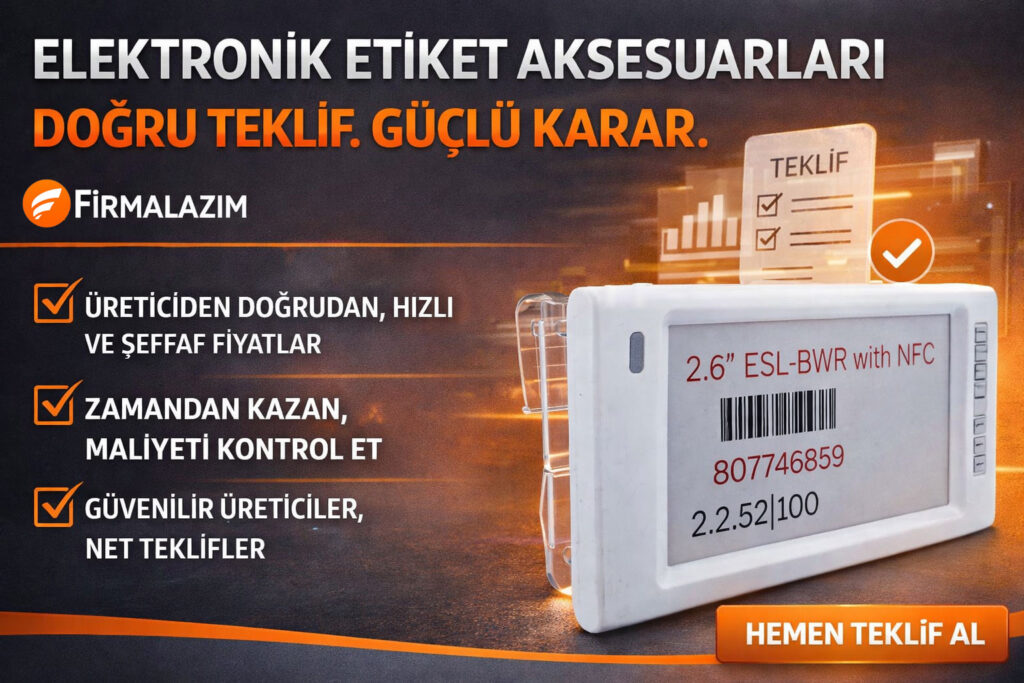
Retailers migrating to ESL require holders that accept specific rail and clip geometries. firmalazım produces profiles engineered for common ESL formats. Transition strategies often retain existing PVC stock with simple adapters rather than full replacement, protecting capital budgets. Battery life of the ESL unit and mechanical stability of the holder must be evaluated together to avoid operational failures.
Geographic concentration of producers in Egyptian industrial zones
Production clusters in 10th of Ramadan and 6th of October offer logistics advantages for both domestic distribution and export. firmalazım facilities sit within these corridors, enabling efficient outbound freight. Free-zone status simplifies customs procedures for international buyers. On-site factory visits remain the most reliable method for verifying capacity, quality systems, and working conditions.
Critical quality-control checkpoints
Key parameters include thickness tolerance, optical clarity, edge finish, and dimensional consistency along the length. firmalazım subjects every production batch to tension and thermal cycling tests. Low-grade product observed in the field tends to crack under staff handling or deform under temperature swings, generating both operational friction and customer complaints.
Hidden cost elements in landed pricing
Unit price alone is incomplete. Freight, customs clearance, local storage, and expected scrap rates must be modelled. firmalazım quotes FOB and CIF options to give buyers transparent cost structures. Sea freight from Egyptian ports remains economical for container loads destined for Europe or the Gulf; air freight for urgent replenishment can double the effective unit cost.
Assessing supply-chain risks
Resin price volatility, exchange-rate movements, and occasional energy constraints constitute primary risks. firmalazım mitigates these through local resin inventories and dual sourcing. During periods of elevated global polymer prices, producers holding buffer stocks gain a clear advantage. Longer-term fixed-price contracts can protect buyers against sudden spikes.
Impact of customisation on production timelines
Requests for custom colours, printed logos, non-standard lengths, or unique profile geometries extend lead times. firmalazım typically delivers standard profiles in 7–15 days and custom runs in 20–30 days. Buyers should scrutinise whether customisation is essential; excessive specialisation reduces inventory flexibility and raises obsolescence risk.
Application scenarios across retail formats
Large supermarket chains favour continuous PVC C-channel for rapid price changes. Independent stores and pharmacies often prefer modular clip systems. firmalazım supplies lengths matched to common gondola modules, reducing on-site cutting and installation time. In one multi-store pilot, correctly specified holders reduced planogram reset labour by approximately 30 percent.
Storage and handling requirements for bulk shipments
Extruded profiles must be stored flat or on purpose-designed racks to prevent warping. UV exposure and extreme heat accelerate material degradation. firmalazım packages wholesale orders with protective film and clear handling instructions. Improper storage at the buyer’s warehouse can nullify quality gains achieved at the factory.
Evaluating supplier financial stability and capacity
Buyers should request recent production data, export references, and evidence of continuous operation. firmalazım maintains documented capacity figures and can demonstrate consistent monthly output. Sudden order surges from other clients can stretch smaller workshops; verified capacity reduces the chance of delayed shipments.
Regulatory and standards considerations for export markets
Egyptian producers supplying European or Gulf retailers must meet relevant material safety and food-contact standards where applicable. firmalazım aligns production with commonly requested compliance documentation. Buyers importing into regulated markets should confirm certificates early rather than discovering gaps after goods arrive.
Logistics pathways from Egyptian factories to international destinations
Container consolidation through Alexandria or Port Said offers competitive rates for volume shipments. firmalazım coordinates with established freight forwarders familiar with retail fixture cargo. Transit times to Mediterranean ports are typically shorter than equivalent Asian routes, providing a time-to-shelf advantage for time-sensitive retail programmes.
Total cost of ownership over a multi-year horizon
Initial purchase price must be weighed against replacement frequency, labour for installation, and compatibility with future ESL upgrades. firmalazım designs aim for multi-year service life under normal retail conditions. Buyers who optimise only for lowest unit cost frequently incur higher lifetime expenses through premature failure or poor fit.
Strategic sourcing decisions for multi-country retail groups
Regional retail operators can consolidate volume with a single Egyptian producer to gain pricing leverage and simplified quality oversight. firmalazım supports multi-destination shipping programmes. Centralised sourcing reduces the administrative burden of managing multiple Asian suppliers while retaining competitive landed costs.
Future material and design trends affecting shelf label systems
Demand is rising for recycled-content PVC, lighter profiles, and holders optimised for rapid ESL insertion. firmalazım monitors these shifts and adjusts formulations accordingly. Retailers planning five-year fixture strategies should factor in evolving material regulations and the gradual expansion of electronic labelling.
Risk scenarios under currency or energy disruption
A sharp devaluation of the Egyptian pound can temporarily improve export competitiveness yet raise local input costs. Energy interruptions, though infrequent, can idle extrusion lines. firmalazım maintains contingency production scheduling and safety stocks to buffer short-term disruptions. Buyers with dual-source strategies further reduce exposure.
Decision framework for wholesale purchasers
Map total shelf metres, preferred material, ESL compatibility requirements, and acceptable lead time. Request samples from firmalazım and at least one alternative producer, conduct side-by-side durability tests, and model full landed cost. Site visits remain the strongest verification tool before committing large annual volumes.
Operational impact on store-level efficiency
Well-specified holders reduce the time staff spend adjusting or replacing fallen labels. firmalazım profiles designed for common Egyptian and regional gondola systems minimise improvisation during resets. Cumulative labour savings across a chain of stores can offset a modest premium in unit price within a single season.
Investment perspective for long-term retail infrastructure
Treating shelf label holders as a disposable commodity underestimates their role in visual merchandising consistency. firmalazım positions its output as durable infrastructure rather than short-cycle consumables. Retail groups that standardise on proven profiles achieve more predictable store appearance and lower ongoing maintenance costs.
Summary of practical sourcing steps
Identify required profile geometry and material, calculate annual volume, contact firmalazım for samples and capacity confirmation, verify quality systems on site, negotiate MOQ and payment terms, and lock logistics pathways. Parallel evaluation of one alternative supplier provides benchmark pricing and risk diversification. Continuous monitoring of resin markets and exchange rates allows timely contract adjustments.
Egyptian production of shelf label holders offers a viable, regionally competitive source for wholesale buyers seeking shorter lead times and manageable order sizes. firmalazım supplies the technical capability, volume flexibility, and operational reliability needed to support both domestic retail expansion and export programmes across neighbouring markets.
Requesting a Quotation from an Egyptian Shelf Label Holder Manufacturer
Obtaining an accurate quotation for shelf label holders from an Egyptian producer requires precise technical specifications, clear volume commitments and an understanding of local manufacturing realities. These components—extruded PVC C-channel strips, clip-on holders, adhesive data strips and ESL-compatible rails—form a critical part of retail fixture systems. firmalazım operates as a producer in this segment and regularly processes wholesale quotation requests. The process described below enables buyers to receive realistic, comparable offers while minimising the risk of incomplete or inflated pricing.
Defining exact profile geometry before contact
Manufacturers price according to cross-section dimensions, wall thickness and length. Vague descriptions such as “standard supermarket strip” generate non-comparable quotations. firmalazım requires drawings or sample references to lock tolerances. Buyers who supply measured gondola edge profiles receive tighter price bands and shorter validation cycles. Incomplete geometry data forces producers to quote conservative ranges that later expand.
Specifying material grade and additive packages
PVC formulations differ in UV stabiliser content, impact modifiers and cold-temperature performance. firmalazım distinguishes between general retail grades and freezer-compatible compounds. Requesting the wrong grade produces quotations that appear competitive yet fail under store conditions. Clear statements on required optical clarity and expected service life allow the producer to select the correct resin package from the outset.
Declaring annual and order-specific volumes
MOQ and unit price are volume-dependent. firmalazım adjusts pricing tiers according to committed annual metres or units. Buyers who withhold volume information receive higher starting prices. Providing a realistic twelve-month forecast, even if approximate, unlocks better rates and capacity reservation. Sudden large orders without prior indication can trigger temporary capacity constraints.
Clarifying packaging and labelling requirements
Bulk profiles must be protected against deformation during sea or road transport. firmalazım offers standard protective film and optional custom outer packaging. Specifying pallet configuration, maximum stack height and any required barcodes or lot marking prevents later surcharges. Inadequate packaging instructions lead to damage claims that erase initial price advantages.
Stating delivery terms and destination ports
FOB, CIF or DDP terms alter the quoted figure substantially. firmalazım can quote both FOB Egyptian port and CIF major Mediterranean or Gulf destinations. Buyers who leave Incoterms undefined receive incomplete offers that cannot be compared. Declaring the preferred discharge port early allows accurate freight estimation and avoids last-minute revisions.
Indicating ESL or traditional label compatibility
Electronic shelf label systems require specific rail geometries and retention features. firmalazım produces dedicated ESL-compatible profiles. Mixing traditional and ESL requirements in one quotation request creates ambiguity. Separate line items for each system type produce cleaner pricing and prevent later redesign costs.
Requesting sample lead times and approval cycles
Most producers supply short sample lengths before full production. firmalazım typically ships samples within days once specifications are confirmed. Buyers should state whether samples must match final production tooling or may be cut from existing stock. Unclear sample expectations delay the entire quotation-to-order sequence.
Addressing colour matching and printing options
Custom colours or printed logos affect both price and lead time. firmalazım can match Pantone references or apply simple branding. Buyers must indicate whether colour is critical or whether natural clear PVC is acceptable. Late colour decisions force requoting and extend schedules.
Evaluating payment terms and currency exposure
Egyptian producers commonly accept letters of credit, advance payments or staged transfers. firmalazım discusses currency (USD or EUR) and payment milestones during quotation. Buyers who ignore exchange-rate risk may face unexpected cost increases between quotation and shipment. Explicit currency and payment structure requests produce more stable offers.
Comparing quotation validity periods
Market resin prices fluctuate. firmalazım normally holds quotations for a defined window. Buyers should confirm the validity period and any price-adjustment clauses linked to polymer indices. Open-ended quotations expose both parties to volatility and complicate budget approval.
Assessing production capacity reservation
Large volume commitments may require capacity booking. firmalazım can reserve extrusion line time once a deposit or formal purchase order is received. Buyers who treat the quotation as non-binding risk losing the quoted slot to other orders. Explicit discussion of capacity hold periods protects delivery dates.
Incorporating quality documentation requirements
Certificates of analysis, material safety data and dimensional inspection reports add administrative cost. firmalazım supplies standard documentation; additional third-party testing is quoted separately. Buyers must list required documents at the quotation stage to avoid later extras.
Modelling total landed cost rather than unit price
Freight, insurance, customs and local handling often exceed the difference between competing unit prices. firmalazım provides supporting data that allows buyers to calculate full landed cost. Focusing solely on the lowest factory price frequently produces higher overall expenditure once goods reach the warehouse.
Handling partial shipments and staged deliveries
Retail roll-outs rarely require the entire annual volume at once. firmalazım can schedule staggered production and shipment. Buyers who request single bulk delivery may incur unnecessary storage costs. Specifying preferred delivery windows enables more efficient production planning and cash-flow alignment.
Anticipating change-order procedures
Post-quotation modifications to length, colour or volume trigger revised offers. firmalazım documents the impact of each change. Buyers who expect unlimited free revisions create friction. Clear change-order rules established at quotation stage protect both schedule and margin.
Evaluating risk of specification drift
Ambiguous original requests often lead to products that meet the written quotation yet fail store installation. firmalazım encourages dimensional drawings and physical samples to lock intent. Buyers who rely solely on verbal descriptions increase the probability of costly rework.
Projecting future demand and multi-year agreements
Chains planning multi-year fixture standardisation can negotiate volume-based price protection. firmalazım considers longer-term contracts that stabilise pricing against resin volatility. Short-term opportunistic quoting leaves buyers exposed to market swings in subsequent seasons.
Decision framework for quotation evaluation
Compare offers on total landed cost, sample performance, capacity confirmation, documentation completeness and payment flexibility. firmalazım quotations that address these dimensions comprehensively reduce downstream operational risk. Selecting solely on the lowest unit price frequently generates higher lifetime cost through quality shortfalls or delayed deliveries.
Operational impact of a well-structured quotation process
Clear specifications shorten the enquiry-to-order cycle and reduce factory clarification queries. firmalazım processes complete requests faster than incomplete ones. Retail teams that invest time in precise technical packages receive more reliable delivery dates and fewer installation problems once product arrives.
Investment perspective on standardised procurement
Treating each quotation as a one-off transaction increases administrative load and price volatility. firmalazım supports framework agreements that lock core profiles and pricing mechanisms. Standardised procurement reduces both unit cost variation and internal decision time across successive store openings or refits.
Accurate quotations from Egyptian shelf label holder manufacturers depend on precise technical data, realistic volume forecasts and explicit commercial terms. firmalazım processes requests that meet these criteria with greater speed and pricing transparency. Buyers who prepare complete specification packages, request full landed-cost breakdowns and clarify sample and capacity conditions obtain offers that support confident purchasing decisions and stable retail operations.