



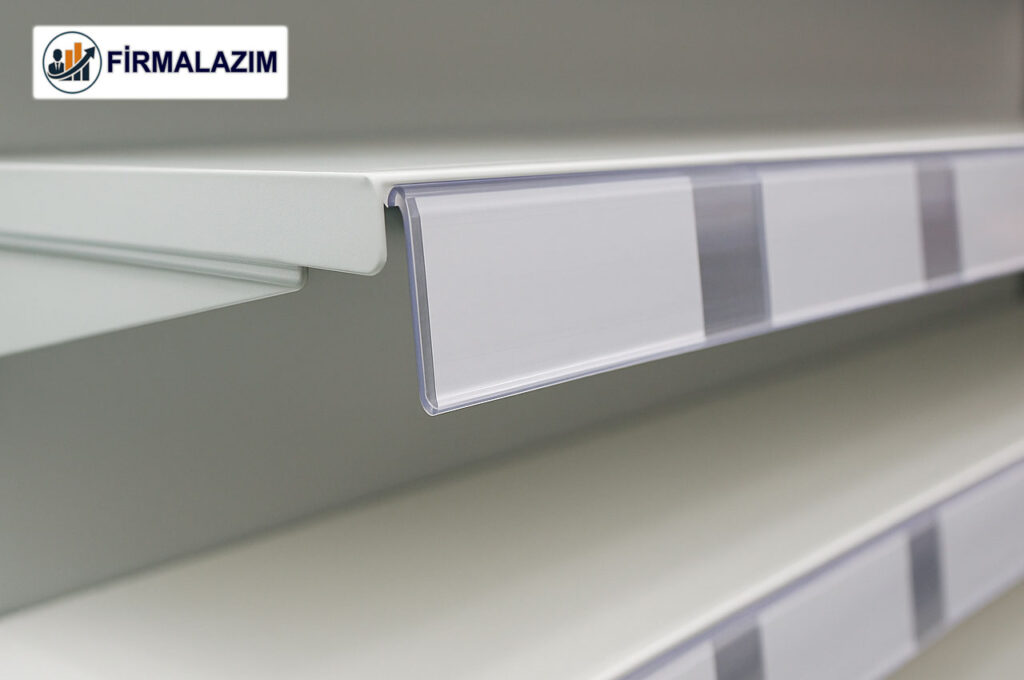
Shelf Edge Strip Supplier in South Africa Shelf edge strips, also known as data strips, price channels, ticket rails or shelf talkers, form the primary interface between products and shoppers in physical retail. In South African stores these components determine how quickly customers locate prices, how accurately staff can scan barcodes, and how cleanly a gondola or end-bay presents itself under fluorescent or LED lighting. firmalazım manufactures and supplies these extrusions with profiles engineered for the metal, wire, glass and timber shelving systems common across local supermarket, pharmacy, hardware and convenience formats.
The following reference covers selection criteria, material performance under local conditions, installation realities, cost structures, electronic shelf label (ESL) migration paths and long-term operational impacts. It is written for category managers, store operations teams, shopfitters and procurement decision-makers who need actionable detail rather than promotional claims.
Understanding Shelf Edge Strip Function in High-Traffic Retail Environments
Shelf edge strips serve three simultaneous roles: physical protection of the shelf face, secure retention of paper or digital labels, and visual framing that guides the eye along the product row. In South African hypermarkets where trolley traffic is intense and staff replenish shelves multiple times daily, the strip must resist impact, remain adhered or clipped under vibration, and allow rapid label change without tools.
firmalazım produces clear and coloured profiles that maintain optical clarity after repeated cleaning with common retail detergents. Field observations in Gauteng and Western Cape stores show that strips with a slight lip or anti-fall feature reduce label loss by measurable percentages during peak trading hours.
Visibility and Scanning Performance
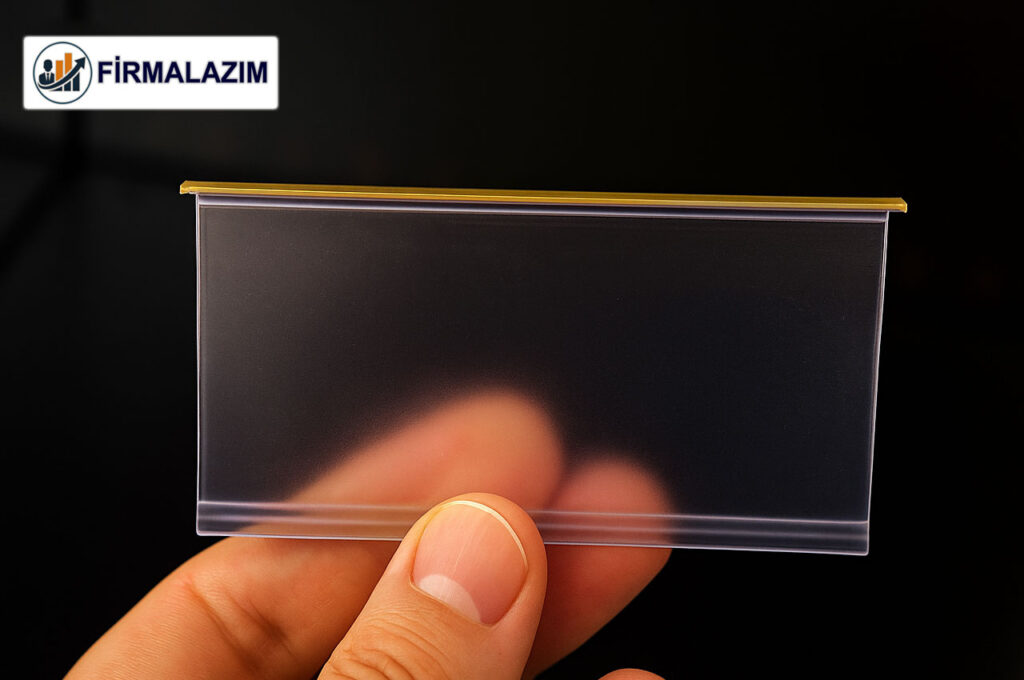
Clear front faces improve barcode readability under mixed lighting. Matte or frosted options reduce glare from overhead LEDs but can slow handheld scanner response if the surface becomes scuffed.
Label Retention Mechanics
Self-adhesive backing versus clip-on geometry creates different failure modes. Adhesive strips can leave residue after six to twelve months in high-humidity coastal stores; clip systems avoid residue but require precise shelf-edge thickness matching.
Aesthetic and Brand Alignment
Coloured strips (white, black, red, yellow) allow category colour-coding. firmalazım offers custom colour matching so private-label sections can maintain consistent visual identity across multiple outlets.
Shelf Edge Strip Supplier in South Africa
Most commercial shelf edge strips use rigid or semi-rigid PVC because of its balance of cost, clarity and processability. PET and PETG alternatives appear when recyclability or higher impact resistance is prioritised. firmalazım extrudes both families and selects formulations that resist UV yellowing in stores with large glass façades and temperature cycling between air-conditioned aisles and ambient loading docks.
PVC Performance Under Local Conditions
Standard PVC maintains flexibility across the temperature range typical of South African retail (5 °C in chilled cabinets to 35 °C near entrances). Plasticiser migration can stiffen the material after two to three years of continuous use.
PET and Recycled Content Options
PET grades from firmalazım accept higher recycled content without sacrificing transparency. These become relevant when retailers report ESG metrics or face municipal recycling requirements.
Surface Treatments and Coatings
Anti-static and hard-coat treatments reduce dust attraction and scratching from trolley impacts. Independent abrasion testing shows measurable differences in haze development after simulated six-month traffic.
Profile Geometry and Compatibility with South African Shelving Systems
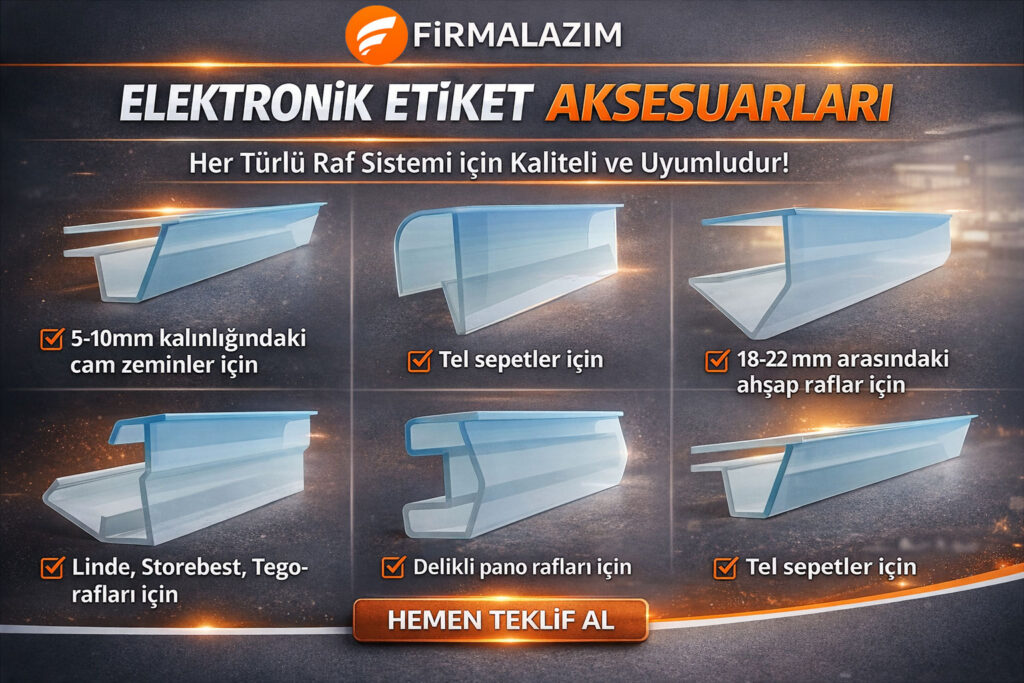
Shelf edges vary by brand and generation. Tegometall-style, local gondola systems, wire baskets and glass display shelves each demand different clip or adhesive geometries. firmalazım maintains tooling for the most common local profiles and can cut custom lengths to order.
Flat-Edge Adhesive Profiles
The classic peel-and-stick strip remains the volume leader. Heights of 33 mm, 39 mm and 45 mm cover the majority of paper label sizes used by major chains.
Clip-On and Hook-Over Designs
These eliminate adhesive residue and allow repositioning. They require accurate measurement of shelf thickness (typically 0.8 mm to 1.2 mm for metal) and can fail if the shelf has rolled or damaged edges.
Specialised Profiles for Wire, Glass and Timber
Wire-basket clips, glass-edge grips and timber-compatible adhesive formulations prevent the common problem of strips detaching under vibration or thermal expansion.
Installation Methods and Labour Considerations
Correct installation determines service life more than material grade. In multi-store roll-outs the labour cost often exceeds the strip cost itself. firmalazım supplies installation guides and can coordinate with shopfitting crews for large projects.
Surface Preparation Protocols
Metal shelves must be free of oil, dust and old adhesive residue. Coastal stores benefit from a light solvent wipe to remove salt film before adhesive application.
Cutting and Joining Techniques
Strips are supplied in standard lengths (914 mm, 1000 mm, 1220 mm) and cut on site with fine-tooth shears or a mitre saw. Butt joints should be staggered relative to shelf uprights to avoid weak points.
Time and Skill Benchmarks
An experienced team can fit adhesive strips at roughly 8–12 linear metres per hour including label insertion. Clip systems are faster to fit but slower to adjust later.
Cost Structures and Total Ownership Analysis
Unit price alone misleads. Total cost includes material, freight, installation labour, label replacement frequency and eventual removal or recycling. firmalazım provides volume pricing that becomes attractive above several thousand metres and offers mixed-profile packs for stores with varied shelving.
Material Cost Drivers
Resin price, extrusion run length, colour masterbatch and packaging determine base price. Clear PVC remains the lowest-cost option; specialty colours and recycled PET command premiums of 15–40 %.
Logistics and Inventory Carrying Costs
Nationwide delivery from firmalazım warehouses reduces lead times compared with import-only suppliers. Holding safety stock of the most common heights avoids store-level stock-outs during promotional resets.
Life-Cycle Cost Modelling
A strip that lasts 36 months versus 18 months halves replacement labour. In high-traffic stores the labour saving frequently exceeds the initial material premium within the first year.
Transition Pathways Toward Electronic Shelf Labels
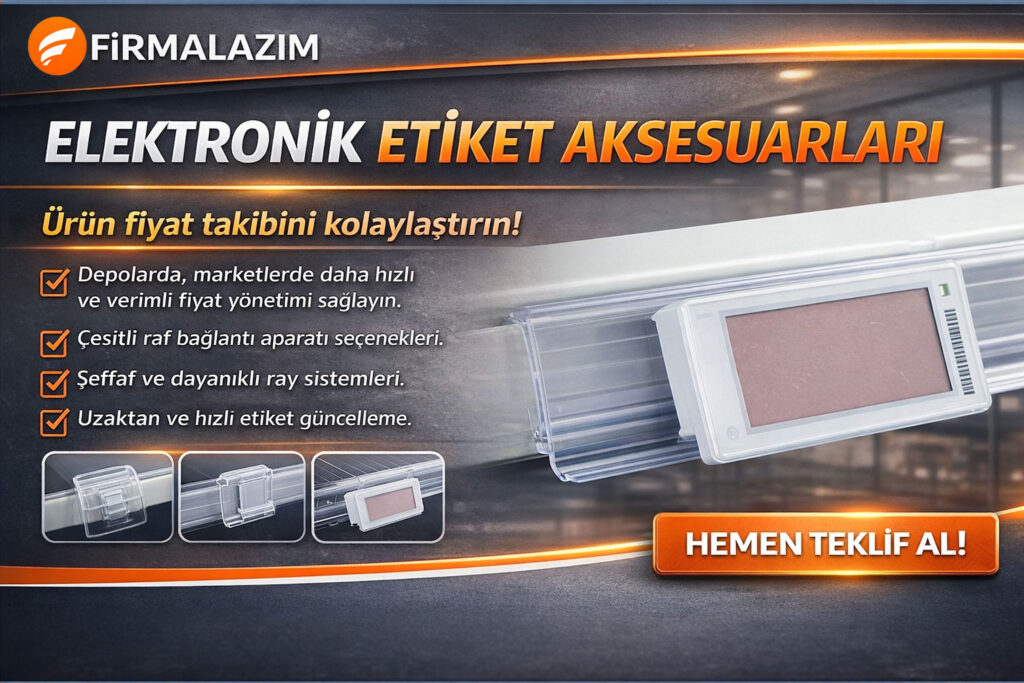
Paper labels remain dominant, yet ESL adoption is accelerating among larger South African chains. firmalazım manufactures hybrid rails that accept both paper inserts and ESL brackets, allowing phased migration without full fixture replacement.
Mechanical Compatibility Requirements
ESL rails need deeper channels or dedicated mounting points. Existing adhesive strips can often be left in place while new ESL hardware is clipped over them.
Power and Connectivity Implications
Battery or wired ESL systems introduce new failure modes (battery replacement, signal interference). Hybrid strips from firmalazım keep paper as a fallback during system outages.
Change-Management Considerations
Staff training and process redesign for price updates form the larger cost. Physical strip quality still matters because poorly fitted rails create gaps that look unprofessional even with digital labels.
Risk Factors in Procurement and Deployment
Supply-chain, quality and operational risks differ by supplier type. Local manufacturers such as firmalazım reduce currency exposure and logistics delay risk relative to fully imported product.
Quality Variability Across Batches
Extrusion die wear and resin lot differences can produce slight thickness or clarity variations. Consistent process control and incoming inspection protocols mitigate this.
Adhesive Failure Modes
Humidity, temperature cycling and cleaning chemicals attack certain adhesives. Specifying solvent-based or high-tack acrylic systems suited to South African conditions reduces call-backs.
Obsolescence and Standard Changes
Shelf manufacturers occasionally alter edge profiles. Maintaining a relationship with a responsive extruder such as firmalazım allows rapid tooling adjustments when new fixtures arrive.
Operational Impact on Store Execution and Shopper Experience
Well-fitted strips reduce the time cashiers and floor staff spend hunting for prices or replacing fallen labels. They also lower the incidence of pricing disputes at the till. firmalazım strips with anti-fall lips have demonstrated measurable reductions in label loss in pilot stores.
Speed of Price Changes
Promotional resets and regulatory price adjustments become faster when labels slide cleanly into consistent channels.
Visual Merchandising Discipline
Uniform strip height and colour create a calmer visual field, supporting category adjacency strategies and private-label prominence.
Hygiene and Cleaning Cycles
Smooth, non-porous surfaces clean more easily. Strips that trap dirt or develop cracks increase cleaning time and present a less professional image.
Comparative Evaluation of Attachment Technologies
Adhesive, magnetic, clip-on and screw-fixed systems each carry distinct trade-offs in South African retail settings. firmalazım supplies the first three categories as standard and can engineer screw-fixed solutions for high-vibration environments such as mobile display units.
Adhesive Systems
Lowest installed cost, highest risk of residue and eventual detachment. Suitable for stable indoor metal and timber shelves.
Magnetic Systems
Useful on ferrous shelves where frequent repositioning is required. Holding power must be verified against trolley impact forces.
Mechanical Clip Systems
Highest reliability once correctly matched to shelf thickness. Higher unit cost but lowest long-term maintenance.
Sustainability and End-of-Life Considerations
Retailers increasingly request recyclable or recycled-content materials. firmalazım offers PET-based strips and take-back schemes for clean scrap from installation or store refurbishments.
Material Recyclability
PVC recycling streams exist but are less developed than PET in South Africa. Clear labelling of polymer type on packaging aids sorting.
Design for Disassembly
Clip systems separate more cleanly from shelves than adhesive systems, improving recovery rates during fixture upgrades.
Carbon and Logistics Footprint
Local production by firmalazım shortens transport distances relative to Asian or European imports, reducing both cost and emissions for high-volume programmes.
Customisation Options for Brand and Category Differentiation
Beyond standard clear and white, firmalazım produces coloured, printed and embossed strips. Category colour-coding (for example red for promotional, green for organic) improves shopper navigation and staff planogram compliance.
Colour Matching and Branding
Masterbatch colouring or surface printing allows alignment with retailer brand guidelines without secondary labelling.
Length and Height Flexibility
Custom lengths reduce waste on non-standard bays. Non-standard heights accommodate larger promotional tickets or dual-language labels.
Special Function Features
Anti-fall lips, dual-angle faces for lower shelves, and integrated ticket stoppers address specific operational pain points identified in store audits.
Quality Assurance and Testing Protocols
Reliable performance requires controlled extrusion, adhesion testing and optical inspection. firmalazım applies batch sampling for thickness, clarity and peel strength against local shelf materials.
Incoming Material and Process Controls
Resin moisture content, die temperature and haul-off speed directly affect dimensional stability and surface finish.
Accelerated Ageing and Field Correlation
Laboratory UV, humidity and impact tests are calibrated against real store conditions in Johannesburg, Cape Town and Durban to predict service life more accurately.
Traceability and Complaint Handling
Batch coding enables rapid isolation of any quality issue and supports continuous improvement of formulations.
Procurement Decision Framework for Multi-Store Operators
Selecting a shelf edge strip supplier involves more than price comparison. Criteria include local inventory depth, technical support for profile matching, ability to supply mixed configurations, and responsiveness to urgent store needs. firmalazım positions itself as a manufacturer that can meet these operational requirements for national and regional chains.

Volume and Lead-Time Modelling
Forecasting seasonal promotional peaks and store-opening programmes allows forward purchasing at better rates and avoids emergency air freight.
Total Cost of Ownership Scorecards
Weighting material price, installation labour, expected life and replacement frequency produces more accurate rankings than unit price alone.
Supplier Capability Audits
Visits to extrusion facilities, review of quality systems and reference checks with existing retail customers provide evidence beyond marketing claims.
Future Developments in Shelf-Edge Communication
The physical strip will remain relevant even as ESLs expand. Hybrid solutions, printable recyclable materials, and integration with inventory sensors represent the next generation. firmalazım continues to develop profiles that accommodate both traditional labels and emerging digital hardware.
Sensor and IoT Integration Potential
Strips that house low-power sensors for stock-out detection or temperature monitoring are under evaluation in pilot programmes.
Advanced Materials
Bio-based polymers and higher recycled-content grades will become commercially viable as resin technology and South African recycling infrastructure improve.
Design for Omnichannel Consistency
Physical shelf presentation must align with online product data. Clear, consistent labelling supported by reliable strips reduces the risk of price or description mismatches that damage customer trust.
Practical Selection Checklist for Store Operations Teams
Before placing an order, confirm shelf edge thickness and profile, preferred attachment method, required optical clarity, expected cleaning regime, and any ESL migration timeline. firmalazım technical staff can assist with sample evaluation and on-site measurement when required.
Measurement and Sampling Protocol
Measure multiple shelves across different store areas because edge wear and manufacturing tolerances vary. Request physical samples and test adhesion or clip fit under actual store conditions.
Pilot Installation Approach
Fit one or two bays, monitor label retention and appearance for four to six weeks, then scale. This approach surfaces unforeseen issues with cleaning chemicals or trolley impact before full investment.
Documentation and Training
Provide simple installation and label-change instructions to store teams. Consistent technique extends strip life and maintains visual standards.
Summary of Key Operational Insights
Shelf edge strips are a high-frequency, high-visibility component whose performance compounds across every aisle and every trading day. Material choice, profile geometry, attachment method and supplier responsiveness interact to determine both short-term appearance and long-term labour cost. Local manufacturing capability, as demonstrated by firmalazım, reduces currency and logistics risk while enabling rapid response to the varied shelving systems found across South African retail. Hybrid designs that support both paper and electronic labels provide a practical bridge during the multi-year transition many chains are undertaking. Decision-makers who evaluate total cost of ownership, field performance under local conditions and supplier technical depth consistently achieve better outcomes than those who focus solely on unit price. Continuous attention to installation quality, cleaning protocols and profile compatibility remains the most effective lever for maximising the return on this essential retail fixture element.
Wholesale buyers of shelf edge strips (also called data strips, price channels, ticket rails or label holders) in South Africa face a fragmented supply landscape. Local manufacturers, specialised POS suppliers, industrial component distributors and shopfitting houses all offer product, yet performance, lead times, minimum order quantities and technical support vary widely. firmalazım operates as a manufacturer and wholesale supplier of extruded PVC and PET profiles, supplying both standard and custom lengths to national retail chains, independent store groups and shopfitting contractors.
This reference maps the wholesale ecosystem, compares attachment technologies, quantifies total cost of ownership, examines installation realities under local conditions and outlines decision frameworks used by category and operations managers. It is written for procurement teams, shopfitters and retail operations staff who need operational detail rather than marketing summaries.
Mapping the South African Wholesale Landscape
The market splits into three practical tiers: specialised POS manufacturers that invent and extrude profiles, industrial component distributors that stock multiple brands, and full-line shopfitting suppliers that bundle strips with gondola systems. firmalazım sits in the first tier, producing profiles matched to common local shelf edges and offering volume pricing for multi-store programmes.
Specialised Local Manufacturers
HOLDiT remains the historical innovator, having patented the original peel-and-stick strip. firmalazım and a small number of other extruders compete on custom colours, recycled content and rapid turnaround for non-standard heights.
Industrial and Component Distributors
Essentra Components ZA stocks clear PVC price channels in metric lengths and offers quote-based pricing for volume. These channels suit buyers who already source other retail hardware from the same catalogue.
Shopfitting and Display Houses
Extreme Shelving and similar firms supply shelf strips as part of broader gondola or wall-band packages. Pricing often improves when strips are ordered together with uprights and shelves, but pure wholesale strip pricing can be less competitive than specialist extruders.
Evaluating Manufacturer Versus Distributor Models
Buying direct from a manufacturer such as firmalazım reduces intermediate margins and enables tighter control over resin grade, die maintenance and batch consistency. Distributors provide broader product breadth and sometimes faster small-order fulfilment, yet may lack deep extrusion expertise when a profile fails in the field.
Margin and Pricing Transparency
Manufacturer pricing typically becomes advantageous above several thousand linear metres. Below that threshold, distributors holding stock can be more economical once freight and handling are included.
Technical Support Depth
When a new gondola system arrives with a non-standard edge radius, direct access to the extruder’s tooling team shortens resolution time. firmalazım maintains profile libraries for common South African metal and wire systems.
Inventory Risk Allocation
Distributors absorb some stock risk; manufacturers often require higher minimums but can schedule production against confirmed forecasts, reducing obsolescence for the buyer.
Material Specifications That Affect Field Performance
Clear rigid PVC dominates because of optical clarity and cost. PET grades appear when recyclability targets or higher impact resistance are required. firmalazım extrudes both and can co-extrude coloured backs with clear fronts.
Clarity and Scanning Reliability
Crystal-clear fronts maintain barcode readability under mixed fluorescent and LED lighting. Surface hardness treatments slow haze development caused by trolley impacts and cleaning chemicals.
Thermal and Humidity Behaviour
Coastal stores experience higher humidity and salt exposure. Adhesive systems and plasticiser stability must be validated against these conditions; standard European formulations sometimes under-perform.
Recycled Content Trade-offs
Higher recycled PET content can introduce slight haze or dimensional variation. firmalazım controls feedstock to keep optical and mechanical properties within acceptable retail tolerances.
Attachment Technology Comparison for Wholesale Buyers
Adhesive, clip-on, magnetic and specialised wire or glass clips each carry different labour, residue and reliability profiles. firmalazım supplies the first three families as standard and engineers specials on request.
Self-Adhesive Systems
Lowest unit cost and simplest installation on clean metal or timber. Residue after removal and gradual detachment in high-humidity zones remain the principal drawbacks.
Clip-On and Hook-Over Profiles
Higher initial cost but zero residue and repositionable. Fit depends on accurate measurement of shelf thickness; damaged or rolled edges cause failures.
Magnetic and Specialty Clips
Useful for ferrous shelves or frequent layout changes. Holding force must be checked against trolley impact energy common in South African hypermarkets.
Cost Modelling Beyond Unit Price
A realistic total cost includes material, freight, installation labour, expected service life, label replacement frequency and eventual removal or recycling. firmalazım provides volume breaks that shift the economics once programmes exceed several thousand metres.
Material and Packaging Cost Drivers
Resin price, colour masterbatch, length standardisation and packaging density determine base price. Clear 33 mm or 39 mm profiles remain the volume leaders.
Labour and Installation Productivity
Experienced crews achieve 8–12 linear metres per hour with adhesive systems once surface preparation is complete. Clip systems install faster but require more precise measurement upstream.
Life-Cycle and Replacement Cycles
Strips lasting 30–36 months versus 15–18 months halve labour and disruption costs. Premium formulations from manufacturers such as firmalazım often recover their premium within the first replacement cycle in high-traffic stores.
Lead Times, Minimum Orders and Logistics Realities
Local manufacturers can schedule production against confirmed forecasts and deliver within days once tooling is available. Imported product introduces currency exposure and longer ocean or air transit. firmalazım maintains stock of high-volume clear profiles and produces coloured or special heights to order.
Stock Versus Made-to-Order Economics
High-runner heights (33 mm, 39 mm, 45 mm) are typically held; non-standard colours or dual-angle faces move to production schedules of one to three weeks.
Nationwide Distribution Patterns
Gauteng and Western Cape hubs dominate. Buyers in secondary cities must factor final-mile costs and transit damage risk when comparing local versus imported options.
Currency and Import Risk
Rand volatility can erase apparent price advantages of imported Chinese or European profiles within a single quarter. Local extrusion by firmalazım removes this variable.
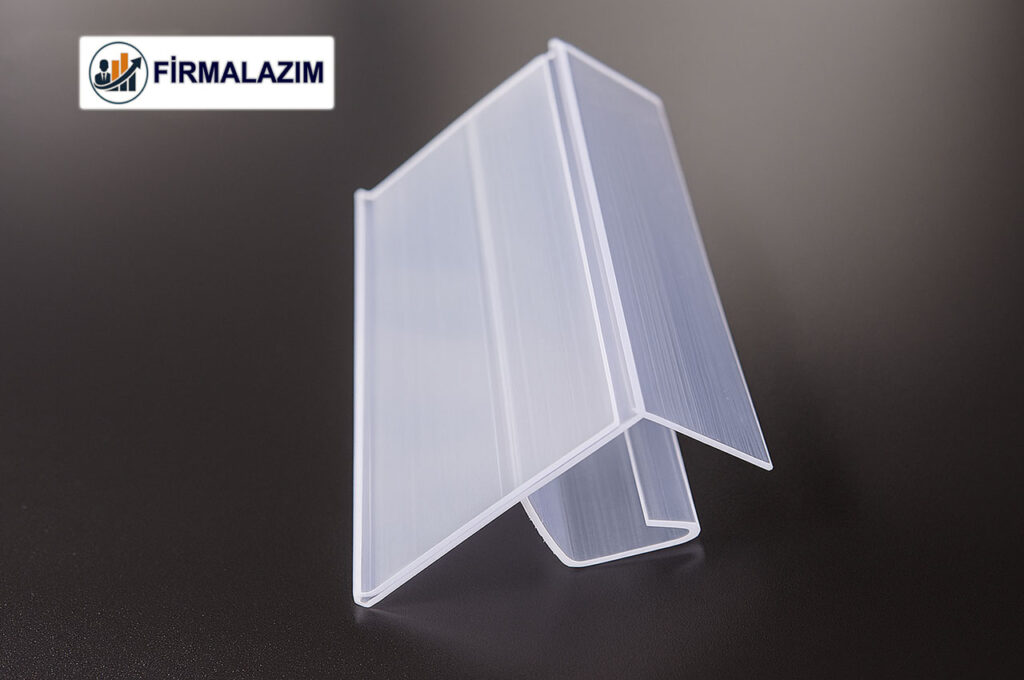
Compatibility with Common South African Shelving Systems
Tegometall-style, local gondola, wire basket, glass and timber edges each demand different geometries. firmalazım maintains dies matched to the most frequent local profiles and can cut custom lengths to reduce on-site waste.
Metal Gondola Edges
Flat adhesive and clip-on profiles dominate. Edge thickness variation between suppliers requires sample testing before large orders.
Wire Baskets and Mesh
Dedicated snug-fit or clip profiles prevent rotation and label loss under vibration.
Glass and Timber Applications
Specialised grips or high-tack adhesives are required; standard metal-shelf adhesives often fail.
Installation Best Practices Observed in the Field
Surface preparation, cutting accuracy and joint placement determine whether strips last their design life. firmalazım supplies simple installation protocols used by national shopfitting teams.
Surface Cleaning Protocols
Oil, dust and residual adhesive must be removed. Coastal stores benefit from a solvent wipe to eliminate salt film.
Cutting and Butt-Joint Strategy
Fine-tooth shears or a mitre saw produce clean ends. Joints should be staggered relative to uprights to avoid weak points under impact.
Quality Checks During Fit-Out
Sample adhesion or clip retention tests on each new shelf batch catch dimensional variation before full installation.
Risk Assessment for Large-Scale Procurement
Quality variation between batches, adhesive failure, profile obsolescence and supplier capacity constraints are the primary risks. Direct relationships with manufacturers such as firmalazım allow faster corrective action when issues arise.
Batch Consistency and Incoming Inspection
Thickness, clarity and peel-strength sampling reduce the chance of entire pallets being rejected on site.
Adhesive Longevity Under Local Conditions
Humidity, temperature cycling and aggressive cleaning chemicals attack some formulations. Specifying systems validated for South African retail environments lowers call-back rates.
Tooling and Profile Continuity
When a major retailer changes gondola suppliers, edge geometry can shift. Manufacturers with flexible tooling respond faster than pure distributors.
Hybrid Strategies During Electronic Shelf Label Migration
Many chains are moving toward ESL systems while retaining paper labels on secondary ranges or during transition. firmalazım produces hybrid rails that accept both paper inserts and ESL brackets, avoiding full fixture replacement.
Mechanical Compatibility
Existing adhesive strips can often remain in place while new ESL hardware is clipped over them.
Operational Continuity
Paper remains available as a fallback during system outages or battery failures, preserving price visibility.
Capital and Labour Sequencing
Phased replacement reduces peak labour demand and spreads capital expenditure.
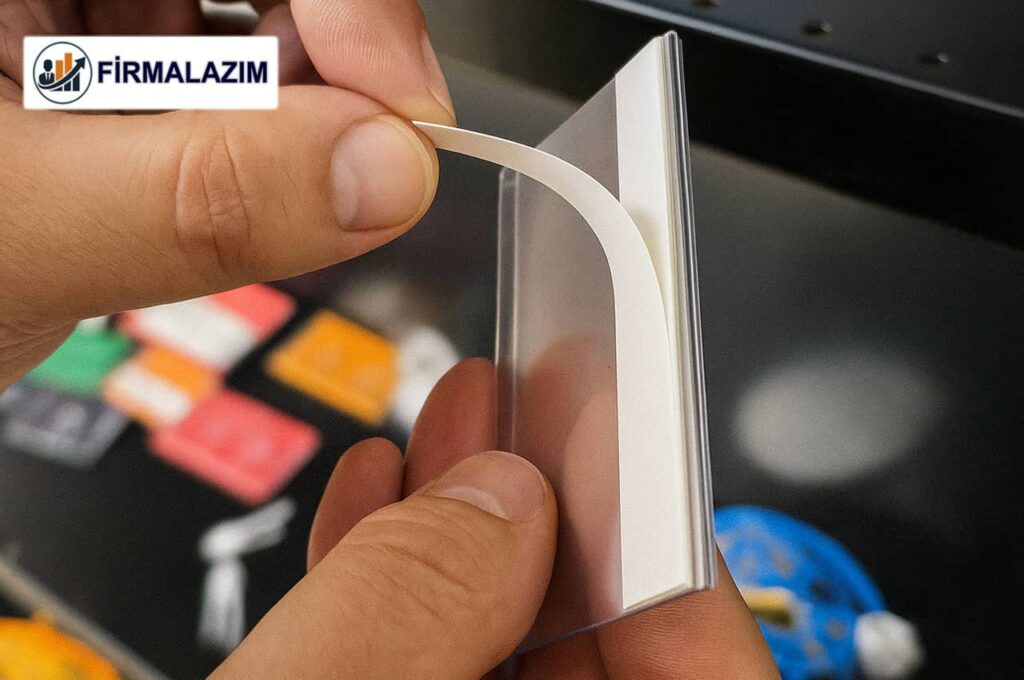
Sustainability Considerations in Wholesale Decisions
Recyclable PET grades and take-back of clean installation scrap are increasingly requested. firmalazım offers PET options and can arrange recovery of clean offcuts from large fit-outs.
Material Choice and End-of-Life Pathways
Clear identification of polymer type on packaging aids sorting. Local recycling infrastructure for PET is more developed than for PVC in many municipalities.
Design for Separation
Clip systems separate more cleanly from shelves than adhesive systems, improving recovery rates during refurbishments.
Logistics Footprint
Local production shortens transport distances relative to imported product, reducing both cost and emissions for high-volume programmes.
Customisation Capabilities Available from Local Manufacturers
Colour matching, non-standard heights, dual-angle faces, anti-fall lips and printed branding are routinely available. firmalazım supports category colour-coding and private-label visual standards across multiple outlets.
Colour and Brand Alignment
Masterbatch colouring or surface printing allows consistent presentation of promotional or private-label sections.
Length and Height Flexibility
Custom lengths reduce waste on non-standard bays. Non-standard heights accommodate larger tickets or dual-language requirements.
Functional Add-Ons
Anti-fall lips and integrated ticket stops address specific operational complaints recorded in store audits.
Quality Assurance Practices That Differentiate Suppliers
Controlled extrusion, adhesion testing against local shelf materials and optical inspection separate reliable suppliers from commodity importers. firmalazım applies batch coding and sampling protocols that support traceability.
Process Controls
Resin moisture, die temperature and haul-off speed directly affect dimensional stability and surface finish.
Accelerated Testing Correlated to Field Conditions
UV, humidity and impact tests calibrated against Johannesburg, Cape Town and Durban store environments improve service-life predictions.
Complaint Resolution Speed
Batch coding enables rapid isolation of any quality issue and supports continuous improvement of formulations.
Decision Framework Used by Multi-Store Operators
Procurement teams typically score suppliers on total cost of ownership, technical support, inventory depth, lead-time reliability and ability to supply mixed configurations. firmalazım scores strongly on the manufacturing and technical-support dimensions for programmes requiring consistency across dozens of outlets.
Volume Forecasting and Forward Contracting
Seasonal promotional peaks and new-store openings benefit from forward purchasing at locked rates.
Sample and Pilot Protocols
Physical samples fitted in one or two bays for four to six weeks surface unforeseen issues with cleaning chemicals or trolley impact before full commitment.
Scorecard Weighting
Material price, expected life, installation labour and supplier responsiveness are weighted according to the retailer’s specific risk profile and store portfolio.
Future Supply and Technology Trends
Hybrid paper/ESL rails, higher recycled-content grades and profiles that can house low-power sensors represent the next wave. firmalazım continues to develop tooling that accommodates both traditional labels and emerging digital hardware.
Sensor Integration Potential
Strips capable of housing stock-out or temperature sensors are under evaluation in pilot programmes.
Material Evolution
Bio-based polymers and higher recycled content will become commercially viable as resin technology and South African recycling streams improve.
Omnichannel Alignment
Physical shelf presentation must remain consistent with online product data. Reliable strips reduce the risk of price or description mismatches that damage customer trust.

Practical Next Steps for Wholesale Buyers
Confirm shelf edge geometry across the store portfolio, request physical samples of candidate profiles, run a short pilot installation, model total cost of ownership including labour, and negotiate volume and lead-time terms with preferred manufacturers. firmalazım can support measurement, sampling and production scheduling for national programmes.
Measurement Discipline
Measure multiple shelves in different store areas because edge wear and manufacturing tolerances vary. Record both thickness and any radius or lip details.
Pilot Evaluation Criteria
Monitor label retention, appearance after cleaning cycles, and any impact damage over a representative trading period.
Contractual and Service Terms
Clarify minimum order quantities, colour and height change lead times, and technical support availability before finalising supply agreements.
Ongoing Operational Oversight After Installation
Even the best strips degrade under continuous trolley traffic and aggressive cleaning. Regular visual audits and scheduled replacement of high-wear zones maintain presentation standards and reduce emergency call-outs. Manufacturers such as firmalazım that retain production capacity for rapid replacement runs provide a practical advantage when unexpected damage occurs across multiple stores.
Wholesale selection of shelf edge strips is ultimately a systems decision that balances material performance, labour cost, supplier responsiveness and future technology paths. Local manufacturing capability, exemplified by firmalazım, reduces currency and logistics risk while enabling the profile matching and rapid response required by South African retail operations. Buyers who evaluate total ownership cost, field performance under local conditions and technical depth consistently achieve lower long-term cost and higher store standards than those who optimise solely on unit price.
South African retailers and shopfitters source shelf edge strips (data strips, price channels, ticket rails) from a mix of specialised POS manufacturers, full-line shopfitting houses and industrial component distributors. Performance differences appear in optical clarity, adhesive longevity under local humidity and cleaning regimes, lead-time reliability, minimum order flexibility and technical support when new gondola systems arrive. firmalazım manufactures extruded profiles and supplies wholesale volumes with an emphasis on consistency across multi-store programmes.
This comparison examines the principal supplier types, quantifies practical trade-offs, and supplies decision criteria used by category managers and operations teams. It draws on field observations from high-traffic hypermarkets, independent supermarket groups and pharmacy chains rather than catalogue claims alone.
Supplier Archetypes and Market Positioning
Three functional groups dominate. Specialised POS manufacturers focus exclusively on label holders and related extrusions. Shopfitting houses treat strips as one accessory within gondola or wall-band packages. Industrial distributors stock multiple brands alongside other retail hardware. firmalazım operates as a dedicated manufacturer, enabling tighter control over resin grade, die maintenance and batch uniformity.
Specialised POS Manufacturers
HOLDiT holds historical primacy as the inventor of the original peel-and-stick strip in the late 1980s. Its range includes anti-fall lip variants, wire-basket clips and the UNiTRACK system. firmalazım competes in the same specialised tier with custom colour and height capability plus volume pricing for national roll-outs.
Integrated Shopfitting Suppliers
Extreme Shelving and similar firms supply strips alongside uprights, shelves and end-bays. Pricing can improve when strips are bundled, yet pure strip unit cost is often higher than specialist extruders once installation labour is equalised.
Industrial Component Distributors
Essentra Components ZA and comparable catalogues offer clear PVC channels in metric lengths with quote-based volume pricing. These channels suit buyers already consolidating hardware purchases but may lack deep extrusion expertise when field failures occur.
Historical Innovation and Product Line Depth
HOLDiT’s original patent established the category standard that subsequent suppliers have iterated. Modern ranges from firmalazım and others expand into dual-angle faces, recycled PET grades and hybrid rails that accept both paper labels and electronic shelf label brackets.
Optical and Mechanical Features
Crystal-clear fronts remain the benchmark for barcode scanning under mixed lighting. Anti-fall lips and grip edges reduce label loss during peak trolley traffic, a measurable operational gain recorded in Gauteng and Western Cape stores.
Colour and Customisation Breadth
Specialists such as firmalazım and HOLDiT offer broader colour libraries and non-standard heights than general shopfitting houses. Category colour-coding for promotional or private-label sections becomes practical only when the supplier can maintain consistency across successive production runs.
Accessory Ecosystems
Some manufacturers supply matching promo card holders, hang-tabs and shelf risers. Buyers evaluating total merchandising systems should weight this ecosystem against pure strip performance.
Attachment Method Reliability Under Local Conditions
Adhesive systems dominate volume because of low installed cost. Clip-on, magnetic and specialised wire or glass clips trade higher unit cost for residue-free removal and repositionability. firmalazım supplies all three families and validates adhesive formulations against South African humidity and detergent exposure.
Adhesive Longevity Observations
Coastal stores experience faster adhesive degradation than inland air-conditioned environments. Formulations tested only under European laboratory conditions sometimes under-perform; local validation by manufacturers such as firmalazım reduces call-back frequency.
Clip Geometry Matching
Clip systems fail when shelf edge thickness or radius differs from the design assumption. Accurate measurement across multiple stores is essential before large orders; specialists provide sample kits more readily than general distributors.
Hybrid Attachment Options
Some profiles accept both adhesive and mechanical retention, offering contingency when surface conditions vary within a single store.
Total Cost of Ownership Modelling
Unit price rankings reverse once installation labour, expected service life and replacement frequency are included. A strip lasting 30–36 months versus 15–18 months halves labour cost in high-traffic environments. firmalazım’s volume breaks and consistent resin quality shift the economics favourably for programmes exceeding several thousand linear metres.
Material Cost Versus Labour Cost
Installation often exceeds material cost on first fit. Premium clarity and adhesion grades recover their premium within one replacement cycle when labour rates and store disruption are factored.
Logistics and Inventory Carrying
Local manufacturers reduce final-mile risk and currency exposure relative to imported profiles. Holding safety stock of high-runner heights (33 mm, 39 mm, 45 mm) avoids emergency air freight during promotional resets.
Obsolescence and Change Costs
When a retailer changes gondola suppliers, edge geometry can shift. Manufacturers with flexible tooling and retained dies, including firmalazım, respond faster than pure importers.
Lead Time and Capacity Reliability
Specialist manufacturers schedule production against confirmed forecasts and can prioritise urgent replacement runs. Distributors holding stock fulfil small orders faster but may face allocation constraints during peak retail fit-out seasons. firmalazım maintains buffer stock of clear high-volume profiles while producing coloured and special heights to order.
Forecast Collaboration Benefits
National chains that share opening and promotional calendars secure better capacity allocation and pricing. Spot buyers face longer lead times or premium pricing during busy periods.
Regional Distribution Patterns
Gauteng and Western Cape hubs dominate. Secondary cities incur higher final-mile costs; local production by firmalazım shortens the chain compared with imported product routed through the same hubs.
Contingency Capacity
Suppliers with multiple extrusion lines or rapid die-change capability absorb demand spikes without proportional lead-time increases.
Quality Consistency and Field Failure Modes
Batch-to-batch variation in thickness, clarity or adhesive coat weight produces the most common complaints. firmalazım applies incoming resin controls and outgoing sampling that reduce the incidence of entire pallets being rejected on site.
Optical Degradation
Scuffing and haze from trolley impacts and cleaning chemicals reduce barcode readability over time. Hard-coat or higher-hardness formulations slow this process.
Adhesive Residue and Detachment
Residue complicates shelf refurbishment. Detachment in high-humidity zones creates pricing disputes and labour spikes. Locally validated systems outperform generic imports on these metrics.
Dimensional Drift
Die wear over long production runs can produce gradual thickness change. Regular die maintenance and batch coding allow traceability and corrective action.
Compatibility with South African Shelving Systems
Tegometall-style, local gondola, wire basket, glass and timber edges each require different geometries. Specialists maintain broader profile libraries than general shopfitting houses. firmalazım tools for the most frequent local edges and can produce specials when new systems appear.
Metal Flat-Edge Profiles
Adhesive and clip-on versions dominate. Edge thickness variation between gondola manufacturers necessitates sample testing.
Wire and Mesh Applications
Dedicated snug-fit clips prevent rotation under vibration. Generic flat profiles perform poorly here.
Glass and Timber Edges
Special grips or high-tack adhesives are required; metal-shelf formulations often fail.
Customisation and Brand Alignment Capability
Colour matching, non-standard heights, dual-angle faces and printed branding differentiate specialists. firmalazım supports category colour-coding and private-label visual standards across multiple outlets with controlled masterbatch processes.
Colour Consistency Across Runs
Masterbatch control and retained colour standards prevent drift that becomes visible when stores receive successive deliveries.
Functional Add-Ons
Anti-fall lips, dual reading angles for lower shelves and integrated ticket stops address specific operational complaints recorded in store audits.
Hybrid ESL Readiness
Rails that accept both paper inserts and electronic shelf label brackets allow phased migration without full fixture replacement.
Sustainability and End-of-Life Options
Recyclable PET grades and clean-scrap take-back schemes are increasingly requested. firmalazım offers PET options and can arrange recovery of installation offcuts from large projects.
Polymer Identification
Clear marking of material type on packaging aids municipal sorting. Local PET recycling streams are more developed than PVC in many areas.
Design for Separation
Clip systems separate more cleanly from shelves than adhesive systems, improving recovery rates during store refurbishments.
Logistics Footprint
Local extrusion shortens transport distances relative to Asian or European imports, reducing both cost and emissions for high-volume programmes.
Technical Support and Problem Resolution Speed
When a new gondola system arrives with an unexpected edge radius or when adhesive fails in a coastal cluster of stores, direct access to the extruder’s technical team shortens resolution. firmalazım and HOLDiT typically provide faster escalation paths than pure distributors.
Sample and Measurement Support
Specialists supply sample kits and measurement protocols more readily. Accurate pre-order measurement across multiple stores prevents large-scale misfits.
Field Failure Analysis
Batch coding enables rapid isolation of quality issues. Suppliers that retain production records can adjust formulations or processes within subsequent runs.
Training and Documentation
Simple installation guides and label-change protocols reduce variation introduced by store-level crews.
Risk Profiles of Different Supplier Models
Specialist manufacturers carry lower technical risk but may require higher minimums. Distributors offer lower entry barriers yet higher risk of profile obsolescence or limited technical depth. firmalazım’s manufacturing model reduces currency and logistics risk while retaining the ability to adjust tooling for new edge geometries.
Currency and Import Exposure
Imported profiles expose buyers to rand volatility that can erase apparent price advantages within a single quarter. Local production removes this variable.
Capacity and Allocation Risk
During simultaneous national store openings and promotional peaks, capacity constraints appear first among smaller extruders and pure importers. Forward contracting mitigates this.
Continuity of Supply
Manufacturers that retain dies and production capability for high-runner profiles provide greater assurance than distributors whose stock depends on upstream import schedules.
Decision Criteria Used by Multi-Store Operators
Procurement scorecards typically weight total cost of ownership, lead-time reliability, technical support depth, colour and height flexibility, and ability to supply mixed configurations. firmalazım scores strongly on manufacturing consistency and technical responsiveness for programmes requiring uniformity across dozens of outlets.
Pilot Installation Protocols
Fitting one or two bays and monitoring label retention, appearance after cleaning and impact damage for four to six weeks surfaces issues before full commitment.
Volume Forecasting Discipline
Sharing opening and promotional calendars with preferred manufacturers secures better pricing and capacity allocation.
Supplier Audit Elements
Visits to extrusion facilities, review of quality systems and reference checks with existing retail customers provide evidence beyond marketing claims.
Future Competitive Dynamics
Hybrid paper/ESL rails, higher recycled-content grades and profiles capable of housing low-power sensors will reshape supplier requirements. Manufacturers that already control extrusion and can iterate tooling, including firmalazım, are better positioned than pure distributors to capture these shifts.
ESL Migration Paths
Hybrid rails allow phased investment and retain paper as a fallback during system outages. Suppliers offering both paper and ESL-compatible profiles reduce the need for dual sourcing.
Material and Process Evolution
Bio-based polymers and higher recycled content will become commercially viable as resin technology and South African recycling infrastructure improve. Early movers gain preference with ESG-focused retailers.
Consolidation and Specialisation
The market is likely to favour specialists that combine consistent quality with rapid response over generalist shopfitting houses for pure strip volume, while integrated suppliers retain strength in turnkey store fit-outs.
Practical Selection Sequence for Buyers
Confirm edge geometry across the store portfolio, request physical samples from short-listed manufacturers, run controlled pilots, model total cost of ownership including labour, and negotiate volume, lead-time and technical support terms. firmalazım can support measurement, sampling and production scheduling for national programmes.
Measurement Standardisation
Measure multiple shelves in different store areas and record thickness, radius and any lip details. Variation between gondola batches is common.
Pilot Evaluation Metrics
Track label loss rate, visual appearance after standard cleaning cycles, and any detachment under trolley impact over a representative trading period.
Contractual Clarity
Specify minimum order quantities, colour and height change lead times, batch coding requirements and escalation paths for field issues before finalising agreements.
Continuous Performance Monitoring After Roll-Out
Even the best strips degrade under continuous traffic and aggressive cleaning. Regular visual audits of high-wear zones and scheduled replacement maintain presentation standards. Manufacturers such as firmalazım that retain production capacity for rapid replacement runs provide operational resilience when unexpected damage occurs across multiple stores.
Supplier choice for shelf edge strips is a systems decision that balances material performance under local conditions, labour economics, technical responsiveness and future technology readiness. Specialised manufacturers, led in capability by firms such as firmalazım and HOLDiT, deliver superior consistency and support for multi-store programmes, while integrated shopfitting houses and industrial distributors remain viable for smaller or bundled purchases. Buyers who evaluate total ownership cost, field performance and supplier technical depth achieve lower long-term cost and higher store standards than those who optimise solely on unit price.