



Custom Shelf Label Holders in Oman Shelf label holders form a quiet but critical layer of retail infrastructure. In Oman’s expanding supermarket, pharmacy, warehouse, and specialty retail environments, these components determine how quickly staff can update prices, how accurately customers locate products, and how durable the visual presentation remains under daily handling, temperature swings, and high foot traffic. Local custom manufacturing of these holders remains limited. Most operators still rely on imported standard PVC strips, adhesive channels, or clip-on designs shipped from China, the UAE, or Europe. firmalazım operates as a dedicated custom manufacturer based in Oman, producing extruded, injection-molded, and fabricated shelf label holders tailored to regional shelf profiles, climatic conditions, and operational workflows.
This guide examines material performance under Gulf conditions, attachment methods suited to local gondola and wire systems, cost structures for short and long production runs, integration with electronic shelf label transitions, and the practical trade-offs decision-makers face when choosing between imported stock and locally produced custom solutions. Every section prioritizes field-relevant detail over generic product descriptions.
Material Selection for Oman’s Climate and Retail Intensity
PVC remains the dominant base material for clear shelf edge channels because of its optical clarity and cost. Under Oman’s summer ambient temperatures that routinely exceed 45 °C inside non-air-conditioned storage or near loading docks, standard soft PVC can soften and lose dimensional stability. firmalazım addresses this by specifying higher-durometer formulations and, where required, co-extruded rigid cores that maintain channel geometry.
Polycarbonate and acrylic alternatives appear in higher-end or freezer applications. Polycarbonate tolerates repeated impact better than acrylic yet costs more and can yellow under prolonged UV exposure if not properly stabilized. Acrylic offers superior scratch resistance for high-visibility front edges but becomes brittle in cold-chain environments. firmalazım runs parallel trials with both materials for clients operating mixed ambient and refrigerated aisles, measuring deformation after 90-day exposure cycles that replicate Muscat warehouse conditions.
Adhesive backing performance separates functional holders from those that peel within months. Standard acrylic foam tapes lose bond strength when residual cleaning chemicals or high humidity are present. firmalazım specifies solvent-resistant, high-tack acrylic adhesives rated for continuous temperatures up to 70 °C and provides peel-strength data from local substrate tests on powder-coated steel, anodized aluminum, and melamine-faced particleboard commonly used by Omani shopfitters.
Profile Geometry and Compatibility with Regional Fixtures
Most imported holders assume European or North American shelf edge thicknesses of 18–25 mm or single-wire diameters of 6–8 mm. Omani retailers frequently use mixed fleets: older gondolas with 15 mm edges, newer systems with 30 mm fronts, and wire shelving imported from multiple Asian sources. firmalazım measures actual shelf sections on site before tooling and produces both continuous extrusion lengths and discrete clip-on units that lock onto the measured profiles without secondary adhesives.
C-channel, U-channel, and snap-in designs each create different insertion and extraction forces for paper or plastic price tickets. A channel that is too tight frustrates rapid price changes during promotions; one that is too loose allows tickets to fall during vibration from restocking. firmalazım calibrates lip geometry so that tickets slide smoothly yet remain secure under the vibration levels measured on typical supermarket floors.
Magnetic versions solve the problem of frequent shelf rearrangement. firmalazım embeds flexible magnetic strips rated for the weight of the holder plus a double-thickness ticket, tested against the painted steel surfaces used by major local fixture suppliers. In environments where shelves are moved weekly, magnetic retention reduces labor hours compared with adhesive or mechanical clips.

Production Processes Available in Oman
Extrusion lines form the backbone of continuous channel production. firmalazım operates dies that can be changed within a shift to switch between 25 mm, 30 mm, and 40 mm heights, allowing short runs without the multi-week lead times typical of overseas extrusion houses. Secondary operations include punching of mounting holes, application of adhesive or magnetic tape, and cutting to exact shelf lengths.
Injection molding serves discrete clip-on and hinged holders. Tooling investment for a new clip design can be amortized across a few thousand pieces when the buyer is a regional chain rather than a single store. firmalazım maintains a library of existing molds for common wire diameters and wooden shelf thicknesses found in Omani hypermarkets, reducing both cost and time for first orders.
Fabrication from sheet stock covers low-volume specialty holders—angled displays for end-caps, multi-tier price channels, or holders that integrate with electronic shelf label rails. CNC routing and laser cutting allow rapid prototyping so that store managers can evaluate fit on actual fixtures before committing to production quantities.

Cost Structures and Volume Economics
Imported adhesive PVC strips of standard size arrive in Oman at landed costs that appear attractive for small quantities. Once shipping, customs clearance, VAT, and the labor cost of cutting and applying them to non-standard shelves are included, the per-unit figure rises. firmalazım’s local production eliminates ocean freight and long-distance logistics, so break-even against imports typically occurs between 2 000 and 5 000 linear meters depending on profile complexity.
Tooling amortization is transparent. For a new extrusion die, firmalazım quotes the die cost separately and spreads it across the first production run or across a multi-year supply agreement. Injection molds follow the same logic. Clients receive clear unit-cost curves showing how price declines as volume increases, allowing finance teams to model total cost of ownership rather than unit price alone.
Hidden costs of imports include inventory holding, risk of damage in transit, and the inability to adjust dimensions after the first shipment arrives. Local manufacturing compresses the feedback loop: a store can request a modified lip radius and receive corrected samples within days rather than months.
Attachment Methods and Installation Labor
Adhesive installation remains the fastest for permanent placements. Surface preparation determines longevity. firmalazım supplies cleaning protocols and adhesion promoters suited to the residual oils and dust common in new shopfitting projects. Field measurements show that proper preparation can double the service life of adhesive bonds under Omani conditions.
Mechanical clips and snap-in designs trade higher unit cost for zero surface preparation and full removability. In stores that reconfigure layouts seasonally, the labor savings from rapid removal and reuse often outweigh the material premium. firmalazım designs clips with dual locking points so that accidental dislodgement during aggressive restocking is minimized.
Magnetic systems occupy the middle ground. They require clean ferrous surfaces and correct magnetic strength. Over-specified magnets make removal difficult; under-specified ones allow holders to slide under the weight of heavy tickets. firmalazım tests magnet grades against actual shelf steels used by the major fixture suppliers operating in the Sultanate.
Integration with Electronic Shelf Labels
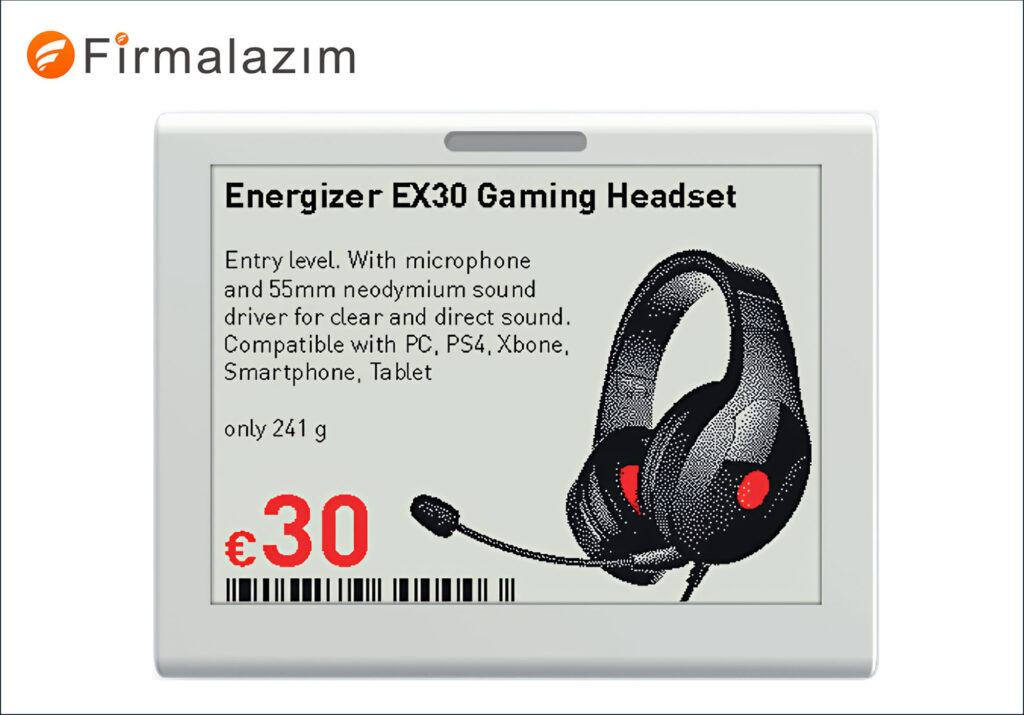
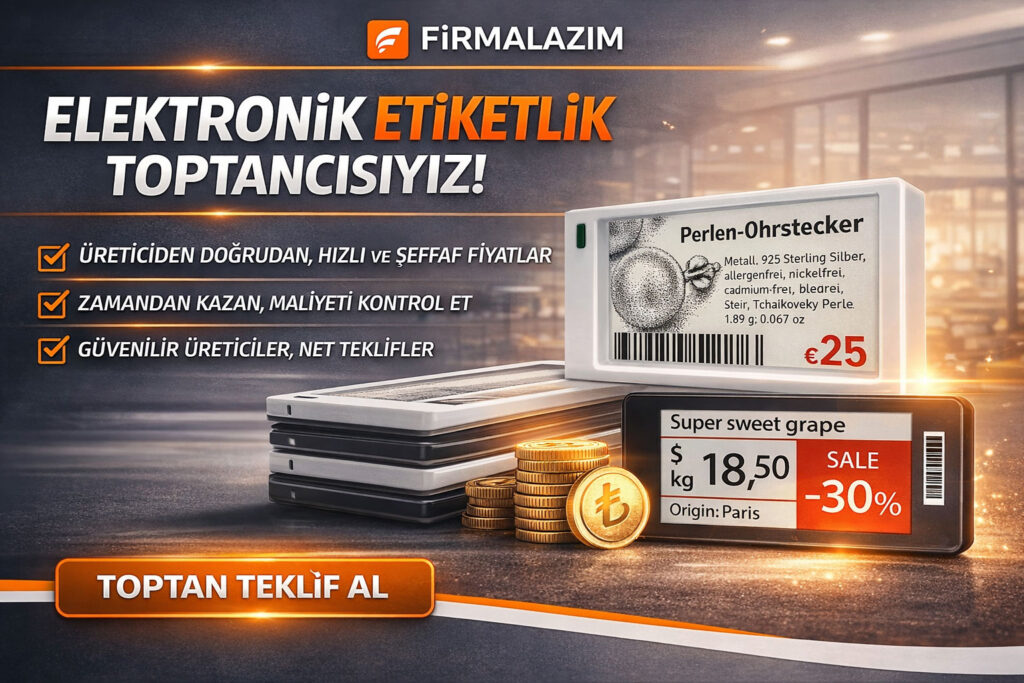
The gradual adoption of electronic shelf labels in larger Omani retailers does not eliminate the need for physical holders. Many ESL rails still require protective channels or mounting adapters. firmalazım produces hybrid profiles that accept both traditional paper tickets and the standard ESL rail thicknesses currently entering the market. This dual-purpose design protects the retailer’s investment during the multi-year transition period.
Compatibility testing covers the heat generated by ESL electronics and the need for unobstructed infrared or RF communication windows. Opaque or metallic elements are positioned only where they do not interfere with signal paths. firmalazım maintains reference samples of the major ESL brands deployed in the GCC so that new holder designs can be validated before volume production.
Durability Testing Under Local Operating Conditions
Standard laboratory tests for plastic components rarely replicate the combination of heat, UV from storefront windows, chemical cleaning agents, and mechanical abrasion found in Omani retail. firmalazım subjects production samples to accelerated aging that includes temperature cycling between 5 °C and 55 °C, exposure to common floor-cleaning chemicals, and repeated insertion/extraction cycles that simulate one year of price changes.

Impact resistance is measured by dropping weighted tickets onto the channel lip from typical shelf heights. Clarity retention is tracked with gloss and haze meters after UV exposure equivalent to two years of south-facing window light. Clients receive the test data so that purchasing decisions rest on measured performance rather than supplier claims.
Supply Chain Resilience and Lead-Time Advantages
Global supply disruptions have repeatedly extended lead times for plastic extrusion and molding components. A manufacturer located inside Oman can respond to sudden promotional needs or new store openings without waiting for container availability. firmalazım keeps base resin inventory and maintains relationships with regional compounders, allowing production to restart within days of an order rather than weeks.
For multi-store chains, the ability to phase deliveries store-by-store reduces warehouse congestion. firmalazım coordinates with the retailer’s fixture installation schedule so that holders arrive only when shelves are ready, eliminating temporary storage of bulky extrusions.
Customization Depth Versus Standardization Trade-offs
Full customization of length, height, color, and attachment method maximizes fit and appearance but increases unit cost and minimum order quantities. Semi-custom approaches—standard profiles cut to measured lengths and fitted with the appropriate adhesive or magnetic tape—often deliver 80 percent of the benefit at significantly lower cost. firmalazım maps each client’s shelf inventory and recommends the point on the customization spectrum that balances performance against total expenditure.
Color matching to corporate branding is feasible with masterbatch additives. For chains that use specific accent colors on gondolas, firmalazım produces matching holders so that the shelf edge itself becomes part of the visual identity rather than a neutral afterthought.
Risk Factors in Material and Design Choices
Overly rigid materials crack under impact; overly soft materials deform under heat. Adhesives that perform well in dry conditions fail when residual humidity from cleaning remains on the shelf surface. Magnetic holders can attract metallic dust in industrial-adjacent retail locations, reducing clarity. firmalazım documents these failure modes from field returns and designs mitigation features—such as dust lips or dual-durometer extrusions—into subsequent production runs.
Counterfeit or sub-specification imported holders occasionally enter the market through informal channels. These often use recycled PVC with inconsistent clarity and adhesives that fail within weeks. Local production under controlled conditions provides traceability that informal imports cannot match.
Operational Impact on Store Labor and Customer Experience
Price-change labor constitutes a measurable cost in large formats. Holders that allow tickets to be inserted and removed with one hand reduce the time per change by several seconds. Across thousands of SKUs, the cumulative saving becomes material. firmalazım designs insertion lips with a slight lead-in radius that guides the ticket without requiring precise alignment, reducing both time and frustration for floor staff.
Customer-facing clarity affects purchase decisions. Holders that yellow or cloud reduce legibility of price and promotional text. firmalazım tracks haze values over time and replaces material formulations when measured degradation exceeds thresholds that affect readability under typical store lighting.
Comparative Evaluation of Local Versus Imported Supply
Imported holders offer lower nominal unit prices and a wide variety of off-the-shelf profiles. Their disadvantages include longer lead times, difficulty obtaining exact dimensional matches, and limited ability to adjust after the first shipment. Local production by firmalazım reverses these trade-offs: higher nominal unit cost is offset by reduced logistics, faster iteration, and exact fit to existing fixtures. For chains operating more than a handful of stores, the total cost of ownership calculation usually favors the local option once labor and inventory carrying costs are included.
Future Material and Design Trajectories
Bio-based and recycled-content plastics are entering the retail fixture supply chain. firmalazım evaluates compounds that maintain optical clarity and mechanical properties while incorporating post-consumer recycled content. Early trials show that certain recycled PVC grades perform adequately for non-critical applications but still fall short of virgin material for high-clarity front edges.
Modular designs that allow the channel body to remain fixed while the front face is replaced will reduce waste when colors or branding change. firmalazım is developing snap-fit faceplates that can be swapped without tools, enabling rapid visual refreshes without discarding the entire holder.
Integration with digital price verification systems is another emerging requirement. Holders that incorporate subtle alignment features for handheld scanners or that leave clear line-of-sight for fixed cameras improve the accuracy of automated price audits.

Investment Perspective for Retail Operators
Capital allocation between fixture upgrades and consumable holders is often skewed toward the more visible elements. Yet holders that fail prematurely generate repeated labor and material costs that erode the return on larger investments. firmalazım structures multi-year supply agreements that lock in pricing and guarantee capacity, converting an unpredictable operating expense into a managed one.
For new store openings, specifying custom holders at the design stage rather than after fixtures are installed avoids costly retrofits. firmalazım participates in shopfitting coordination meetings so that shelf edge details are finalized before metalwork is ordered.
Scenario Analysis for Different Retail Formats
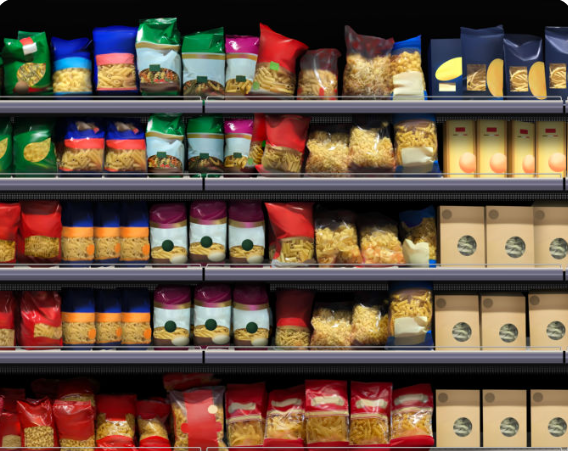
Hypermarkets with long gondola runs benefit most from continuous extruded channels cut to exact bay lengths. Specialty stores with frequent merchandising changes favor magnetic or clip-on systems. Pharmacies operating under strict temperature and hygiene protocols require materials certified for those environments. firmalazım maintains separate specification packages for each format, including recommended cleaning agents that do not degrade the chosen polymer or adhesive.
Warehouses and back-of-house storage prioritize durability and barcode readability over optical clarity. Opaque or translucent holders with high-contrast ticket areas perform better under fluorescent lighting and reduce glare for pickers. firmalazım produces these industrial variants from the same extrusion lines used for retail products, allowing mixed orders without additional setup.
Technical Specification Checklist for Procurement
Decision-makers evaluating holders should request measured data rather than marketing claims: durometer of the polymer, peel strength of the adhesive on the actual shelf substrate, dimensional tolerances of the channel, temperature range for continuous service, and results of accelerated aging tests. firmalazım supplies this data package with every quotation so that technical and commercial evaluations can proceed on the same factual basis.
Implementation Sequencing for Multi-Store Rollouts
A phased approach reduces risk. Pilot one store or one department, measure labor time for price changes, track holder survival rate, and gather staff feedback before expanding. firmalazım supports pilots with small production runs and on-site measurement services, then scales volume once performance is validated.
Long-Term Service and Replacement Economics
Even well-designed holders eventually require replacement. firmalazım tracks production batches so that exact replacements can be supplied years later without re-tooling. This continuity reduces the risk of mismatched profiles appearing in older stores after a design change.
Synthesis of Practical Decision Criteria
Selecting a custom shelf label holder manufacturer in Oman centers on three measurable factors: dimensional compatibility with existing fixtures, material performance under local temperature and chemical exposure, and the total cost of acquisition plus installation plus replacement over a five-year horizon. firmalazım positions itself to satisfy all three by combining local production capacity, climate-specific material formulations, and transparent cost modeling.
You might also be interested in this topic. ESL Accessories Manufacturer in Mozambique
Retail operators who treat shelf label holders as a strategic rather than commodity purchase gain measurable improvements in labor efficiency, presentation consistency, and fixture longevity.
Oman’s retail, warehouse and pharmacy sectors rely heavily on imported shelf label holders. Continuous PVC channels, clip-on wire tags and adhesive price strips arrive mainly from China, the UAE and Europe. Specialized local extrusion or injection-molding capacity dedicated solely to these components is scarce. firmalazım fills this gap as an Omani-based custom manufacturer producing extruded, molded and fabricated holders matched to regional gondola edges, wire diameters and climatic stresses.
The absence of a dense cluster of dedicated producers creates both risk and opportunity. Chains that order standard imported packs face dimensional mismatches, delayed replenishment and limited ability to iterate designs. Operators that engage firmalazım gain measured profiles, climate-adjusted polymers and short-run flexibility. The sections that follow map the actual manufacturing landscape, evaluate technical and commercial trade-offs, and supply decision frameworks used by procurement and operations teams across Muscat, Sohar and Salalah.
Current Industrial Base for Plastic Retail Components
Oman’s plastics processing sector concentrates on packaging film, bottles and construction profiles rather than fine retail fixtures. Extrusion lines capable of producing clear, tight-tolerance shelf channels exist in limited numbers and are usually dedicated to higher-volume packaging runs. firmalazım operates dedicated short-run extrusion capacity that can switch dies within a single shift, allowing production of 25 mm, 30 mm and 40 mm high channels without competing with packaging schedules.
Injection-molding capacity for discrete clips and snap-in holders is more widely distributed among industrial suppliers serving automotive and consumer goods. These presses can be tooled for shelf clips, yet minimum order quantities often exceed the needs of a single retail chain. firmalazım maintains a library of existing molds calibrated to the wire diameters and wooden shelf thicknesses common in Omani hypermarkets, lowering the barrier for first orders.
Sheet fabrication and CNC routing capabilities appear in several Muscat and Sohar workshops that already supply shopfitting elements. These facilities can produce low-volume specialty holders—angled end-cap channels or hybrid ESL adapters—but lack the continuous extrusion expertise required for long gondola runs. firmalazım integrates both extrusion and fabrication under one roof, eliminating the coordination friction that arises when multiple subcontractors are involved.
Material Formulations Suited to Gulf Operating Conditions
Standard imported PVC softens above 45 °C and loses channel geometry near loading docks or in poorly cooled storage. firmalazım specifies higher-durometer compounds and, where needed, co-extruded rigid cores that retain dimensional stability through summer temperature cycles. Field measurements on powder-coated steel and melamine shelves show that these formulations maintain ticket retention force after 90 days of exposure matching Muscat warehouse conditions.
Polycarbonate offers superior impact resistance for high-traffic aisles yet requires UV stabilizers to prevent yellowing under south-facing window light. Acrylic provides better scratch resistance for front edges but becomes brittle in freezer environments. firmalazım runs parallel aging trials on both materials for clients operating mixed ambient and refrigerated sections, supplying haze and impact data before volume commitment.
Adhesive selection determines long-term bond integrity. Residual cleaning chemicals and humidity reduce the performance of commodity acrylic foam tapes. firmalazım applies solvent-resistant, high-tack tapes rated to 70 °C continuous service and validates peel strength on the actual substrates used by major local fixture suppliers.
Profile Compatibility with Existing Omani Fixture Fleets
Retailers in Oman operate mixed fleets: older European gondolas with 15–18 mm edges, newer Asian systems with 25–30 mm fronts, and wire shelving of varying diameters. Imported holders assume standardized dimensions and frequently require field modification. firmalazım measures actual shelf sections on site before tooling, then produces both continuous lengths and discrete clips that lock onto the measured profiles without secondary adhesives or shims.
C-channel, U-channel and snap-in geometries create different insertion forces. A channel that grips too tightly slows promotional price changes; one that is too loose allows tickets to drop during restocking vibration. firmalazım calibrates lip geometry so that tickets slide with one-hand pressure yet remain secure under measured floor vibration levels.
Magnetic variants eliminate surface preparation for stores that reconfigure weekly. firmalazım embeds flexible magnetic strips tested against the painted steel surfaces supplied by regional fixture companies, ensuring retention of the holder plus a double-thickness ticket without excessive removal force.
Production Process Options and Tooling Economics
Extrusion remains the efficient route for continuous channels. Die changes at firmalazım occur within a shift, supporting short runs that overseas suppliers reject. Secondary operations—punching mounting holes, applying adhesive or magnetic tape, cutting to exact bay lengths—occur in the same facility, reducing handling damage and lead time.
Injection molding serves discrete clips and hinged designs. Tooling cost is quoted separately and amortized across the first production batch or a multi-year agreement. Clients receive unit-cost curves that show price decline with volume, enabling finance teams to model total cost of ownership rather than headline unit price.
Sheet fabrication covers specialty and hybrid holders that integrate with electronic shelf label rails. CNC and laser processes allow rapid prototyping so that store managers can evaluate fit on actual fixtures before committing capital.
Landed Cost Comparison Between Imports and Local Production
Imported adhesive PVC strips arrive at attractive nominal prices for small quantities. Once ocean freight, customs, VAT, inland transport and the labor cost of cutting and adapting them to non-standard shelves are added, the effective cost rises sharply. firmalazım’s local production removes long-distance logistics; break-even against imports typically occurs between 2 000 and 5 000 linear meters depending on profile complexity.
Inventory holding and damage risk further tilt the calculation. Imported stock must be ordered months ahead and stored until shelves are ready. firmalazım phases deliveries store-by-store according to fixture installation schedules, reducing warehouse congestion and obsolescence.
Attachment Method Performance Under Local Labor Practices
Adhesive installation is fastest for permanent placements yet fails when surface preparation is incomplete. firmalazım supplies cleaning protocols and adhesion promoters matched to residual oils and dust common on new shopfitting projects. Proper preparation can double service life under Omani conditions.
Mechanical clips trade higher unit cost for zero surface preparation and full reusability. In seasonal reconfiguration environments the labor savings often outweigh material premiums. firmalazım designs dual-locking clips that resist accidental dislodgement during aggressive restocking.
Magnetic systems occupy the middle ground. Correct magnetic strength is critical: over-specified magnets hinder removal; under-specified ones allow sliding. firmalazım validates grades against actual shelf steels used by major fixture suppliers operating in the Sultanate.

Hybrid Designs for Electronic Shelf Label Transition
Larger Omani retailers are introducing electronic shelf labels. Many ESL rails still require protective channels or mounting adapters. firmalazım produces hybrid profiles that accept both traditional paper tickets and the ESL rail thicknesses currently entering the market. Dual-purpose design protects capital investment during the multi-year transition.
Compatibility testing covers heat generated by ESL electronics and the need for clear infrared or RF windows. Opaque or metallic elements are positioned only where they do not obstruct signal paths. firmalazım maintains reference samples of major ESL brands deployed in the GCC for validation before volume production.
Accelerated Durability Protocols Matching Field Exposure
Laboratory tests designed for temperate climates understate Gulf stresses. firmalazım subjects samples to temperature cycling between 5 °C and 55 °C, exposure to common floor-cleaning chemicals, and repeated insertion cycles equivalent to one year of price changes. Impact resistance is measured by dropping weighted tickets from typical shelf heights. Clarity retention is tracked with haze meters after UV exposure matching two years of south-facing window light. Clients receive the data package with every quotation.
Supply Continuity and Response to Demand Spikes
Global container shortages and resin allocation have repeatedly extended import lead times. A manufacturer inside Oman can restart production within days of an order because base resin inventory and regional compounder relationships are maintained locally. firmalazım coordinates with retail fixture schedules so that holders arrive only when shelves are ready, eliminating temporary storage of bulky extrusions.
Customization Spectrum and Cost-Performance Balance
Full customization of length, height, color and attachment maximizes fit yet raises unit cost and minimum quantities. Semi-custom approaches—standard profiles cut to measured lengths and fitted with appropriate tape—often deliver most of the benefit at lower cost. firmalazım maps each client’s shelf inventory and recommends the optimal point on the spectrum.
Color matching to corporate branding is achieved with masterbatch additives. Chains that use specific accent colors on gondolas can receive matching holders so the shelf edge becomes part of the visual identity.
Documented Failure Modes and Mitigation Design
Overly rigid materials crack under impact; soft materials deform under heat. Adhesives that succeed in dry conditions fail when residual humidity remains. Magnetic holders attract metallic dust in industrial-adjacent locations. firmalazım documents these modes from field returns and incorporates mitigation features—dust lips, dual-durometer extrusions—into subsequent runs.
Sub-specification imported holders occasionally enter through informal channels, using recycled PVC of inconsistent clarity and adhesives that fail within weeks. Local production under controlled conditions provides batch traceability that informal imports cannot match.
Labor and Customer Experience Metrics
Price-change labor is a measurable cost in large formats. Holders allowing one-hand ticket insertion reduce time per change by several seconds. Across thousands of SKUs the cumulative saving is material. firmalazım designs insertion lips with a lead-in radius that guides the ticket without precise alignment.
Yellowing or clouding reduces legibility under store lighting. firmalazım tracks haze values and replaces formulations when degradation exceeds readability thresholds.
Total Cost of Ownership Modeling for Multi-Store Operators
Nominal unit price favors imports for very small quantities. Once logistics, adaptation labor, inventory carrying and premature replacement are included, local production by firmalazım usually shows lower five-year cost for chains operating more than a few stores. Transparent unit-cost curves and multi-year supply agreements convert an unpredictable operating expense into a managed one.
Format-Specific Specification Packages
Hypermarkets with long gondola runs benefit from continuous extruded channels cut to bay length. Specialty stores that reconfigure frequently prefer magnetic or clip-on systems. Pharmacies require materials compatible with hygiene protocols. Warehouses prioritize durability and barcode contrast over optical clarity. firmalazım maintains separate specification packages for each format, including recommended cleaning agents that do not degrade the chosen polymer.
Procurement Data Requirements
Technical evaluation should rest on measured values: polymer durometer, adhesive peel strength on the actual substrate, dimensional tolerances, continuous service temperature range, and accelerated aging results. firmalazım supplies this package with every quotation so commercial and technical teams evaluate on the same factual basis.
Phased Rollout Sequencing
Pilot one store or department, measure price-change labor time, track holder survival and collect staff feedback before expansion. firmalazım supports pilots with small runs and on-site measurement, then scales once performance is validated.
Long-Term Replacement Continuity
Even durable holders eventually require replacement. firmalazım tracks production batches so exact replacements can be supplied years later without re-tooling, preventing mismatched profiles in older stores after a design change.
Strategic Positioning of Local Capacity
The limited number of specialized producers in Oman means that most retailers still default to imports. firmalazım’s combination of local extrusion, climate-adjusted materials, on-site measurement and transparent cost modeling offers a practical alternative. Operators that treat shelf label holders as a strategic rather than commodity purchase obtain measurable gains in labor efficiency, presentation consistency and fixture longevity.
Investment and Capacity Planning Considerations
Capital allocation often prioritizes visible fixtures over consumable holders. Premature holder failure generates repeated labor and material costs that erode returns on larger investments. Multi-year agreements with firmalazım lock pricing and guarantee capacity. Specifying custom holders at the design stage of new stores avoids costly retrofits after metalwork is complete.
Emerging Material and Modular Directions
Recycled-content and bio-based compounds are entering evaluation. Certain recycled PVC grades perform adequately for non-critical applications yet still lag virgin material for high-clarity edges. Modular designs that keep the channel body fixed while allowing the front face to be replaced will reduce waste when branding changes. firmalazım is developing tool-free snap-fit faceplates for rapid visual refreshes.
Alignment features that assist handheld scanners or fixed cameras improve automated price-audit accuracy. These details are being incorporated into next-generation profiles.
Decision Framework Summary
Selection of a custom shelf label holder source in Oman rests on three measurable criteria: dimensional match to existing fixtures, material performance under local temperature and chemical exposure, and five-year total cost of acquisition plus installation plus replacement. firmalazım addresses all three through local production, climate-specific formulations and open cost modeling. Retailers that apply this framework convert a previously overlooked consumable into a controlled contributor to operational efficiency and presentation quality.
Retail environments depend on precise product information delivery, efficient stock presentation, and professional visual communication. Shelf label holders, price tag profiles, electronic labeling systems, brochure stands, and related fixtures form the backbone of these functions. Firmalazım produces these components with a focus on durability, custom sizing, and practical field performance across supermarkets, pharmacies, specialty stores, warehouses, and industrial facilities.
Core Functions of Shelf-Front Label Holders
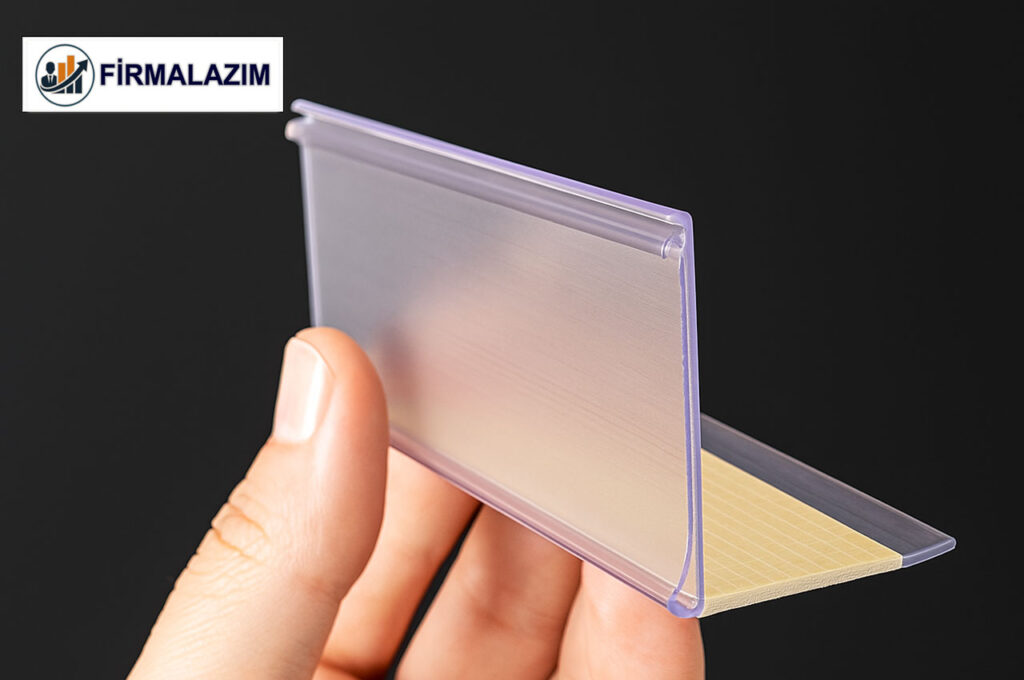
Shelf-front label holders secure pricing, promotional, and product data at the exact point of customer decision. They prevent misplacement of paper or digital tags while maintaining clear sight lines. In high-traffic stores, poorly designed holders lead to frequent replacements and pricing errors that erode margins. Firmalazım designs profiles that grip standard shelf edges without requiring permanent modification to the shelving structure itself.
The holders also serve inventory discipline. When labels remain fixed in position, staff can update information faster during promotions or price changes. This reduces labor hours spent searching for displaced tags. In multi-aisle operations, consistent holder placement creates visual order that customers subconsciously associate with reliability.
Material selection determines both lifespan and total cost of ownership. Soft PVC versions flex during installation and resist cracking under moderate impact. Rigid acrylic options deliver higher optical clarity and resist yellowing under continuous lighting. Firmalazım offers both material families so operators can match the fixture to the specific environment rather than forcing a single solution across the entire store.
Material Performance Under Real Store Conditions
PVC profiles handle humidity and temperature swings typical of produce and dairy sections without warping. Their flexibility allows quick insertion onto wire or metal shelves of varying thickness. Acrylic versions maintain dimensional stability in climate-controlled cosmetics or electronics areas where appearance matters more than flexibility.
Aluminum profiles appear in premium or industrial settings. They accept higher mechanical loads and integrate cleanly with modular shelving systems. Firmalazım supplies matching connection pieces so aluminum sections can form continuous runs or custom frames without visible joints that collect dust.
Field observations show that material mismatch causes the majority of premature failures. A rigid profile forced onto a flexible wire shelf eventually loosens; a soft profile on a sharp metal edge deforms. Matching the holder chemistry and geometry to the shelf type eliminates these recurring costs.
Mounting Methods Across Shelf Geometries
Clip-on designs attach without tools and suit temporary or frequently reconfigured layouts. Adhesive-backed holders work on glass or solid wood surfaces where mechanical clips cannot grip. Magnetic variants attach to steel shelves and allow rapid relocation during planogram changes.
Firmalazım produces each mounting style in multiple depths so the label face sits at the optimal viewing angle. Lower shelves often require forward-tilted profiles to remain readable from standing height. Upper shelves benefit from upright orientation that reduces glare from overhead lighting.
Installation sequence affects long-term reliability. Cleaning the contact surface, verifying edge thickness, and applying even pressure prevent later detachment. Stores that train staff on these steps report substantially lower replacement rates than those that treat holders as disposable accessories.
Custom Sizing and Production Thresholds
Standard lengths cover most common shelf modules, yet many stores operate non-standard fixtures. Firmalazım cuts profiles to exact shelf lengths, eliminating gaps that allow labels to shift sideways. Custom production begins at moderate order quantities, typically two hundred pieces and above, which keeps unit costs viable while accommodating unique requirements.
The process starts with precise measurement of the target shelf edge, including any existing protective strips or price channels. Design confirmation follows, then material selection and cutting. Quality checks verify both dimensional accuracy and surface finish before packaging. This sequence prevents the common problem of ordered lengths that fail to seat correctly once they arrive on site.
Operators who plan custom runs during store renovations or new branch openings achieve better visual consistency and avoid the piecemeal appearance of mixed standard and improvised holders.
Electronic Shelf Labels and System Architecture
Electronic shelf labels replace printed tags with low-power displays that update wirelessly. Firmalazım supplies and integrates E-ink based units from established manufacturers, covering sizes from small cosmetics tags to large promotional screens. Battery life commonly exceeds five years under normal update frequency because the display consumes power only during image changes.
Gateway placement and network density determine reliability. Dense product areas require more gateways to maintain consistent signal strength. Firmalazım evaluates floor layouts and product density before recommending gateway counts, reducing the risk of dead zones that force manual overrides.
Integration with existing ERP or pricing software remains the largest implementation variable. Successful projects map the data fields carefully so price, promotion flags, and stock status transfer without manual re-entry. Partial digital conversions—high-velocity categories first—allow stores to validate processes before full rollout.

Comparative Cost Structures of Labeling Approaches
Traditional printed labels carry low unit cost but generate continuous labor for printing, cutting, and placement. Electronic systems require higher initial capital yet eliminate most of that labor and reduce pricing errors that trigger customer complaints or regulatory issues. Firmalazım provides both traditional profiles and electronic solutions so operators can calculate break-even points using their own labor rates and promotion frequency.
Hidden costs often dominate the comparison. Mispriced items during high-volume periods create direct margin loss. Frequent label reprints generate paper waste and disposal expenses. Electronic systems shift these costs into predictable hardware amortization and occasional battery replacement.
Stores with high promotion volume and frequent price adjustments typically recover electronic investment faster than those with stable, low-change pricing. Hybrid approaches—electronic on promotional end-caps and traditional on stable core categories—offer intermediate capital outlay while still capturing major labor savings.
Operational Effects on Staff Productivity and Customer Flow
Clear, correctly positioned labels reduce the time customers spend locating price information. This shortens dwell time in high-traffic aisles and improves overall store throughput. Staff spend fewer minutes correcting displaced or damaged tags and more time on higher-value tasks such as stock replenishment and customer assistance.
Product pushers and shelf dividers supplied by Firmalazım further reinforce these gains. Pushers keep merchandise front-facing; dividers prevent product migration between facing. Together with proper label holders, they create a self-maintaining presentation that requires less daily intervention.
In warehouse and back-of-house applications the same principles apply. Clear bin labels and durable holders accelerate picking accuracy and reduce search time. Firmalazım produces industrial-grade versions that withstand higher dust and impact loads typical of distribution environments.
Risk Factors in System Selection and Deployment
Material degradation under ultraviolet exposure or chemical cleaners ranks among the most common long-term risks. Firmalazım selects formulations that resist yellowing and surface etching from standard retail cleaning agents. Operators should still test sample holders against their actual cleaning protocol before full purchase.
Electronic systems introduce network and software risks. Firmware updates, gateway firmware mismatches, and pricing data mapping errors can produce temporary display inaccuracies. Phased rollout and parallel paper-label backup during transition periods mitigate these exposures.
Supply-chain concentration presents another risk. Relying on a single source for critical fixtures can delay renovations or new store openings. Firmalazım maintains production capacity and partner relationships that support both standard and custom orders with predictable lead times.
Brochure Stands, Menu Holders, and Point-of-Sale Communication
Desktop and floor brochure stands organize promotional literature without cluttering surfaces. Foldable designs allow rapid deployment at events or temporary promotions and compact storage afterward. Firmalazım produces acrylic and metal variants that accept standard literature sizes while protecting edges from curling and soiling.
Menu holders and table tents serve hospitality and café environments. Acrylic construction provides clarity and easy cleaning; weighted bases prevent tipping. Custom sizing accommodates unique menu formats or multi-panel displays. These fixtures convert passive table space into active communication points for specials and brand messaging.

Product Presentation Accessories Beyond Labeling
Shelf dividers and product pushers maintain planogram integrity. Firmalazım supplies sets compatible with common retail shelf profiles. Correct divider spacing prevents product mixing and simplifies inventory counts. Pushers reduce the labor of facing merchandise after each customer interaction.
Suction-cup fixtures and clip systems support temporary signage and secondary displays. These accessories expand the utility of existing fixtures without permanent alteration, useful during seasonal campaigns or limited-time offers.
Warehouse, Factory, and Non-Retail Applications
Label holders and identification systems transfer directly to industrial settings. Durable profiles mark bins, racks, and workstations. Aluminum framing components allow construction of custom carts, frames, and protective enclosures. Firmalazım supplies both the profiles and the connecting hardware so users can assemble solutions on site without specialized tooling.
In manufacturing environments the same components organize tooling and component storage. Clear labeling reduces search time and error rates during assembly or maintenance.
Sustainability Considerations in Fixture Selection
Longer-lasting materials reduce replacement frequency and associated waste. Firmalazım prioritizes formulations that maintain performance under repeated cleaning cycles. Electronic labels further reduce paper consumption once the transition is complete. Operators evaluating total environmental impact should include both the fixture lifespan and the consumables it replaces.
Recyclability of end-of-life materials varies by polymer type. Clear separation of PVC, acrylic, and aluminum components at disposal improves recovery rates. Specifying mono-material designs where possible simplifies this process.
Emerging Directions in Retail Information Delivery
Electronic labels continue to gain color capability and larger formats. Integration with inventory sensors and automated price optimization software will increase. Firmalazım tracks these developments and supplies systems that accept future software upgrades rather than requiring hardware replacement.
Hybrid physical-digital approaches remain relevant. Physical holders that accept both traditional inserts and electronic modules provide flexibility during multi-year transition periods. Stores can upgrade individual sections as budget and operational readiness allow.
Decision Criteria for Procurement Teams
Procurement decisions should begin with measurement of existing shelf edges and documentation of current labor hours spent on labeling. Material samples tested under actual store conditions prevent later dissatisfaction. Total cost calculations must include installation labor, expected replacement cycles, and the value of reduced pricing errors.
Firmalazım supports this process by providing technical drawings, material specifications, and sample kits. Custom production capability allows alignment with unique store standards rather than forcing adaptation to limited catalog options.
Practical Scenarios Across Retail Formats
A mid-size supermarket converting high-velocity categories to electronic labels typically begins with dairy and packaged goods. Traditional PVC holders remain on slower-moving categories until the next capital cycle. A specialty pharmacy prioritizes optical clarity and chemical resistance for acrylic holders. A warehouse operation specifies heavier aluminum profiles and industrial adhesives.
Each scenario shares the requirement for accurate edge measurement and clear performance expectations. Stores that document these parameters before ordering experience fewer installation delays and higher long-term satisfaction.
Return on Investment Calculations
Traditional systems show low upfront cost but accumulate labor and reprint expenses. Electronic systems reverse the profile: higher capital, lower ongoing cost. Hybrid implementations often deliver the most favorable cash-flow curve for mid-size operators. Firmalazım can supply the component pricing and technical parameters needed for internal modeling.
Sensitivity analysis around promotion frequency and labor rates reveals the break-even window. Stores with weekly promotional cycles recover electronic investment faster than those with quarterly adjustments.
Quality Assurance and Longevity Expectations
Dimensional consistency, surface finish, and grip strength determine service life. Firmalazım applies quality checks at multiple production stages. Operators should inspect incoming shipments for edge straightness and surface defects before installation. Proper cleaning and avoidance of aggressive solvents extend usable life beyond nominal expectations.
Electronic units require periodic battery status monitoring and firmware consistency. Documented maintenance schedules prevent unexpected blank displays during peak trading periods.
Integration with Existing Infrastructure
Most retail shelves accept standard clip or adhesive profiles without modification. Older or proprietary shelving may require adapter pieces or custom profiles. Firmalazım evaluates non-standard edges and produces compatible solutions rather than requiring shelf replacement.
Electronic systems must coexist with existing wireless networks and power constraints. Site surveys identify potential interference sources and optimal gateway locations before hardware arrives.
Strategic Considerations for Multi-Site Operators
Consistency across branches improves brand perception and simplifies staff training. Standardized holder profiles and electronic platforms reduce the variety of spare parts and software versions that must be managed. Firmalazım supports volume pricing and phased delivery schedules that align with multi-site rollout calendars.
Centralized specification of materials and mounting methods prevents local improvisation that later creates maintenance complexity.
Future Risk Landscape
Regulatory pressure on pricing accuracy and transparency continues to increase. Systems that reduce human error in price display gain relative value. Supply-chain volatility in polymer and electronic components remains a background risk; diversified production capacity and safety-stock practices mitigate exposure.
Technology obsolescence risk is higher for proprietary electronic platforms than for open-protocol systems. Selecting solutions that accept software updates and multi-vendor gateways protects the investment over longer horizons.
Firmalazım continues to expand both traditional and electronic offerings so operators retain choice as the balance between physical and digital labeling evolves. The combination of custom manufacturing capability, material range, and system integration experience positions the company as a practical partner for stores seeking durable, operationally efficient information display solutions.