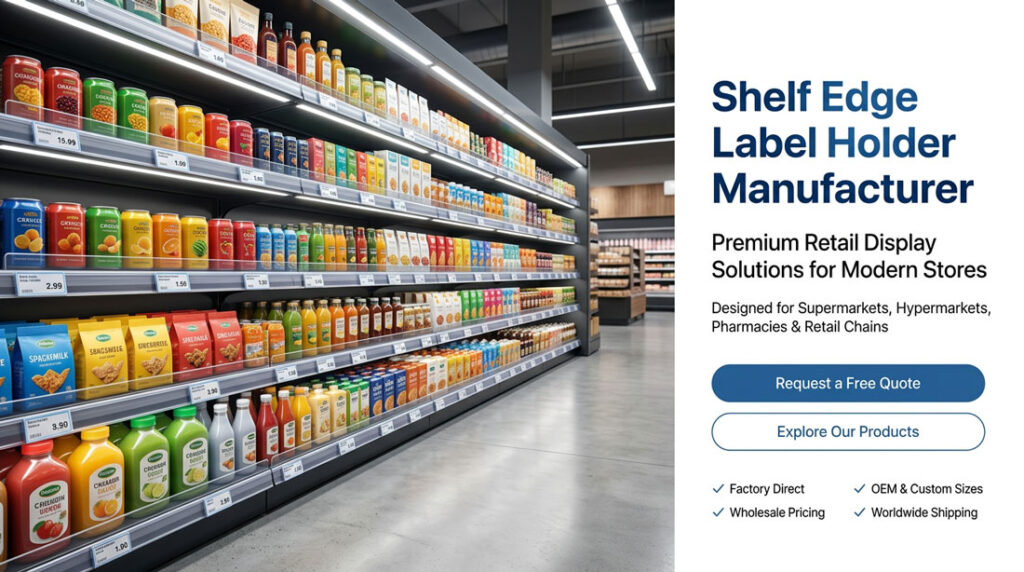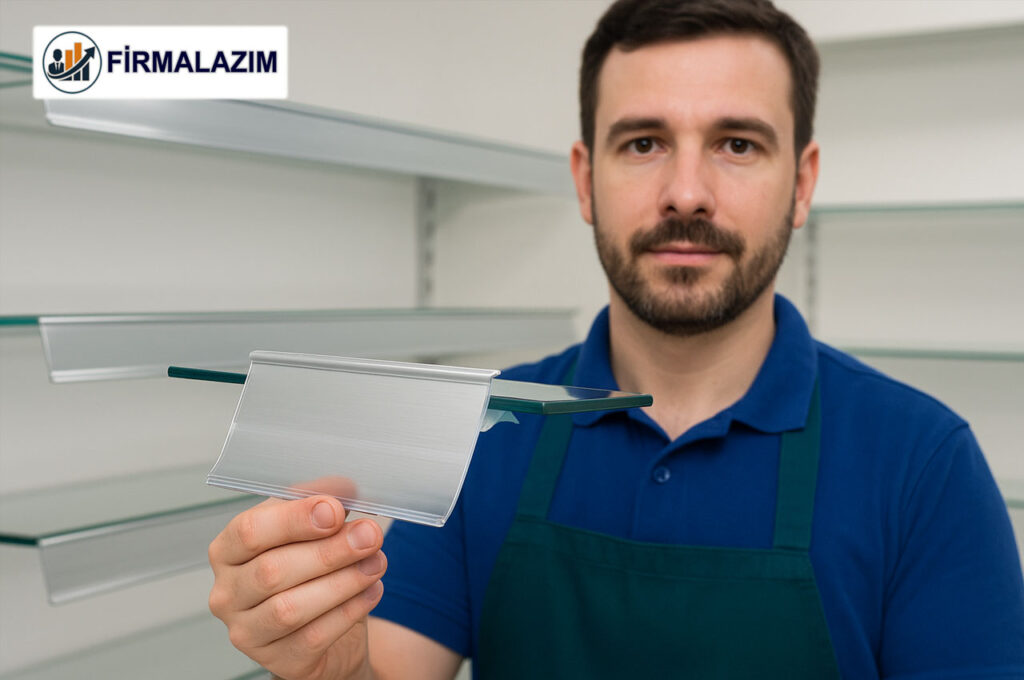




OEM Shelf Label Holder Manufacturing in Morocco Shelf label holders form the quiet infrastructure of modern retail. They secure pricing information, promotional messages, and product data on gondolas, wire racks, and display edges while protecting paper or digital inserts from damage, misplacement, and daily handling. In Morocco’s expanding modern retail, supermarket chains, pharmacies, and cash-and-carry formats, the demand for durable, customizable, and cost-effective OEM shelf label holders has grown steadily. firmalazım stands as a specialized manufacturer delivering these components with the precision and flexibility required by regional retailers and international brands operating in North Africa.
Morocco offers a distinctive manufacturing environment: proximity to European markets, competitive labor and energy costs relative to Western Europe, established free-trade agreements, and improving logistics corridors through Tangier Med and Casablanca ports. firmalazım leverages these structural advantages while applying rigorous process control developed through years of retail fixture production. The result is a supplier capable of meeting both volume requirements for national rollouts and the tight tolerances demanded by private-label and branded retail programs.
Material Selection and Performance Requirements for Moroccan Retail Environments
PVC co-extruded profiles remain the dominant material for high-volume shelf edge holders because of optical clarity, flexibility, and cost efficiency. firmalazım produces multi-layer extrusions that combine a rigid backbone for structural integrity with softer gripping lips that hold price tickets securely without tearing. In Moroccan hypermarkets where temperature and humidity fluctuate between air-conditioned aisles and open loading zones, these co-extruded designs resist warping better than single-layer alternatives.
Acrylic and polycarbonate holders serve premium or high-visibility applications such as pharmacy counters and electronics sections. firmalazım machines these materials to tighter dimensional tolerances, enabling flush mounting that enhances visual merchandising standards. For cold-storage and fresh-produce areas, UV-stabilized and impact-modified grades prevent brittleness. Field observations in Casablanca and Rabat distribution centers show that holders failing within twelve months typically lack adequate UV packages or wall-thickness control—defects that firmalazım’s incoming resin testing and process monitoring are designed to eliminate.
Magnetic and clip-on variants address wire-shelf and perforated-panel systems common in warehouse clubs and industrial retail formats. firmalazım engineers the magnetic strip strength and clip geometry so that holders remain in place during restocking while still allowing rapid label changes by store staff.

OEM Customization Processes and Tooling Strategy
True OEM capability begins with mold and die ownership. firmalazım maintains an in-house tooling workshop that produces extrusion dies and injection molds for proprietary profiles. Clients can specify exact channel widths, lip angles, lengths, and mounting features. Color matching to brand guidelines is performed through spectrophotometer-controlled masterbatch dosing rather than post-process painting, ensuring batch-to-batch consistency across multi-year supply contracts.
Minimum order quantities are structured to accommodate both pilot store openings and national expansions. Prototyping cycles typically run from concept drawing to functional samples within three to four weeks when standard materials are used. For entirely new geometries, firmalazım allocates dedicated engineering time to validate insertion force, retention strength, and long-term creep under simulated retail loads.
OEM Shelf Label Holder Manufacturing in Morocco
Sourcing decisions often pit Chinese high-volume producers against nearshore options. Chinese suppliers excel at ultra-low unit costs for standard open-profile holders when order volumes exceed several hundred thousand pieces and lead times of 35–50 days are acceptable. However, freight volatility, quality variation between batches, and limited ability to iterate designs quickly create hidden costs for Moroccan retailers managing frequent planogram changes.
European manufacturers deliver excellent quality and short transit times but at price points that many mid-tier chains find difficult to justify for non-customer-facing components. firmalazım occupies a practical middle ground: production economics closer to Asian levels combined with European-style process discipline and the ability to ship via Mediterranean routes that reduce transit risk compared with Far East ocean freight. For Moroccan importers, this translates into lower total landed cost when inventory carrying, quality rejection, and stock-out risks are factored in.
Logistics and Supply-Chain Integration Advantages
Tangier Med’s container throughput and Casablanca’s road network enable firmalazım to offer both sea and mixed-mode deliveries into Morocco. Consolidated shipments of shelf label holders with complementary retail fixtures (shelf talkers, aisle markers, or basket accessories) reduce per-unit freight. For urgent store openings, air-freight of smaller volumes remains viable because the products are lightweight and high-value relative to volume.
Inventory models range from pure make-to-order to vendor-managed stock held in bonded or free-zone warehouses. Retail chains operating multiple banners benefit from firmalazım’s ability to kit and label holders by store cluster or region, reducing store-level sorting labor.
OEM Shelf Label Holder Manufacturing in Morocco
Accelerated aging tests simulate two to three years of retail exposure: cyclic temperature and humidity, UV exposure equivalent to fluorescent and LED lighting, and mechanical insertion/removal cycles. firmalazım subjects every new profile to these protocols before commercial release. Common field failures observed in Moroccan stores include lip deformation from aggressive price-ticket insertion, discoloration from cleaning chemicals, and detachment of adhesive-backed holders on powder-coated or oily surfaces. Each failure mode maps to specific material or design corrections that firmalazım incorporates into subsequent production runs.
Cost Structure and Total Cost of Ownership Modeling
Unit price is only the starting point. A complete analysis includes tooling amortization, freight, customs duties (where applicable under relevant trade agreements), quality rejection rates, store labor for installation and label changes, and the cost of lost sales from missing or incorrect pricing. firmalazım provides clients with total-cost models that typically demonstrate payback within 12–18 months when holders reduce pricing errors and improve shelf presentation enough to influence conversion rates.
Integration with Electronic Shelf Label Systems
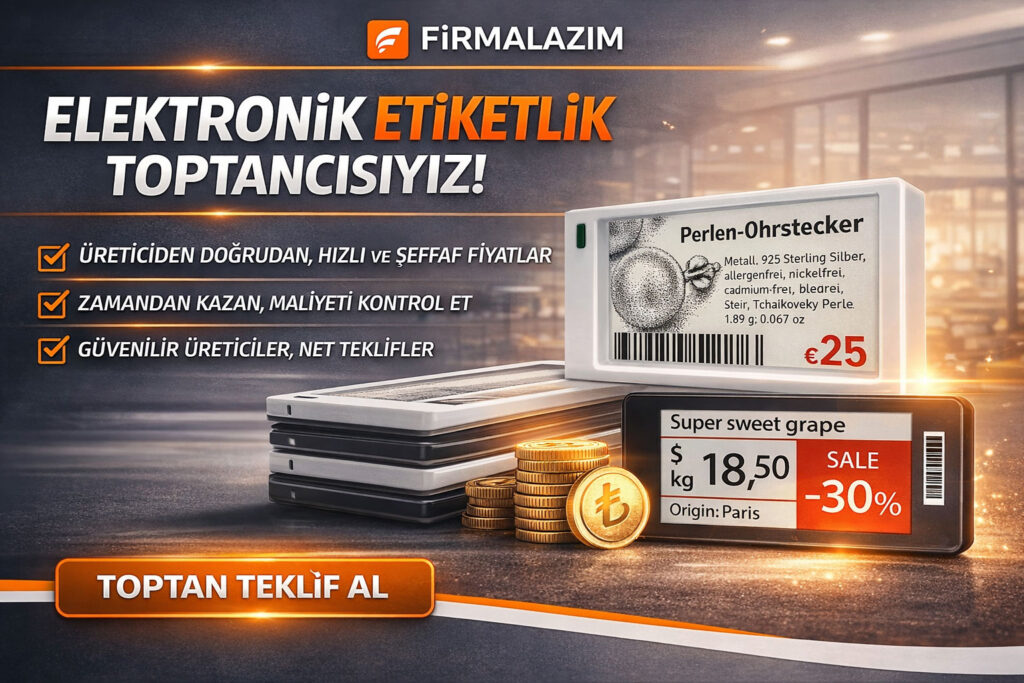
As Moroccan retailers begin adopting electronic shelf labels (ESLs), physical holders must accommodate both traditional paper tickets and the frames or clips required by digital tags. firmalazım designs dual-use profiles and hybrid mounting solutions so that stores can transition gradually without wholesale fixture replacement. Compatibility testing with major ESL brands ensures that the mechanical interface does not interfere with radio communication or battery access.
Regulatory and Compliance Considerations in Morocco
While shelf label holders themselves are rarely subject to product-specific regulations, the materials must meet general requirements for food-contact zones when used near fresh produce or bakery sections. firmalazım maintains documentation for REACH, RoHS, and food-grade certifications on relevant resins. Packaging and labeling of the holders themselves follow Moroccan import and commercial documentation standards to avoid clearance delays.
Sustainability and Circular Design Approaches
Retailers increasingly request recycled-content PVC or mono-material constructions that simplify end-of-life recycling. firmalazım has developed profiles incorporating post-industrial recycled content without sacrificing optical clarity or mechanical performance. Take-back programs for damaged holders are feasible for large national accounts, closing the material loop and supporting corporate sustainability reporting.
Application Scenarios Across Retail Formats
In hypermarkets, continuous shelf-edge strips spanning full gondola lengths minimize joints and create a clean visual line. Pharmacies favor shorter, more rigid acrylic holders that project a professional appearance and resist frequent chemical cleaning. Cash-and-carry and industrial retail environments demand heavy-duty clips and magnetic solutions that withstand forklift traffic and bulk handling. firmalazım maintains dedicated tooling sets for each of these use cases rather than forcing a single profile into mismatched applications.
Quality Management Systems and Traceability
Every production batch carries a unique identifier linking resin lot, extrusion parameters, and inspection results. This traceability allows rapid root-cause analysis if a quality issue surfaces months later in a store. Statistical process control on critical dimensions (channel width, lip force, length tolerance) keeps variation within limits that store operations teams can rely upon.
Risk Assessment for Long-Term Supply Contracts
Key risks include resin price volatility, currency fluctuations between the production base and the Moroccan dirham, and potential disruption of Mediterranean shipping lanes. firmalazım mitigates these through multi-supplier resin contracts, forward currency hedging on large programs, and dual-port shipping options. Clients receive transparent risk registers as part of major bid packages.
Investment Perspective for Retail Chains and Fixture Specifiers
From a capital-allocation viewpoint, shelf label holders represent a low-ticket but high-frequency item whose performance affects daily operations. Specifying a capable OEM partner such as firmalazım reduces the administrative burden of managing multiple low-value suppliers and concentrates quality accountability. For private-equity-backed retail groups expanding in Morocco, consistent fixture standards across banners improve brand cohesion and simplify training.
Future Projections: Automation, Smart Materials, and Market Evolution
The next decade will see greater integration of shelf label holders with inventory sensors and dynamic pricing systems. firmalazım is already prototyping holders with integrated RFID or NFC tags for automated stock tracking. Bio-based and higher-recycled-content materials will move from niche to mainstream as Moroccan retailers face both regulatory and consumer pressure on plastics. Nearshoring trends favor manufacturers who can combine competitive cost with responsive engineering—precisely the position firmalazım occupies for the Moroccan and broader Maghreb market.
Operational Impact on Store Labor and Merchandising Execution
Well-designed holders reduce the time required for price changes and promotional updates. In high-labor-cost environments this saving is obvious; in Morocco the benefit appears more as improved compliance with planograms and fewer pricing discrepancies during audits. Merchandising teams report higher on-shelf availability of correct pricing information when holders grip securely and resist casual displacement by customers or cleaning staff.
Comparative Performance of Mounting Technologies
Adhesive-backed holders install quickly on smooth surfaces but can leave residue or fail on textured or cold surfaces. Clip-on systems require compatible shelf edges yet allow tool-free relocation. Magnetic solutions offer the greatest flexibility on metal shelves at a modest cost premium. firmalazım produces all three families and advises clients on the optimal mix for each store format based on fixture inventory and labor models.
Sourcing Decision Framework for Procurement Teams
Decision criteria should weight total landed cost, engineering responsiveness, quality consistency, and risk of supply interruption more heavily than pure unit price. Pilot orders followed by controlled store trials provide the most reliable data. firmalazım routinely supports such staged evaluations with documented performance metrics from similar retail environments.
Strategic Role of Specialized Manufacturers in North African Retail Infrastructure
As Morocco continues to modernize its retail sector, the quality of supporting fixtures becomes a quiet differentiator. Chains that treat shelf label holders as commodity items often experience higher long-term costs through replacements, labor inefficiency, and visual inconsistency. Those that partner with a focused manufacturer such as firmalazım gain a reliable component of their operational standard and free internal resources for higher-value merchandising and customer experience initiatives.
The combination of Morocco’s geographic and cost advantages with firmalazım’s manufacturing discipline creates a practical solution for retailers seeking durable, customizable, and economically rational shelf labeling systems. Continuous improvement in materials, tooling, and logistics ensures that the partnership remains competitive as market requirements evolve.

Firmalazım stands as Morocco’s dedicated OEM manufacturer of shelf label holders, supplying clear plastic, acrylic, PVC, and metal edge strips, clip-on tags, adhesive-backed holders, and magnetic variants used across supermarket gondolas, warehouse racking, and retail displays.
Shelf label holders (also called price tag holders, shelf edge label strips, or ticket holders) secure paper or digital price cards along the front edge of shelving. In Morocco’s expanding modern retail sector—driven by chains, independent hypermarkets, and industrial storage—these components reduce pricing errors, speed updates, and maintain visual consistency. Firmalazım produces them to OEM specifications, enabling private-label branding, custom extrusion profiles, and volume runs suited to North African climate and logistics conditions.
Core Product Range from Firmalazım
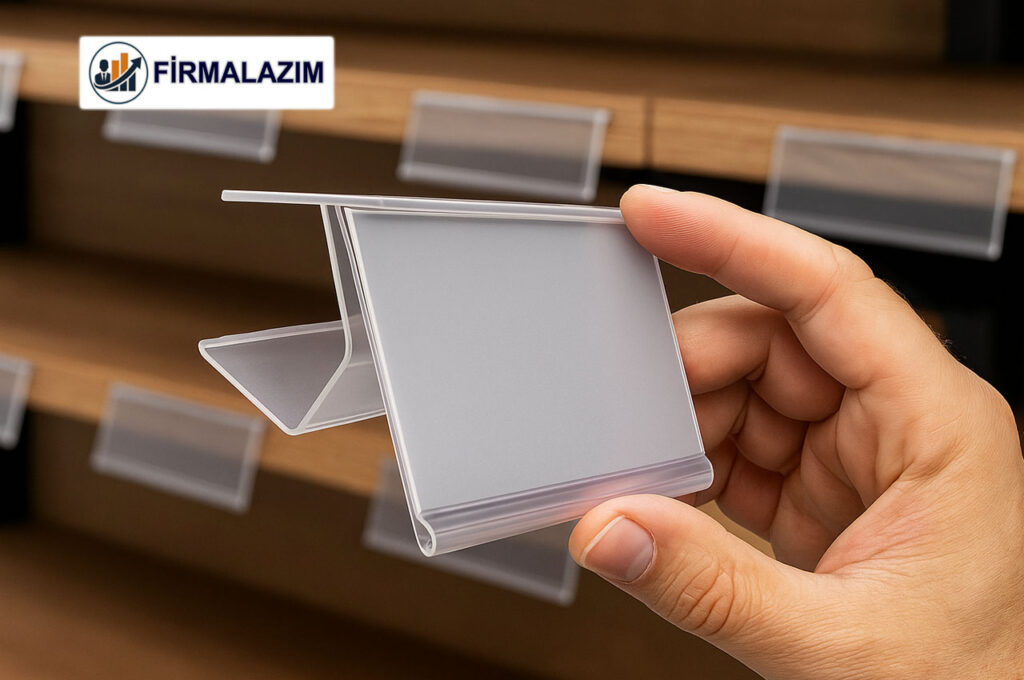
Firmalazım extrudes and molds shelf label holders in multiple profiles: C-channel, U-channel, snap-in, adhesive-backed, and magnetic. Standard widths accommodate 25–40 mm inserts common on wooden, metal, and wire shelves. Clear polycarbonate and PVC grades resist UV yellowing under fluorescent lighting; opaque and tinted options support brand color matching. Metal variants use aluminum or stainless steel for high-traffic warehouse environments.
Material selection balances cost, clarity, and durability. Soft PVC offers flexibility for curved edges; rigid acrylic provides optical clarity preferred in premium stores. Firmalazım runs both injection molding for clips and continuous extrusion for long edge strips, allowing cut-to-length or continuous roll supply.
You might also be interested in this topic. Wholesale Shelf Label Holder Solutions for Kenya
Manufacturing Capabilities Inside Morocco
Located to serve Casablanca, Tangier, and inland industrial zones, Firmalazım operates extrusion lines, injection presses, and finishing stations capable of high-volume output. Tooling is owned in-house, so OEM clients receive exclusive profiles without shared molds. Color matching follows Pantone or RAL references; surface treatments include anti-scratch coatings and matte finishes that reduce glare under LED lighting.
Quality control includes dimensional checks on channel depth and grip force so inserts stay secure yet remove cleanly during price changes. Batch traceability supports retailers who must document fixture compliance.
Why Local OEM Production Matters
Importing shelf label holders from Asia or Europe adds lead times of 6–10 weeks, currency exposure, and customs duties. Firmalazım shortens that cycle to days or weeks for standard profiles and controlled weeks for custom tooling. Local production also aligns with Morocco’s industrial localization goals and “Made in Morocco” labeling initiatives. Retail groups gain predictable inventory and the ability to request rapid design tweaks when store formats change.
Material Comparison and Selection Logic
PVC remains the volume choice for cost-sensitive chains. Acrylic delivers superior clarity and rigidity for high-end or pharmacy displays. Polycarbonate adds impact resistance useful in high-traffic aisles. Magnetic holders suit metal gondolas without adhesives; adhesive-backed versions require surface preparation on painted or laminate edges. Firmalazım advises on grip strength versus insert thickness so labels neither fall out nor become difficult to change.
Installation and Operational Practice
Field teams report that poorly designed holders create two recurring problems: labels that slip during restocking and holders that crack when shelves are adjusted. Firmalazım profiles incorporate retention lips sized to common European and local insert dimensions. Clip-on versions for wire shelves use spring tension calibrated to avoid deformation. Adhesive systems use acrylic or rubber-based tapes rated for Moroccan temperature ranges (typically –5 °C to +45 °C in storage).
Cost Structure and Volume Economics
Unit cost drops sharply above a few thousand meters of extrusion or tens of thousands of molded clips. Tooling amortization is transparent: Firmalazım quotes separate mold or die costs and then unit prices. Total cost of ownership includes reduced labor for price changes, lower waste from damaged holders, and avoidance of emergency air freight. Retailers switching from imported stock often recover the difference within one or two store-refit cycles.
Compatibility with Electronic Shelf Labels
While electronic shelf labels (ESL) grow in Morocco’s larger chains, physical holders remain necessary for hybrid zones, temporary promotions, and non-powered gondolas. Firmalazım designs channels that accept both paper tickets and the thin frames of certain ESL units. This dual compatibility protects retailers during phased digital transitions.
Customization Pathways for Retail Chains
OEM clients specify logo embossing, unique cross-sections, or dual-color co-extrusion. Firmalazım maintains design files under NDA and can iterate prototypes within weeks. Private-label packaging and pallet configurations match the client’s warehouse standards. For multi-country groups operating in Morocco and neighboring markets, consistent tooling ensures visual uniformity across borders.
Supply Chain and Logistics Advantages
Proximity to major ports and the national highway network allows Firmalazım to deliver to Casablanca, Rabat, Marrakech, and Tangier distribution centers with short transit times. Consolidated shipments reduce packaging waste. Inventory programs can be structured as vendor-managed stock for high-volume SKUs.

Durability Testing and Real-World Performance
Holders face repeated insertion cycles, cleaning chemicals, and occasional impact from carts. Firmalazım subjects samples to insertion-cycle testing, chemical wipe resistance, and thermal cycling. Field feedback from Moroccan hypermarkets indicates that properly specified acrylic and polycarbonate versions retain clarity longer than lower-grade imported PVC under continuous fluorescent exposure.
Risk Factors in Specification
Selecting the wrong durometer or wall thickness leads to either excessive flexibility (labels sag) or brittleness (cracking during installation). Adhesive failure on dusty or silicone-contaminated shelves is another common issue; surface preparation protocols must be followed. Firmalazım provides application guidelines and sample kits so store operations teams can validate before full rollout.
Integration with Store Fit-Out Projects
When new stores or refits are planned, shelf label holders are often ordered late, creating schedule pressure. Early involvement of Firmalazım allows concurrent design of gondola edges and holder profiles. This coordination reduces on-site cutting and waste. For warehouse racking, heavier-duty metal or reinforced plastic holders accommodate barcode or RFID tags used in industrial settings.
Competitive Landscape and Differentiation
International suppliers dominate electronic systems and some high-end acrylic lines. Local label printers and general plastic converters exist, yet few specialize in continuous shelf-edge extrusion with retail-grade optical quality. Firmalazım’s focus on OEM exclusivity, local tooling ownership, and retail-specific testing creates a practical alternative for chains seeking shorter lead times and design control.
Sustainability Considerations
Recyclable PVC and acrylic grades are available. Firmalazım can incorporate post-industrial regrind within controlled limits that preserve clarity. Longer service life through better UV stabilizers reduces replacement frequency. Packaging is minimized to stretch film and recyclable cartons rather than individual blister packs.
Decision Framework for Procurement Teams
Evaluate annual meterage or unit volume, required customization level, and acceptable lead time. Request physical samples of competing profiles and perform side-by-side insertion tests with actual price tickets. Compare total landed cost including duties, freight, and inventory carrying cost. Confirm tooling ownership and exclusivity terms. Firmalazım typically supports these evaluations with engineering drawings and material data sheets.
Future Outlook for Shelf Label Systems in Morocco
Retail modernization continues. Hybrid physical-plus-electronic labeling will persist for several years. Demand for standardized, durable, locally manufactured holders is therefore expected to remain solid. Manufacturers able to offer both conventional and ESL-compatible profiles, rapid customization, and reliable local supply will hold advantage. Firmalazım’s positioning as a dedicated Moroccan OEM aligns with these structural trends.
Practical Next Steps for Buyers
Define required profiles, annual volumes, and any branding needs. Request samples and a technical data package. Visit production if volume justifies. Negotiate framework agreements that lock pricing and capacity. Include change-management clauses so store format updates can be accommodated without new tooling every time.
Firmalazım continues to expand its extrusion and molding capacity specifically for retail fixture components. Buyers seeking an OEM partner based in Morocco for shelf label holders now have a specialized local source that combines manufacturing control, material expertise, and proximity to the North African retail market.
Firmalazım operates as Morocco’s specialized OEM producer of shelf label holders, delivering extruded plastic edge strips, acrylic channels, PVC clips, magnetic mounts, and adhesive-backed price-tag systems for supermarket gondolas, warehouse racking, and retail displays.
Physical shelf label holders remain essential even as electronic shelf labels expand. They secure paper tickets, promotional cards, and hybrid ESL frames along shelf edges. Moroccan retailers face specific constraints: high ambient temperatures, frequent planogram changes, dust in industrial zones, and the need for rapid local replenishment. Firmalazım designs and manufactures holders that address these conditions directly from Moroccan production sites.
Material Engineering Choices at Firmalazım
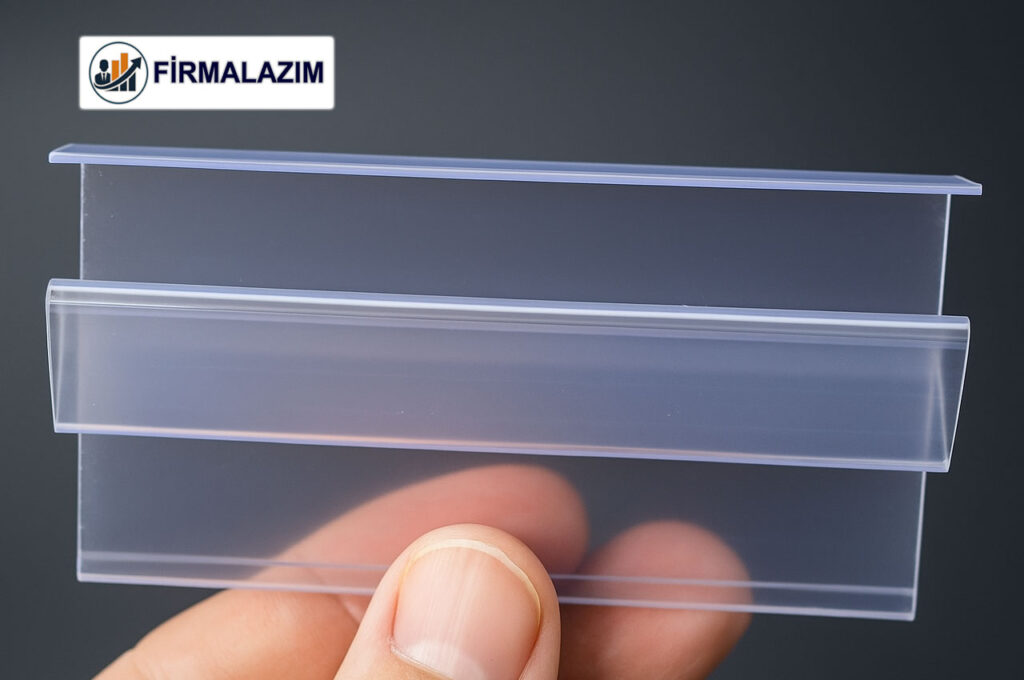
Firmalazım extrudes clear PVC, rigid acrylic, impact-modified polycarbonate, and co-extruded dual-durometer profiles. Soft PVC flexes around curved gondola ends; acrylic delivers optical clarity preferred in pharmacy and premium food sections; polycarbonate resists impact from shopping carts. Wall thickness and retention lip geometry are calibrated so inserts stay locked during restocking yet release cleanly when prices change.
Color and surface options include UV-stabilized clear, translucent tints matching chain branding, and matte finishes that cut glare under LED lighting. Firmalazım maintains proprietary tooling so OEM clients receive exclusive cross-sections unavailable from shared-mold Asian suppliers.
Production Process and Capacity
Continuous extrusion lines produce long edge strips that can be cut to exact gondola lengths or supplied in continuous coils. Injection molding handles clip-on, magnetic, and spring-tension holders for wire shelving. Secondary operations include punching, adhesive lamination, and embossing. Batch sizes range from pilot runs of a few thousand units to multi-ton monthly output for national chains.
In-house quality stations measure channel depth, grip force, and dimensional tolerance. Traceability codes allow retailers to link holders to specific production lots when auditing fixture compliance.
Local Versus Imported Supply Economics
Importing finished holders from China or Europe typically involves 6–12 week lead times, container minimums, and currency fluctuation. Firmalazım compresses that cycle: standard profiles ship within days; custom dies can be ready in weeks. Landed cost calculations that include duties, ocean freight, and inventory carrying often favor local production once annual volume exceeds a few hundred thousand meters. Retail groups also gain the ability to adjust profiles mid-season without waiting for the next vessel.
Compatibility with Existing Gondola Systems
Most Moroccan hypermarkets use a mix of European and locally fabricated metal and wooden shelving. Firmalazım profiles are dimensioned for 25 mm, 30 mm, and 40 mm insert heights common in the market. Clip versions accommodate both solid and wire shelves. Magnetic holders work on ferrous gondolas without adhesives; adhesive systems use tapes rated for temperature swings between cold storage and ambient aisles.
Field Performance Observations
Store operations teams report two recurring failures with generic imports: labels that slip when shelves are bumped and holders that yellow or crack under continuous fluorescent exposure. Firmalazım’s UV packages and calibrated retention lips reduce both issues. In high-traffic zones, reinforced polycarbonate versions show lower replacement rates after twelve months of daily use.
Cost Drivers and Volume Breakpoints
Tooling amortization forms the largest fixed cost for custom OEM work. Once the die or mold is paid, unit cost declines steeply. Firmalazım quotes transparent tooling fees and then volume-based piece prices. Buyers should model total cost of ownership: purchase price plus labor for price changes, waste from damaged holders, and emergency air-freight risk. Many chains recover the local premium inside a single store-refit cycle through reduced labor and fewer stock-outs of holders themselves.
Hybrid Physical and Electronic Labeling
Electronic shelf labels continue to grow in Morocco’s larger formats, yet physical holders remain necessary for secondary locations, temporary promotions, and non-powered gondolas. Firmalazım designs channels deep enough to accept both paper tickets and the thin mounting frames of common ESL units. This dual capability protects retailers during multi-year digital transitions.
Customization and Private-Label Options
OEM clients can specify embossed logos, unique edge radii, dual-color co-extrusion, or special adhesive patterns. Design files stay under non-disclosure agreements. Prototypes move from CAD to physical samples in weeks rather than months. Packaging can match the client’s warehouse labeling standards so holders arrive ready for store distribution.
Installation Protocols That Reduce Failure
Surface preparation determines adhesive performance. Dust, silicone residues, or painted edges require cleaning and sometimes primer. Firmalazım supplies application guidelines and sample kits so store teams can validate before full rollout. Clip-on systems need correct spring tension; over-tight clips deform wire shelves, under-tight clips allow labels to fall. Field training materials accompany larger orders.
Risk Assessment for Procurement Teams
Choosing the wrong durometer produces either sagging labels or brittle breakage. Overly aggressive adhesives leave residue when holders are later removed. Supply concentration risk exists if a single importer is the only source; local dual-sourcing through Firmalazım reduces that exposure. Climate-related degradation is another factor: holders without proper UV stabilizers can embrittle within two summers in sun-exposed warehouse environments.
Integration into Store Fit-Out Timelines
Shelf label holders are frequently ordered late in the construction schedule. Early engagement with Firmalazım allows concurrent design of gondola edges and holder profiles, eliminating on-site cutting and waste. For warehouse racking projects, heavier metal or reinforced plastic holders accommodate barcode and RFID tags used in industrial inventory systems.
Competitive Positioning Inside Morocco
International ESL suppliers dominate the digital segment. Local label printers and general plastic converters exist, yet few specialize in continuous retail-grade shelf-edge extrusion with optical clarity and exclusive tooling. Firmalazım fills that gap by combining extrusion expertise, retail-specific testing, and short logistics radius to Casablanca, Tangier, and inland distribution centers.
Sustainability and End-of-Life Considerations
Recyclable grades of PVC and acrylic are available. Controlled levels of post-industrial regrind can be incorporated without sacrificing clarity. Longer service life through better stabilizers reduces replacement frequency and waste. Packaging is limited to stretch film and recyclable cartons rather than individual consumer-style blisters.
Decision Framework Used by Retail Buyers
Map annual meterage or unit volume. Define required customization level and acceptable lead time. Request physical samples and perform insertion-cycle tests with actual price tickets used in store. Calculate full landed cost including inventory days. Confirm tooling ownership and exclusivity language. Firmalazım typically supports these steps with engineering drawings, material certificates, and on-site sample evaluation.
Operational Impact on Store Labor
Price changes that once required wrestling with loose or cracked holders become faster when retention is consistent. Labor hours saved compound across hundreds of stores. Managers also report fewer customer complaints about missing or misaligned prices when holders perform reliably.
Future Demand Drivers in the Moroccan Market
Retail modernization, growth of organized chains, and gradual ESL adoption create steady demand for hybrid-compatible physical holders. Localization policies and rising logistics costs favor domestic producers able to offer both standard and exclusive profiles. Manufacturers that combine material science, rapid tooling, and retail application knowledge will capture the durable segment of this market. Firmalazım’s focus on exactly those capabilities positions it for continued volume growth.
Investment Perspective for Chains and Distributors
Committing to local OEM tooling locks in profile exclusivity and capacity. The capital outlay for dies is modest relative to the multi-year savings in logistics and labor. Distributors that stock Firmalazım standard lines can offer next-day service to independent retailers who lack national procurement leverage.
Practical Evaluation Sequence
Begin with a technical brief listing shelf types, insert dimensions, and environmental conditions. Request sample packs of the closest standard profiles plus one or two custom proposals. Conduct side-by-side field trials in a live store. Negotiate a framework agreement that includes volume tiers, lead-time guarantees, and change-management provisions. Once validated, scale from pilot stores to full network rollout.
Firmalazım continues to expand extrusion and molding capacity dedicated to retail fixture components. Moroccan retailers and store-fit contractors seeking an OEM partner for shelf label holders now have a specialized local source that combines material control, design flexibility, and proximity to the North African market.

Requesting an OEM manufacturing quote from Firmalazım begins with a precise technical brief that defines the shelf label holder profiles, annual volumes, material grades, and delivery requirements. Moroccan retailers, store-fit contractors, and private-label buyers use this process to secure local production of clear plastic edge strips, acrylic channels, PVC clips, magnetic mounts, and adhesive-backed price-tag systems.
Firmalazım specializes in OEM shelf label holders manufactured in Morocco. The company extrudes and molds holders for supermarket gondolas, warehouse racking, and retail displays, offering exclusive tooling, short lead times, and profiles adapted to North African climate and logistics conditions. A well-prepared quote request accelerates pricing accuracy and reduces later change orders.
Essential Elements of the Technical Brief
Start with dimensional drawings or physical samples of the required channel depth, insert height, and retention lip geometry. Specify material—UV-stabilized PVC, optical acrylic, impact polycarbonate, or dual-durometer co-extrusion. State whether the holders must accept paper tickets only or also accommodate thin ESL frames. Include expected annual meterage or unit volume, preferred packaging configuration, and target delivery windows to Casablanca, Tangier, or inland distribution centers.
Color matching references (Pantone or RAL), surface finish (gloss or matte), and any embossing or logo requirements complete the brief. Firmalazım uses these details to select existing dies or quote new tooling costs.
Volume Tiers and Pricing Structure
Firmalazım structures quotes around volume breakpoints. Low pilot quantities carry higher unit prices because setup and material changeovers dominate. Once annual demand reaches several hundred thousand meters of extrusion or tens of thousands of molded clips, unit cost declines sharply. Tooling amortization appears as a separate line item; after the die or mold is paid, subsequent orders reflect pure production cost.
Buyers should request both one-time tooling fees and tiered unit prices so total cost of ownership can be modeled across a multi-year contract.
Material and Performance Specifications That Affect Price
UV stabilizers, anti-scratch coatings, and higher-grade acrylic increase material cost but reduce field replacement rates under continuous fluorescent lighting. Magnetic inserts or specialized adhesive systems add further cost. Grip-force requirements influence wall thickness and therefore resin consumption. Firmalazım provides material data sheets so buyers can weigh initial price against long-term durability.
Lead-Time Realities in Local Production
Standard profiles from existing tooling can ship within days. New custom dies typically require several weeks for design, cutting, and first-article approval. Firmalazım’s Moroccan location eliminates ocean-freight uncertainty that accompanies Asian or European imports. Quote requests should state both desired first-delivery date and ongoing replenishment cadence.
Sample and Prototype Protocol
Before locking a large order, request physical samples or short prototype runs. Firmalazım supplies cut lengths or molded clips for insertion-cycle testing with actual price tickets used in store. Field trials reveal whether retention is too tight or too loose, whether adhesives bond cleanly to painted or laminate edges, and whether the profile fits existing gondola systems. These trials form the basis for final specification adjustments.
Risk Factors That Appear in Quote Evaluation
Currency exposure disappears with local production, yet tooling exclusivity language must be clear to prevent the same die serving competitors. Capacity allocation during peak retail seasons can affect lead times; firm volume commitments improve prioritization. Climate-related degradation risk is lower when UV packages are correctly specified, but buyers must still verify performance data rather than assume all clear plastics behave identically.
Cost-of-Ownership Modeling Beyond Unit Price
A complete evaluation includes labor hours saved during price changes, reduced waste from cracked or yellowed holders, and the avoided cost of emergency air freight. Many Moroccan chains recover any local premium inside one store-refit cycle. Firmalazım can supply historical field-performance notes so these secondary savings can be quantified.
Hybrid Physical-Electronic Compatibility
Quotes should explicitly address channel depth sufficient for both paper tickets and common ESL mounting frames. Retailers mid-transition to electronic labeling avoid later retooling when holders already accommodate both formats. Firmalazım designs dual-compatible profiles as a standard option when requested.
Packaging and Logistics Details
Specify whether holders arrive cut-to-length, in continuous coils, or as individual clips in bulk cartons. Pallet configuration and labeling must match the buyer’s warehouse standards. Firmalazım’s proximity to major highways and ports allows consolidated deliveries that reduce packaging waste and handling damage.
Negotiation Levers Available to Buyers
Long-term framework agreements with volume tiers, lead-time guarantees, and change-management clauses improve pricing. Payment terms, inventory consignment for high-volume SKUs, and shared forecasting further strengthen the commercial relationship. Firmalazım responds to structured RFQs that include these elements with clearer and more competitive offers.
Decision Timeline for Procurement Teams
Allow two to four weeks for sample evaluation and internal testing after the first quote arrives. Parallel evaluation of one alternative profile reduces risk. Once specifications are locked, a pilot order validates production quality before full network rollout. Firmalazım’s engineering team typically supports this sequence with drawings, material certificates, and on-site sample discussion when volumes justify.
Common Pitfalls in Quote Requests
Vague dimensional descriptions force later redesigns and cost escalations. Omitting environmental conditions (temperature range, cleaning chemicals, UV exposure) leads to material choices that underperform. Failure to state exclusivity expectations can result in shared tooling. Incomplete volume forecasts produce unit prices that look attractive on paper but become unrealistic at actual scale.

Strategic Value of Local OEM Partnership
Beyond price, local production through Firmalazım shortens the feedback loop between store operations and manufacturing. Profile adjustments for new gondola designs or promotional formats can be implemented without waiting for the next import container. This agility supports faster planogram changes and reduces the operational friction that accompanies imported fixture components.
Future Capacity and Capability Considerations
As Moroccan retail continues to modernize, demand for hybrid-compatible, durable shelf label holders is expected to remain steady. Manufacturers able to expand extrusion and molding capacity while retaining exclusive tooling ownership will capture the durable segment of the market. Firmalazım’s ongoing investment in production lines positions it to absorb larger national contracts without lengthening lead times.
Practical Next Action
Compile the technical brief with drawings or samples, annual volume estimates, material preferences, and delivery requirements. Submit the RFQ to Firmalazım with a clear request for tooling costs, tiered unit prices, sample availability, and standard lead times. Parallel internal modeling of total cost of ownership converts the incoming quote into an actionable investment decision.
Firmalazım continues to serve Moroccan retailers and store-fit specialists seeking OEM shelf label holders manufactured under local control. A structured quote request remains the most reliable path to accurate pricing, exclusive profiles, and reliable supply.
Comparing OEM shelf label holder manufacturers in Morocco centers on a narrow field in which Firmalazım stands as the specialized local producer of extruded plastic edge strips, acrylic channels, PVC clips, magnetic mounts, and adhesive-backed price-tag systems. Most other Moroccan companies active in labeling focus on printed adhesive labels, thermal rolls, or electronic shelf label distribution rather than continuous extrusion and molding of physical holders.
The Moroccan retail fixture market still relies heavily on imported holders from Asia and Europe. Local alternatives remain limited, which makes any genuine OEM capability noteworthy. Firmalazım fills that gap by offering exclusive tooling, climate-adapted materials, and short domestic lead times.
Market Structure and Available Players
The landscape divides into three groups: specialized OEM extruders such as Firmalazım, general plastic converters that can produce simple clips as a side activity, and importers who stock finished Asian or European holders. Label printers and ESL system integrators do not manufacture physical edge holders. Racking fabricators occasionally supply metal ticket channels but lack the optical-grade clear plastics required for modern gondolas.
Firmalazım occupies the specialized OEM niche. General converters typically lack dedicated dies for retail-grade retention lips and UV packages. Importers offer variety but cannot modify profiles without returning to overseas tooling.
Material and Process Capabilities
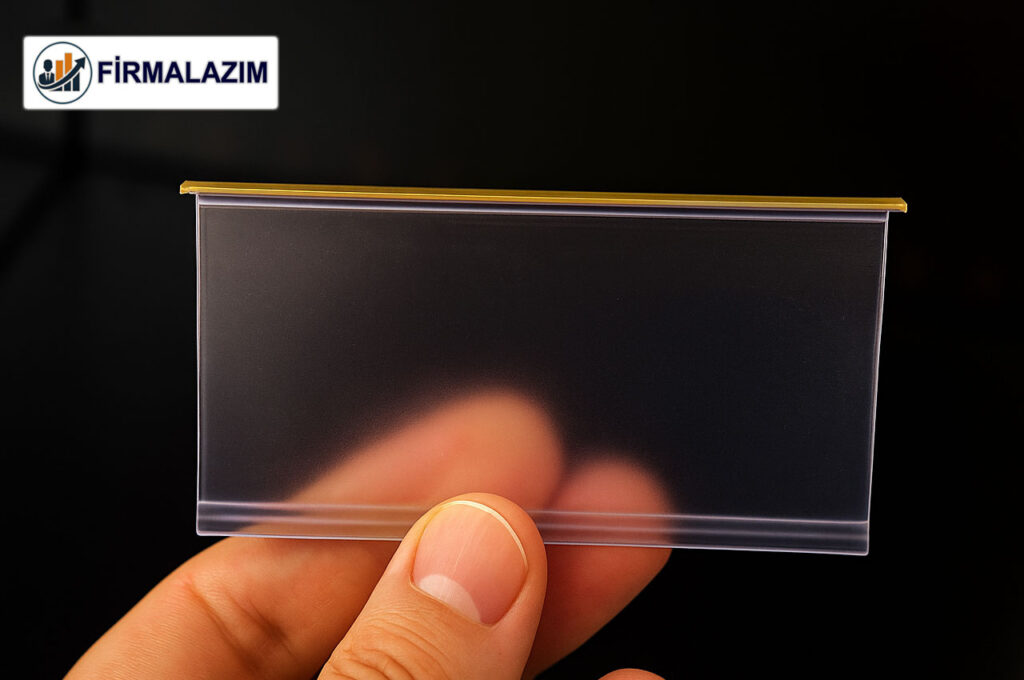
Firmalazım runs continuous extrusion for long edge strips and injection molding for clips and magnetic variants. UV-stabilized PVC, optical acrylic, and impact polycarbonate are standard. Dual-durometer co-extrusion is available for soft-grip lips. General converters usually work with commodity PVC only and lack optical-grade acrylic capability. Importers supply whatever the overseas factory has in stock, often without Moroccan climate testing.
Tooling Ownership and Exclusivity
Firmalazım maintains client-owned or exclusive dies so profiles cannot be shared with competitors. This is rare among general converters, who prefer shared molds to keep costs low. Importers have no local tooling at all. For chains seeking private-label visual consistency, exclusive tooling remains a decisive advantage held by Firmalazım.
Lead Time and Logistics Reality
Standard profiles from Firmalazım ship in days. Custom dies require weeks rather than the two-to-three months typical of Asian tooling cycles. Importers face container schedules and customs clearance. General converters may quote faster on simple parts but often cannot meet optical or dimensional tolerances required for high-volume retail use.
Cost Structure Comparison
Unit prices from Firmalazım sit between low-cost Asian imports and European specialty suppliers once tooling is amortized. Landed cost calculations that include freight, duties, inventory days, and replacement rates frequently favor the local OEM for volumes above a few hundred thousand meters. General converters may undercut on simple clips yet lose ground when field failure rates rise. Importers look cheaper on paper until emergency air freight or yellowed stock appears.
Field Performance Differences
Store teams report higher rates of label slippage and UV yellowing with generic imported PVC. Firmalazım’s calibrated retention lips and stabilizers reduce both issues. Metal channels from racking fabricators survive impact but lack the clarity preferred in food and pharmacy aisles. General converters’ parts often show inconsistent wall thickness that affects grip force.
Hybrid Physical-Electronic Compatibility
Only specialized producers design channels deep enough for both paper tickets and thin ESL frames. Firmalazım offers this dual compatibility as a standard option. Most imported holders and general converter products are sized for paper only, forcing later replacement when electronic labeling expands.
Capacity and Scalability
Firmalazım has dedicated extrusion and molding capacity that can absorb national chain volumes without disrupting other product lines. General converters treat shelf holders as secondary work and may deprioritize during busy periods. Importers are constrained by container availability and minimum order quantities from overseas factories.
Risk Profiles Across Supplier Types
Local OEM production through Firmalazım eliminates currency and ocean-freight risk but concentrates volume with one specialized partner. Dual-sourcing with a secondary importer provides insurance yet reintroduces long lead times. General converters introduce quality variability. Pure importers expose buyers to geopolitical and logistics disruption.
Customization Depth
Firmalazım can iterate exclusive cross-sections, embossing, and dual-color profiles. General converters usually limit changes to color or simple length cuts. Importers offer catalog choices only. For retailers rolling out new gondola designs or private-label branding, the depth of customization available from Firmalazım is unmatched locally.
Installation and After-Sales Support
Firmalazım supplies application guidelines, sample kits, and technical notes on surface preparation and grip-force matching. Importers rarely provide more than a packing list. General converters may offer basic advice but lack retail-specific field data. This difference surfaces during large store-refit projects when installation teams encounter unexpected adhesion or fit issues.
Sustainability and Recyclability
Firmalazım can incorporate controlled regrind and supply recyclable grades of PVC and acrylic. Importers often use lower-cost formulations with limited end-of-life documentation. General converters vary widely. Retailers with formal sustainability targets find clearer data paths with the specialized local OEM.
Decision Criteria Used by Procurement Teams
Volume, exclusivity needs, lead-time tolerance, and total cost of ownership dominate. When annual demand is modest and profiles are standard, an importer may suffice. When volumes are national, profiles must be exclusive, or hybrid ESL compatibility is required, Firmalazım becomes the practical choice. Parallel evaluation of one general converter and one importer still serves as risk mitigation.
Operational Impact Observed in Stores
Consistent grip force from Firmalazım holders reduces labor minutes per price change across hundreds of stores. Lower replacement rates free maintenance budgets. Managers report fewer customer complaints about missing or misaligned prices. These secondary effects rarely appear in pure unit-price comparisons yet influence total cost after the first full year.
Future Competitive Outlook
As organized retail expands and hybrid labeling becomes standard, demand for durable, locally manufactured holders will grow. New entrants may appear among general plastic processors, yet the combination of optical-grade capability, exclusive tooling, and retail-specific testing remains scarce. Firmalazım’s head start in these areas positions it to retain the specialized OEM segment for the medium term.
Investment Perspective for Buyers
Committing tooling capital to Firmalazım locks profile exclusivity and capacity priority. The outlay is modest relative to multi-year logistics and labor savings. Distributors that stock Firmalazım standard lines gain the ability to offer rapid replenishment to independent retailers who lack national leverage. Pure reliance on imports leaves the buyer exposed to the next freight-rate spike or container shortage.
Practical Comparison Sequence
Map required profiles and annual volumes. Request samples from Firmalazım, one general converter, and one major importer. Run side-by-side insertion and UV-exposure tests. Model full landed cost including inventory days and expected replacement rates. Confirm exclusivity language and capacity commitments. Only after these steps does the comparison become actionable rather than theoretical.
Firmalazım remains the primary specialized OEM manufacturer of shelf label holders operating inside Morocco. The broader field is thin, which makes structured evaluation of material performance, tooling control, and total cost essential for any serious buyer.